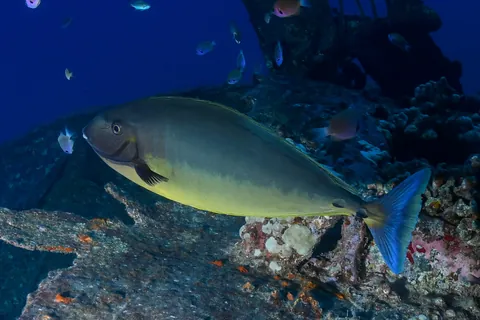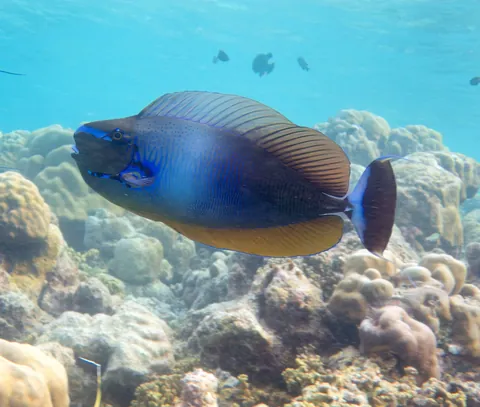
Bignose unicornfish
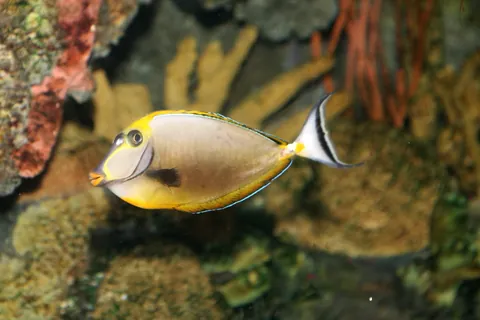
Naso vlamingii
Naso annulatus
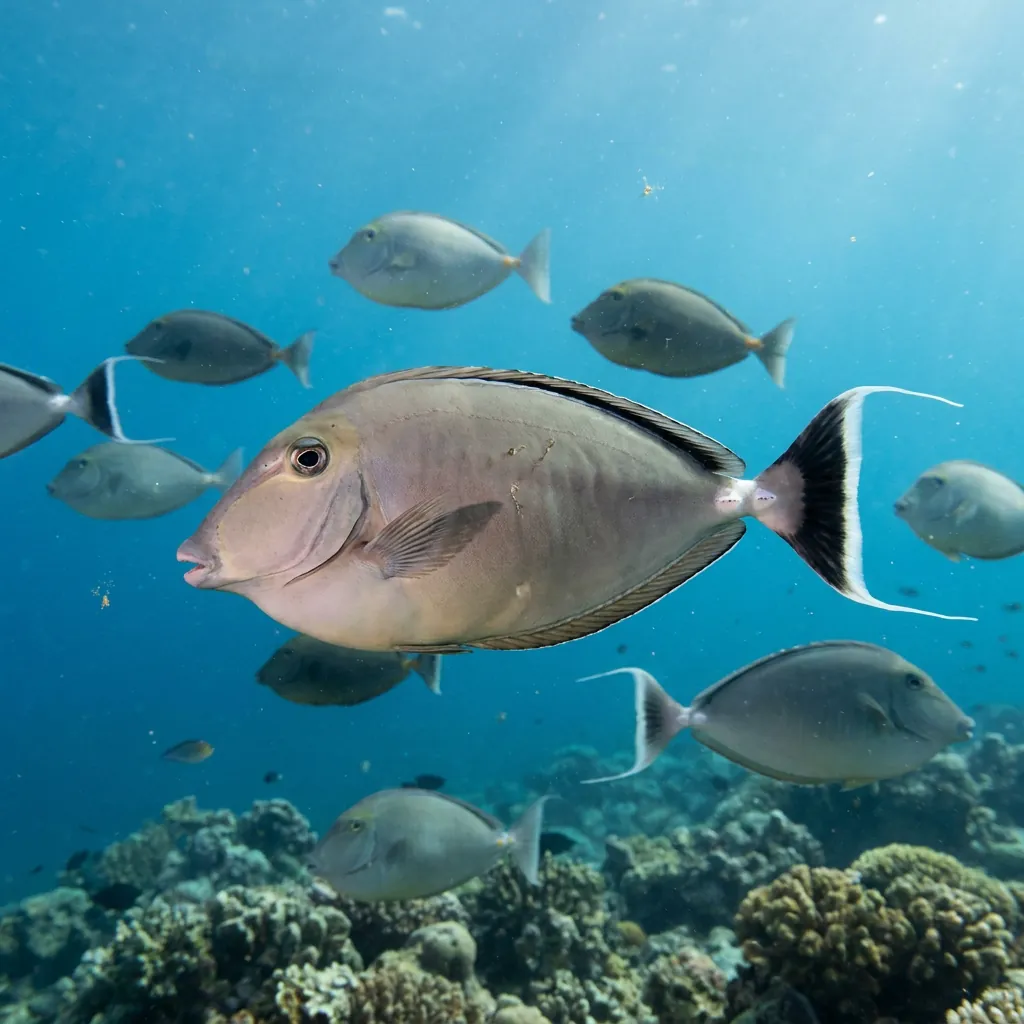
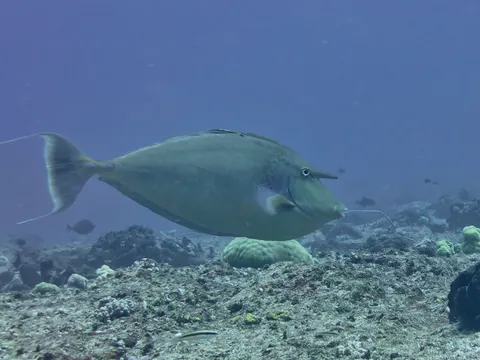
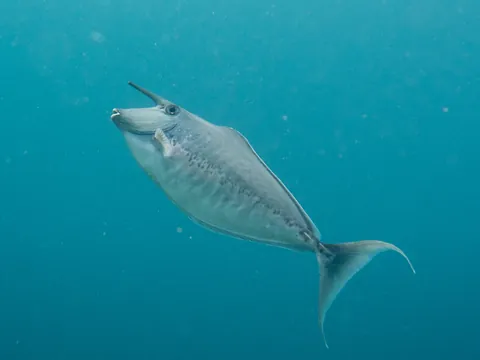
The whitemargin unicornfish is the giant of its family, a big, quiet grazer marked out by a pale-rimmed tail and a long bony horn jutting out ahead of its eyes.
Also known as: long-horn unicornfish, nosefish, ringtailed unicornfish, unicornfish, whitemargin unicornfish, short-horned unicornfish, white-margin unicorn, ringtailed unicornfish, whitemargin unicorn, whitemargin surgeonfish, white margin unicornfish, surgeonfish, long-horn unicorn fish, whitemargin, whitemargin unicornfish, ring-tailed unicorn-fish, ring-tailed unicornfish, ringtail unicornfish, short-horned unicorn-fish, white-margin unicorn
Several unicornfish share the long forehead horn, but the tail sets this species apart: a pale white margin running along the edge of the tail fin, with a dark band just inside it in adults, is not shared by similar Naso species in the same habitat.
This fish grows up to 100 cm long, making it the largest unicornfish and one of the largest members of the surgeonfish family. Adults carry a long, tapering, horn-like bony bump projecting forward from the head just ahead of the eyes. The body is bluish-grey or bluish-brown, paler underneath, with no dark markings, and the lips are white. On the tail base, two bony plates on each side develop into blade-like keels as the fish matures. Young fish show a clear white band around the tail base and a white edge to the tail fin; as they grow into adults, a black band forms just inside that white edge, while the pale margin and, in males, long trailing filaments from the tail tips remain.
This species lives across the tropical Indo-Pacific. Young fish stay in shallow, clear lagoon reefs close to the surface, while adults live much deeper, favouring the outer drop-offs of reef slopes in water between about 25 and 60 m, in a preferred temperature range of 24 to 28°C.
This is the largest species in the unicornfish genus Naso, and one of the biggest members of the entire surgeonfish family.
Describe what you saw and we name it, then keep every species you find in your Oceandex.