AI fish identification
What was that fish? Just ask Blue.
Describe what you saw in your own words, no photo needed. Blue asks what a dive buddy would ask, then names the species and adds it to your dive.
Tiny fish, electric blue with orange swirls, red eyes. Hiding in the coral at dusk.
Those colors and the dusk timing point to a dragonet, a small reef fish that lives near the bottom.
Was it shuffling along the bottom on its fins?
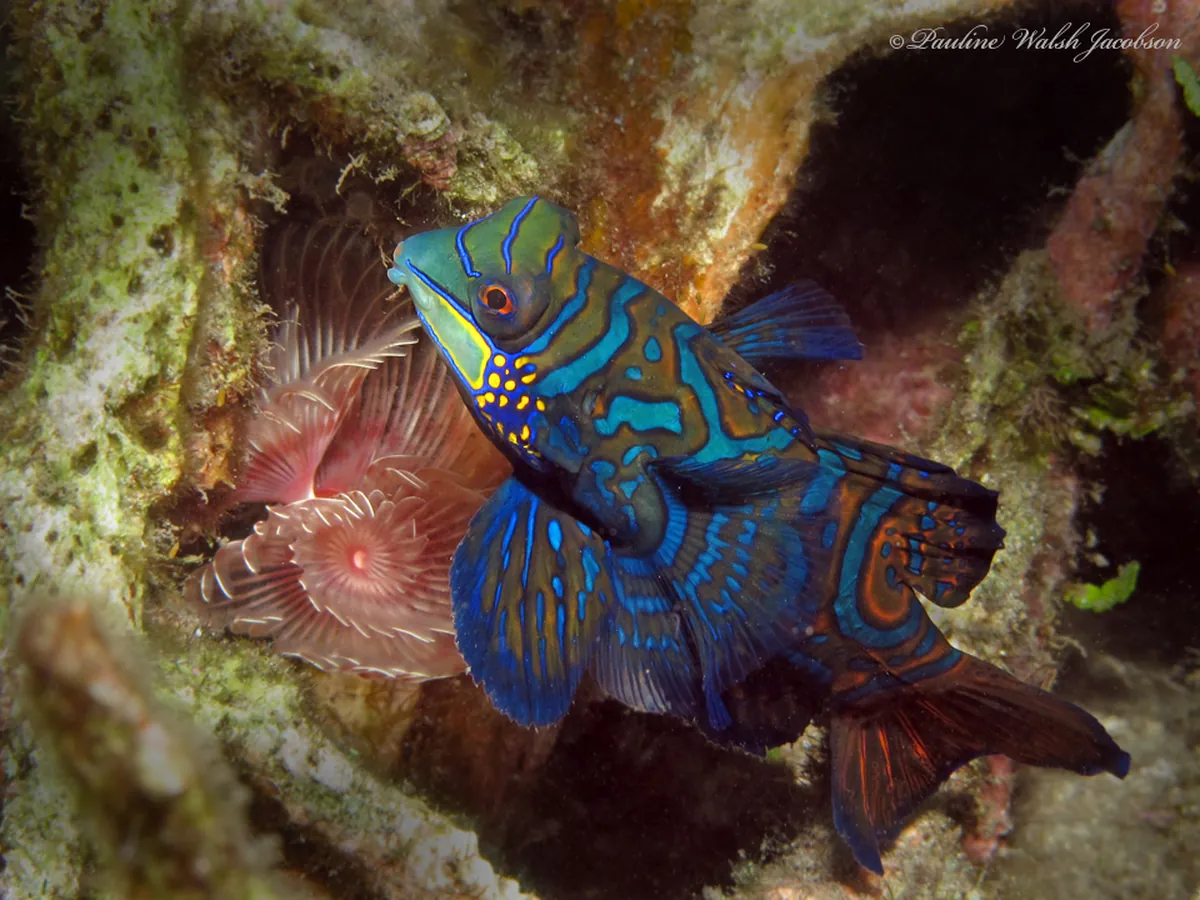 MandarinfishSynchiropus splendidusAdd sightingView species →
How it works
From “what was that?” to your logbook.
Describe it
Colors, pattern, shape, size, what it was doing. Write it the way you’d tell your buddy on the boat, in English or Spanish.
Answer a question or two
When your description fits more than one species, Blue asks the one question that tells them apart. Tap yes, no or not sure.
Log it
Pick the match from Blue’s shortlist, check what sets it apart, and add it to your dive. It goes straight into your Oceandex.
Why it works
An identification buddy that knows the reef.
Knows where you dived
Blue weighs its answer by what divers actually record at your dive site, so a common local fish ranks above a lookalike from another ocean.
Asks like a dive buddy
One clear question at a time, never a quiz. Blue remembers what you’ve already answered and never asks the same thing twice.
No photo needed
Most fish swim off before you reach for a camera. Blue works from what you remember, hours or days after the dive.
Ranked shortlist
Up to five candidates, best first, each with what sets it apart, so you can confirm the match yourself before you log it.
Ask what lives where
Not just “what was that?”. Ask “which nudibranchs live in the Mediterranean?” and browse the answers before your next trip.
Builds your collection
Every species you log lands in your Oceandex, your own field guide of everything you’ve seen, with over 1,300 species to find.
Blue, answered.
How can I identify a fish I saw while diving or snorkeling?
Open Into the Blue and tell Blue what you saw: colors, markings, body shape, size and behaviour. If you logged the dive, Blue also knows where you were. It may ask a short question to tell similar species apart, then shows a ranked shortlist you can add to your dive.
Do I need a photo to identify a fish?
No. Blue identifies from a written description, so it works for the fish that swam off before you could take a picture. If you do have photos, you can attach them to your dive.
How accurate is Blue?
The more detail you give, the better: colors and where they are on the body, stripes or spots, fin shape, size, and what it was doing. Blue ranks its answer using the species recorded at your dive site, and every suggestion comes with the features that tell it apart, so you confirm the match before logging it.
What can Blue identify?
Fish and other marine life: rays, sharks, turtles, octopuses, nudibranchs, shrimps and more, from the Mediterranean to the Red Sea and the Coral Triangle. The species it suggests come from the app’s catalogue, with over 1,300 species to collect in your Oceandex.
Is Blue free?
Your first identification is free, and the free plan includes one more every month. An identification is a whole conversation, questions included. Into the Blue Pro makes it unlimited, and starts with a free trial.
Does Blue work offline?
No, Blue needs an internet connection to answer. The rest of your logbook works offline, so you can log the dive on the boat and ask Blue once you’re back in coverage.
Which languages does Blue speak?
English and Spanish. Blue answers in the language your app is set to.
Can I ask Blue what lives at a dive site?
Yes. Besides identifying a sighting, you can browse: ask which species to expect in a sea or region, and Blue shows examples you can open. Browsing questions don’t count as identifications.
Know every fish on your next dive.
Free on iPhone and Android. Your first identification is on us.
 Get the app
Join 5,000+ divers and snorkelers


