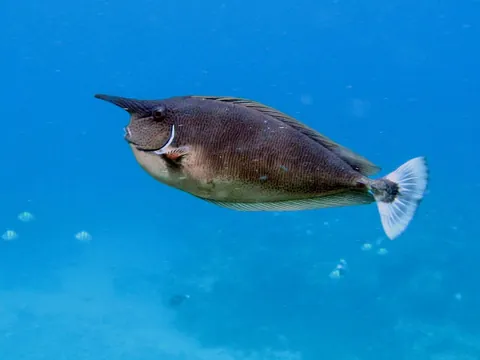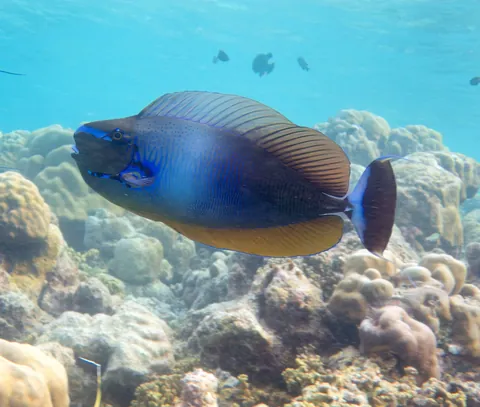
Bignose unicornfish
Naso vlamingii
Naso hexacanthus
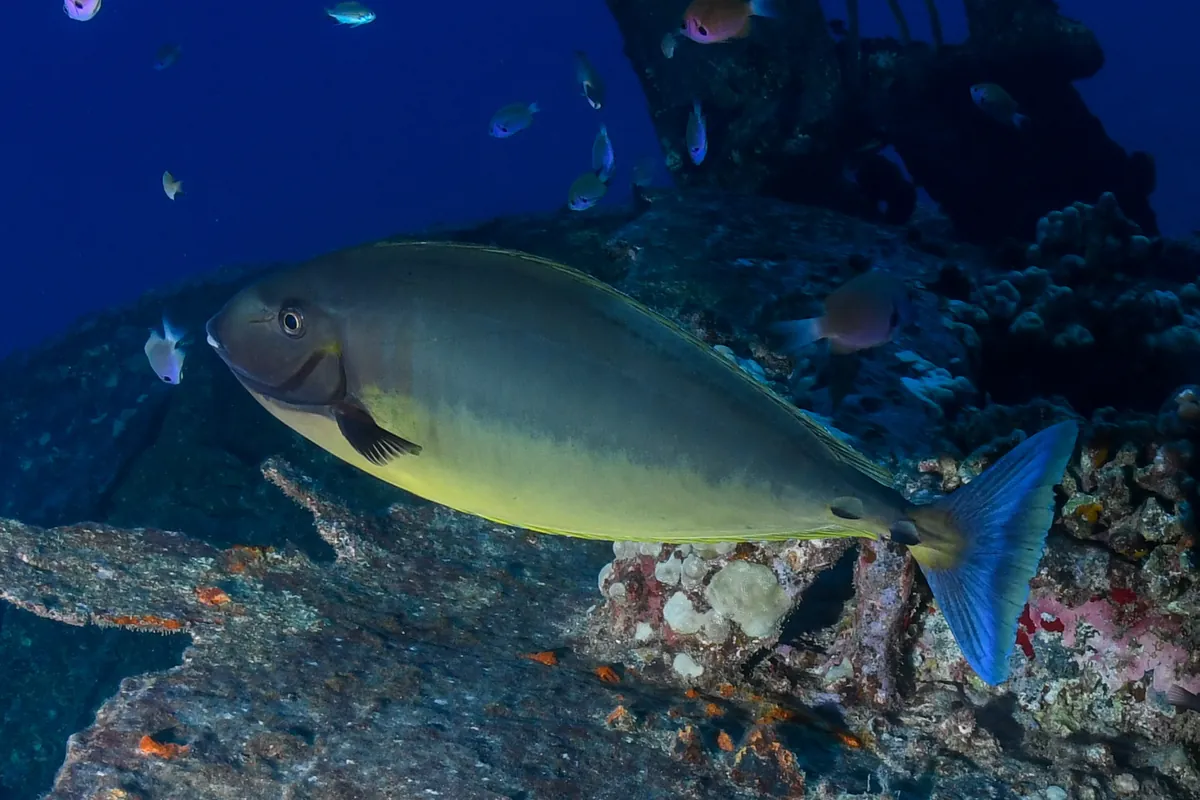
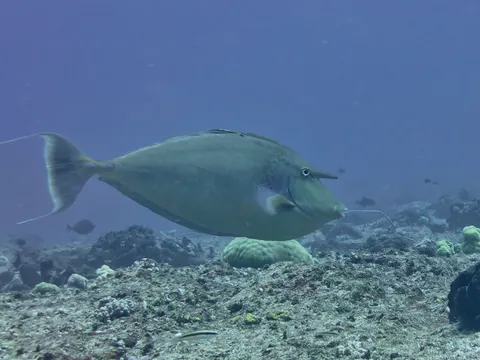
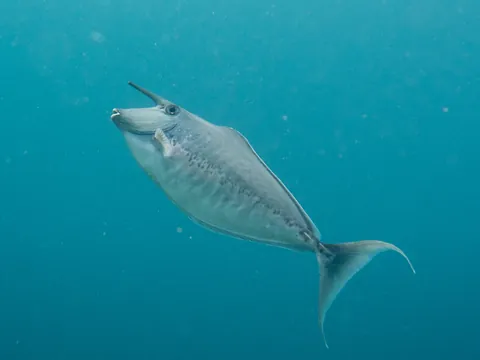
The sleek unicornfish is a big, deep-ranging reef fish that often moves in large schools over open water off the reef edge. It grows up to 75 cm long and can shift its colour from dark brown to yellow, or even blue or silver.
Also known as: black unicornfish, sleek unicornfish, blacktongue unicornfish, nohorn unicorn, surgeonfish, thorpe's unicornfish, unicornfish, blacktongue unicorn, nohorn unicorn, sleek unicornfish, sleek unicorn, blacktounge unicornfish, blacktongue unicornfish, sleek unicornfish, sleek unicorn, blue-tail unicorn
Many unicornfishes carry a horn or bony bump on the forehead, but this species does not; a smooth-headed, schooling unicornfish of this size is a strong sign you are looking at the sleek unicornfish rather than a horned relative.
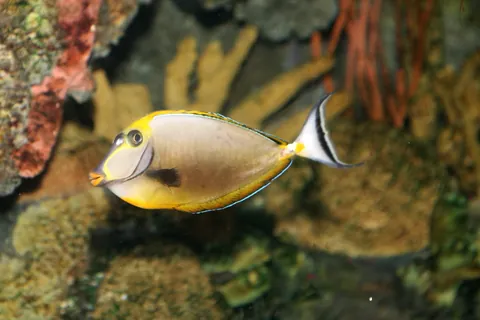
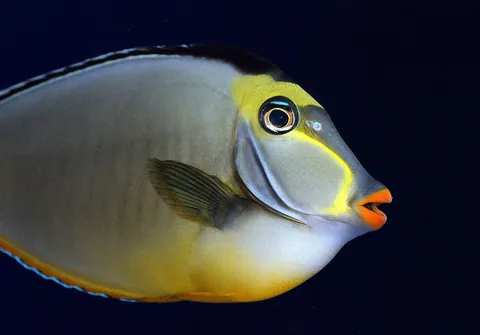
This is a large, deep-bodied fish with a flattened side profile, growing up to 75 cm, with most adults around 50 cm. Unlike many of its unicornfish relatives, it has no horn or bump on its forehead; the head profile curves smoothly instead. Its colour ranges from dark brown to yellow, and it can switch to blue or silver. The teeth point backwards, and the tongue inside its mouth is black.
It ranges widely across the Indo-Pacific, from East Africa and India to the Hawaiian Islands, living in clear lagoons and along seaward reef slopes. Divers usually meet it well off the reef, from shallow water down to well over 100 m.
One of this fish's nicknames is the blacktongue unicornfish, for a genuinely black tongue inside its mouth. It is also a quick-change artist, able to shift its body colour between dark brown, yellow, blue, and silver.
Describe what you saw and we name it, then keep every species you find in your Oceandex.