Draughtboard Shark
Cephaloscyllium laticeps
Cephaloscyllium ventriosum
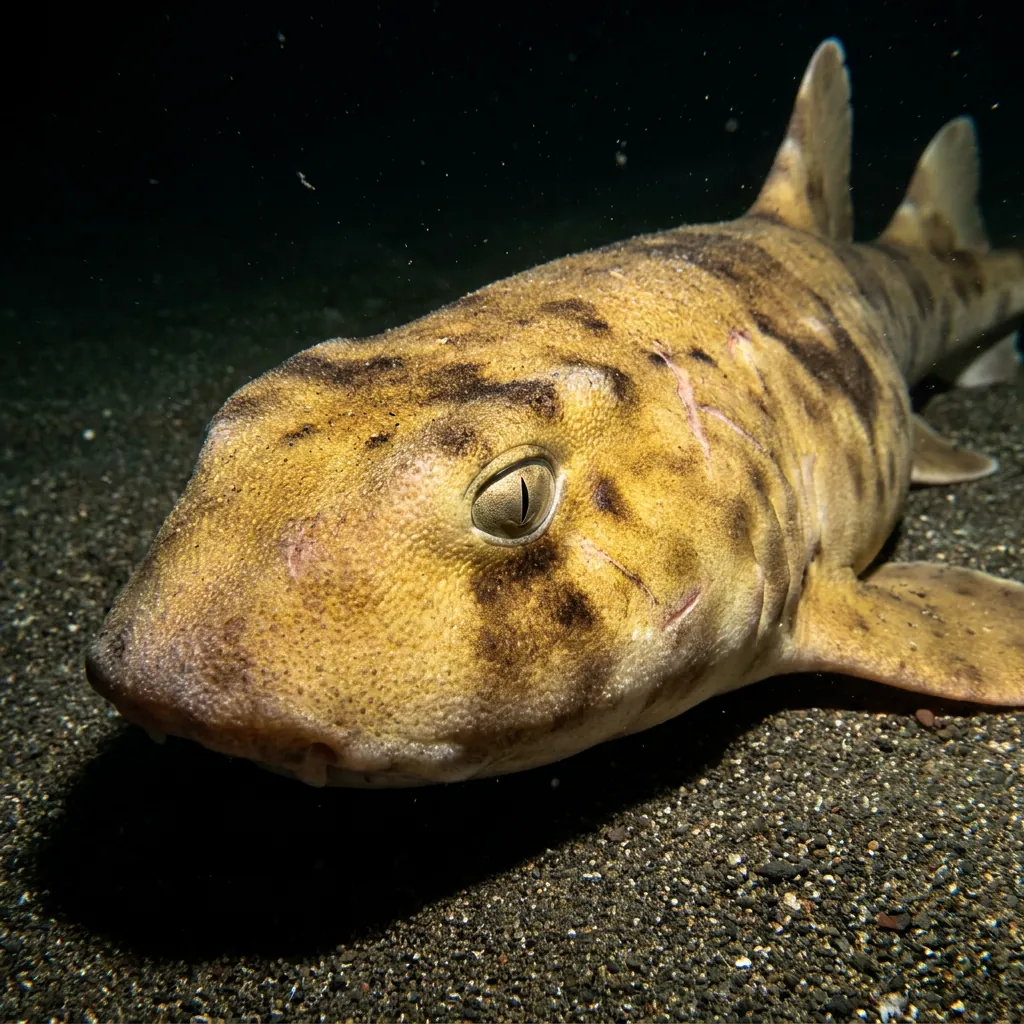
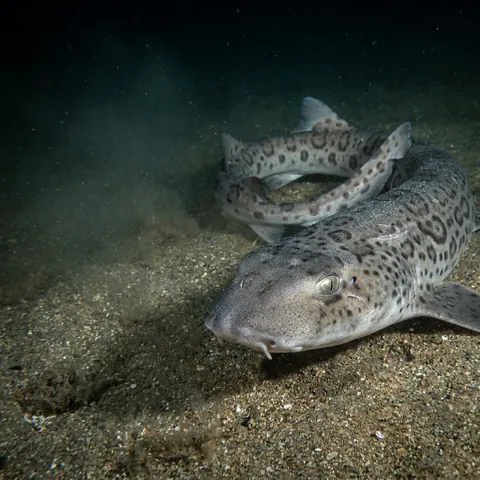
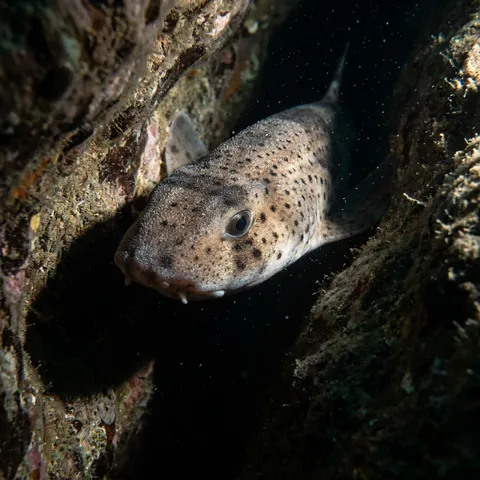
The swellshark is a small, slow-moving catshark that grows up to 110 cm long. It spends its days wedged in rocky crevices and comes alive at night to hunt.
Also known as: swell shark
Its blotchy brown-and-white pattern looks similar to other small catsharks, but check the fins: on this species, the spots stop at the body and never carry onto them.
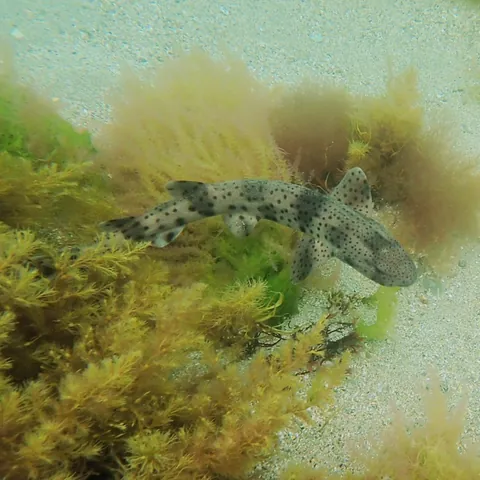
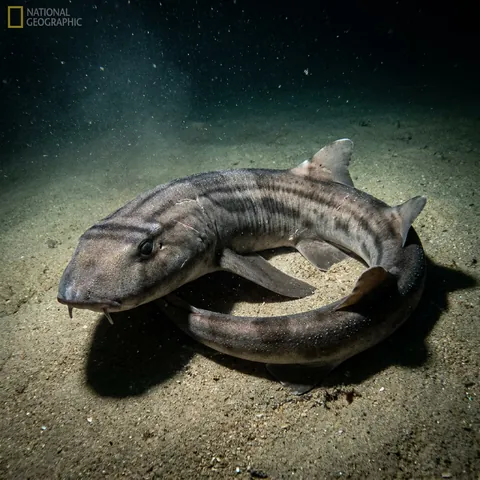
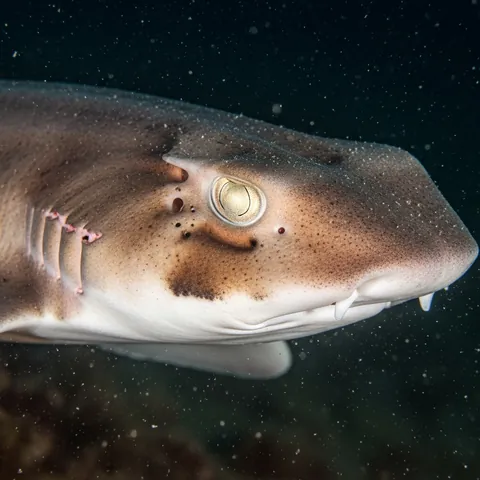
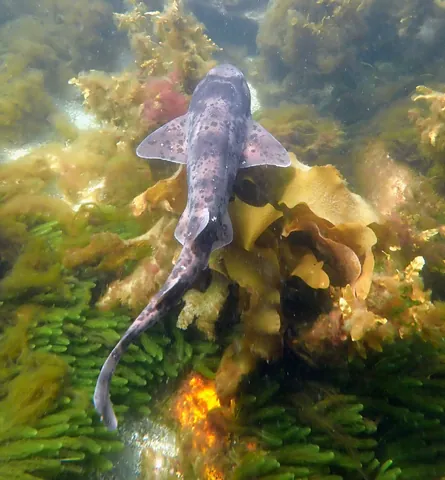
This shark has a broad, flat head and large gold eyes with a protective inner eyelid. Its body is yellow-brown, covered in brown and white spots that reach across its underside but stop short of its fins. Young sharks are paler than adults, and the gill slits are small and tight against the body.
Swellsharks live in the eastern Pacific, from central California to southern Mexico, with a separate population off Chile. They favour rocky, algae-covered reefs and kelp beds, hiding in crevices by day, and range from about 5 to 457 metres deep, though they are most common between 5 and 37 metres.
This shark hunts at night, feeding on bony fish, molluscs, and crustaceans, whether dead or alive. It either sucks prey straight into its mouth or lies motionless on the seafloor with its mouth open, waiting for something to pass by. It has also been known to raid lobster traps for an easy meal.
Females lay flattened, green or amber egg cases in pairs, anchoring them to kelp or reef with thin tendrils. There is no care from the parents once the eggs are laid, and each pup hatches fully able to fend for itself.
No fishery targets the swellshark directly, and it is not eaten due to its poor-quality meat, though it is sometimes caught by accident in traps, nets, and trawls. It is common in public aquariums, where it survives well in captivity, and is listed as a species of least concern.
Under blue light, swellsharks glow with their own distinct light pattern, a trait first documented in 2014 that may help them recognise one another in the dark.
Describe what you saw and we name it, then keep every species you find in your Oceandex.