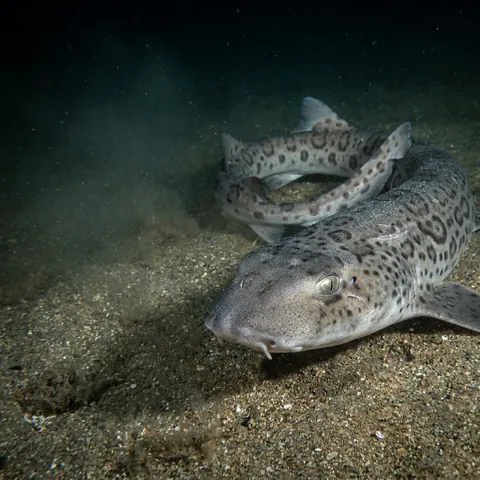
Leopard Catshark
Poroderma pantherinum
Cephaloscyllium laticeps
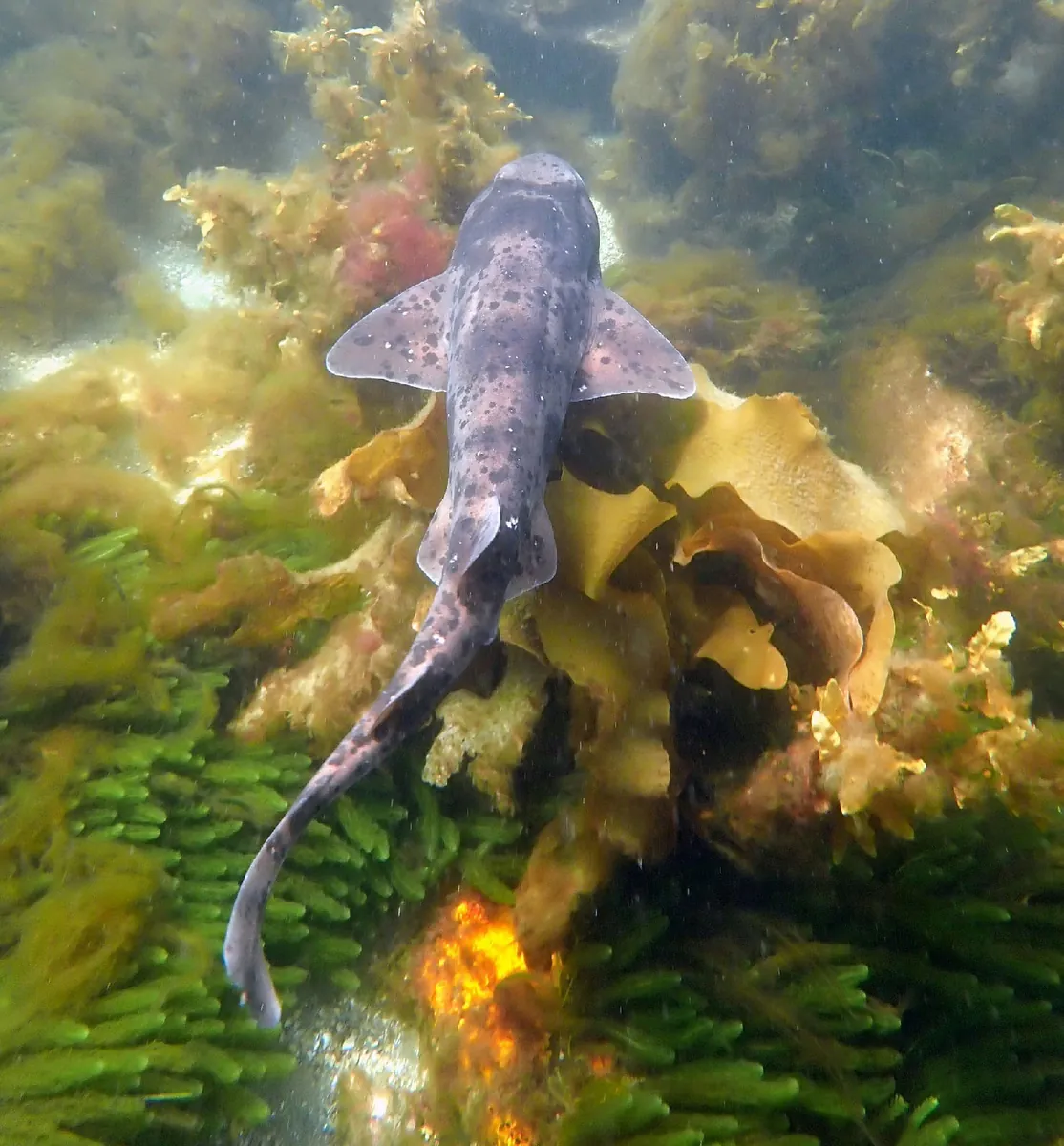
Named for the checkered pattern across its back, the draughtboard shark is a stocky, slow-moving catshark of southern Australia's rocky reefs, growing up to 150 cm long.
Also known as: australian swellshark, rock shark, flopguts, nutcracker shark, sleepy joe, spotted swellshark, swell shark, whitefinned swellshark, isabell's swell shark
Other bottom-dwelling catsharks in the region share its blunt head and mottled coloring. The clearest fixed mark is the dark stripe running from under the eye back to the base of the pectoral fin, which stays put even though the spotting on its body can vary between individuals.
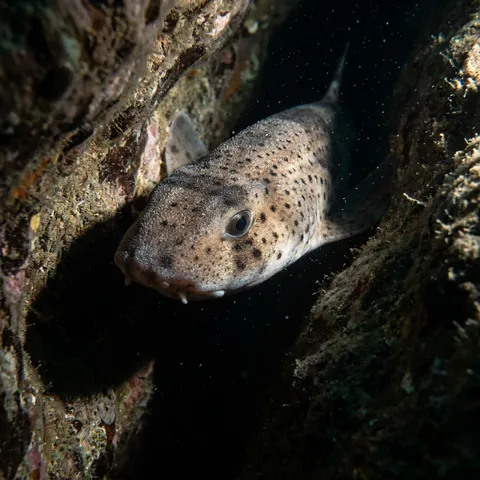
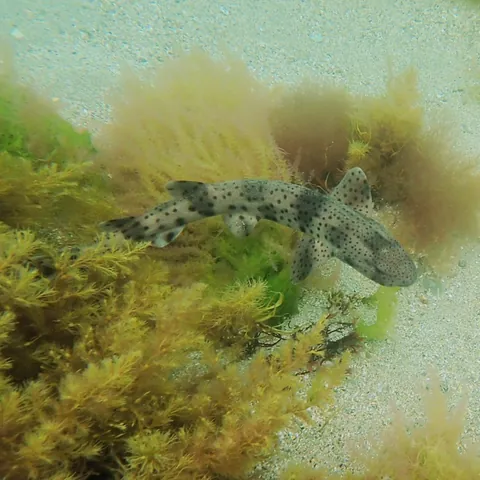
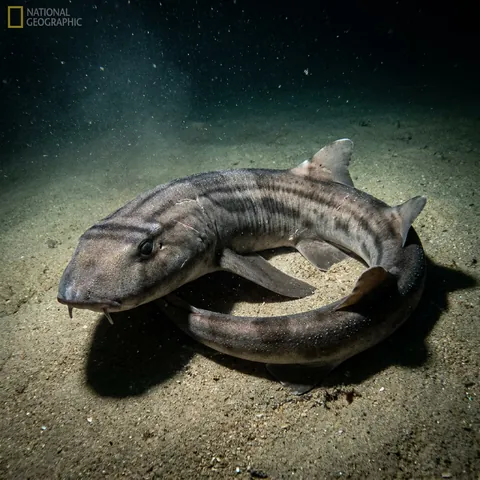
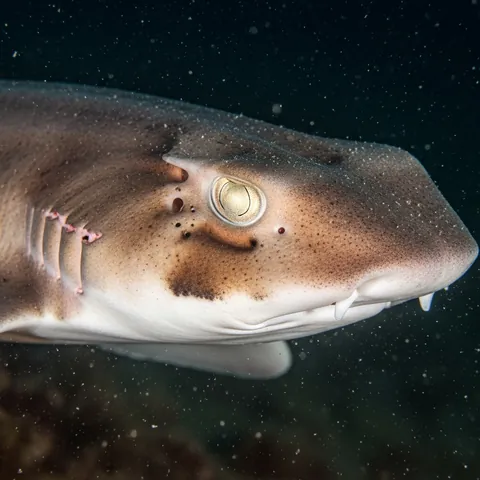
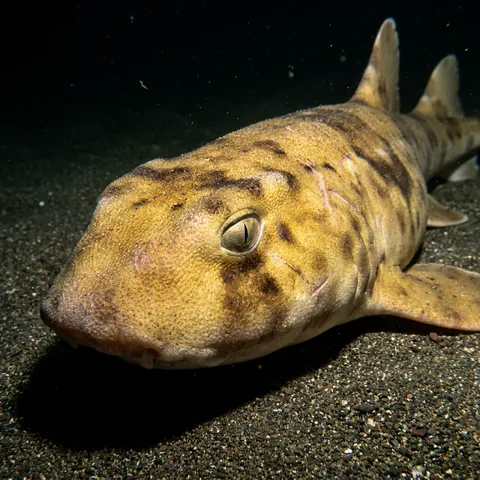
This shark has a stocky, rounded body that narrows sharply toward a short tail base. Its head is broad and flattened, with a short, blunt snout and a very large mouth. The upper teeth stay visible even with the mouth closed. Large oval eyes sit high on the head. The first of its two dorsal fins is much larger than the second, and the pectoral fins are broad. Thick skin covers the body, set with small, hard, arrowhead-shaped bumps. The back and sides are light grey to brown, patterned with close-set darker saddle shapes and blotches plus many dark spots, and a dark stripe runs from under the eye to the base of the pectoral fin. The underside is cream, often with a dark stripe down the middle in adults.
The draughtboard shark lives only on the continental shelf of southern Australia, from Western Australia's Recherche Archipelago to Jervis Bay in New South Wales, including Tasmania. It sits on or near the bottom among rocky reefs and seaweed beds, from close to shore down to about 220 metres.
This shark is a sluggish swimmer, more active at night, and rests by day alone or in groups under ledges and in caves. Some individuals stay active for months at a stretch, while others rest in place for days after a large meal. Most stay within one home area year-round, though a few travel long distances. It hunts crabs, rock lobsters, squid, octopus, and small fish, often swallowing prey whole. When threatened, it can rapidly swell its body by gulping water or air, wedging itself into crevices to avoid being pulled out or swallowed by predators such as the broadnose sevengill shark.
The draughtboard shark is tough enough to survive more than a day out of water.
Describe what you saw and we name it, then keep every species you find in your Oceandex.