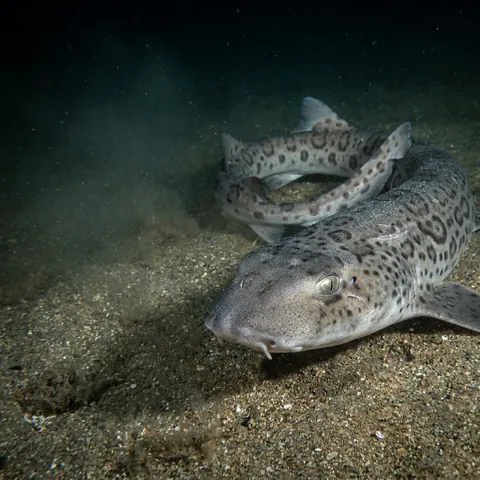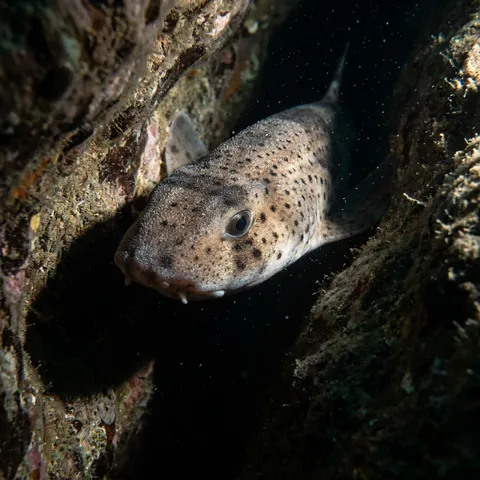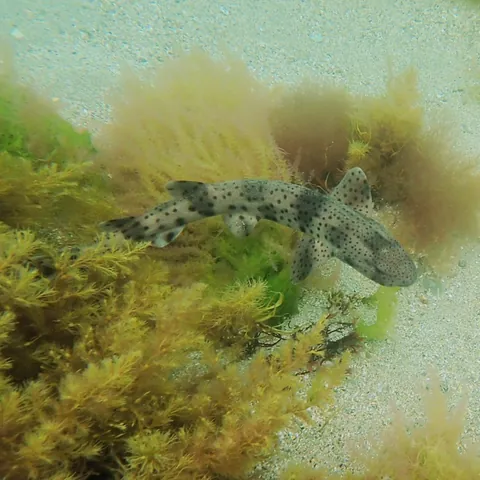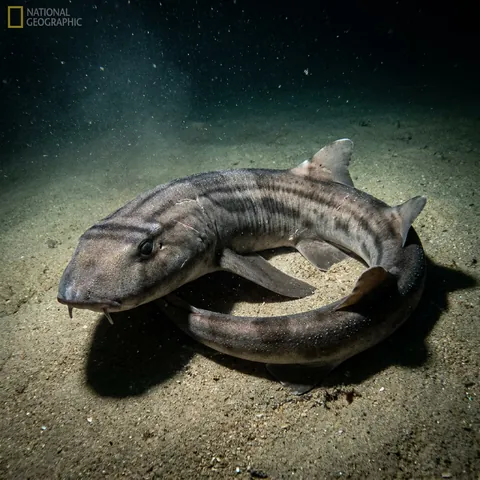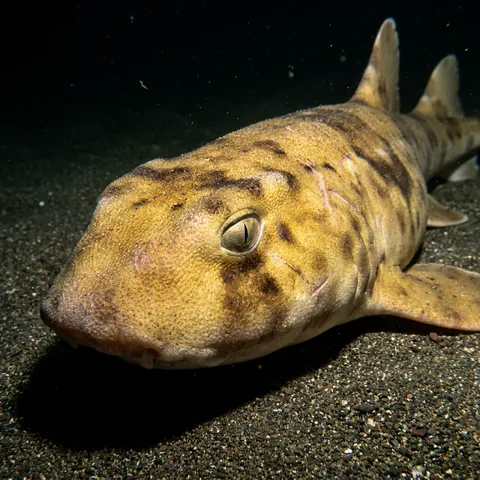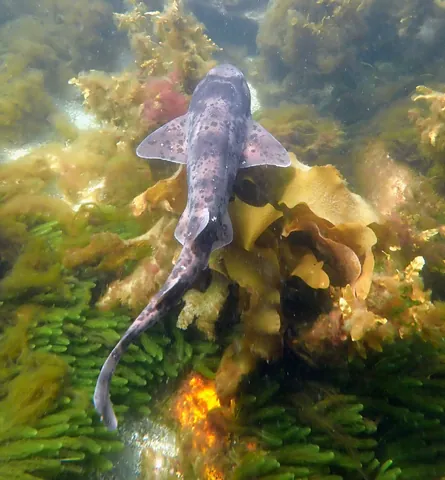
Draughtboard Shark
Cephaloscyllium laticeps
Apristurus spongiceps
The spongehead catshark is one of the least known sharks in the Pacific. For most of its history it was known from just two animals: an adult taken near Bird Island in Hawaii and a young one from the Banda Sea off Sulawesi. It lives on or just above the bottom of island slopes, the steep ground that falls away from island shelves, between about 572 m and 1482 m. It reaches about 50 cm. The adult was carrying eggs, so the species most likely lays eggs rather than giving birth to live young.
Also known as: spongehead cat shark
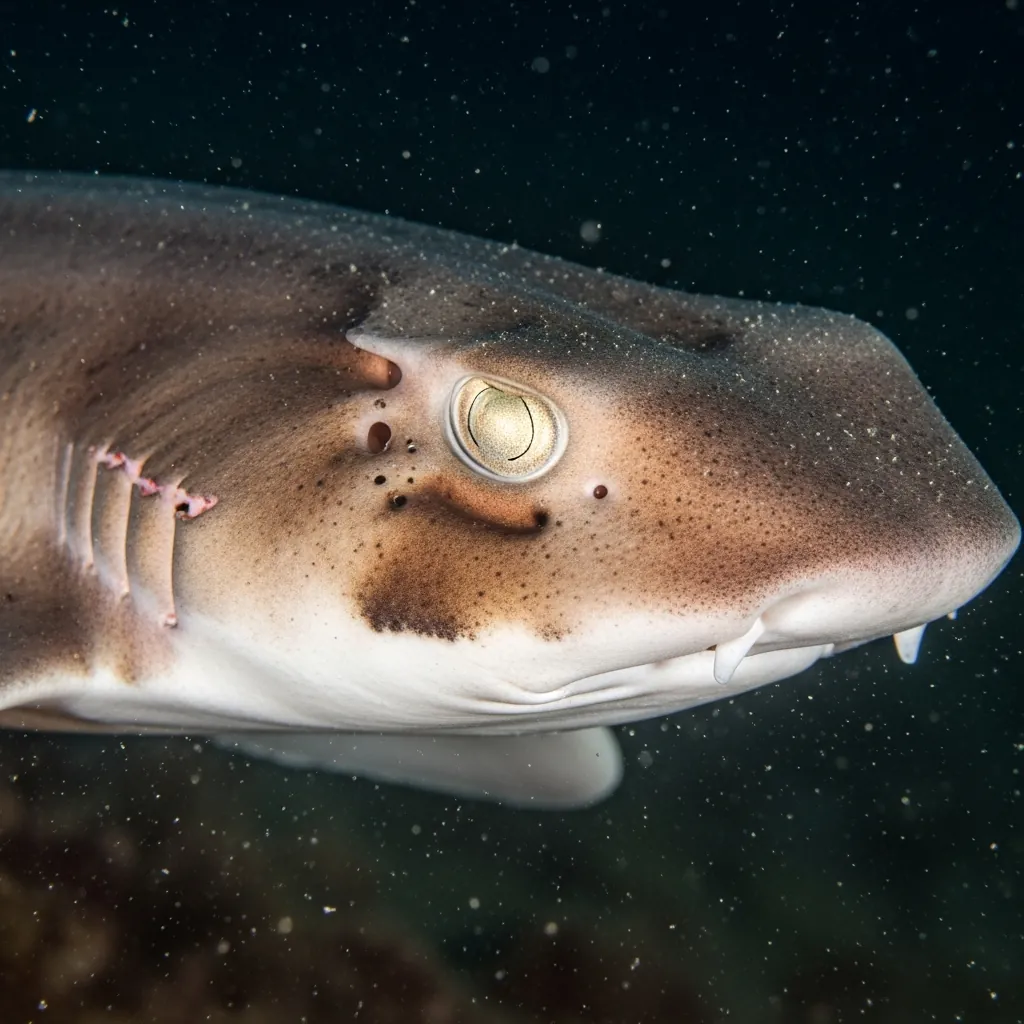
Deepwater catsharks are a plain brown, hard-to-separate group. The mark that settles this one sits between the gill slits: the skin there is gathered into pleats and folds that carry on above and below the slits and spread across the throat. Nothing else in the group has that folded collar, and it does not change with age - the young shark found in the Banda Sea already had it.
A stocky little shark, thick through the head and body, with a fairly long snout that is broad and rounded at the tip. It is plain dark brown, with no pale or dark marks on the fins. The eyes are small and the nostrils wide. The mouth is long and set in a broad arch. The five gill slits on each side are very small for a shark of this size. Both fins on the back are about the same size, the paired fins near the belly are tall and rounded, and the skin feels fuzzy, almost like felt.
Nobody saw this shark alive until 2002. It had been known only from two dead specimens, and it was finally filmed in its own habitat by the crew of the submersible Pisces IV, over the Northampton Seamount off the northwestern Hawaiian Islands.
Describe what you saw and we name it, then keep every species you find in your Oceandex.