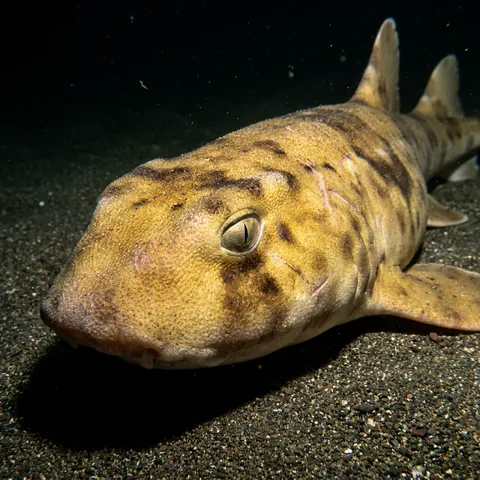
Draughtboard Shark
Cephaloscyllium laticeps
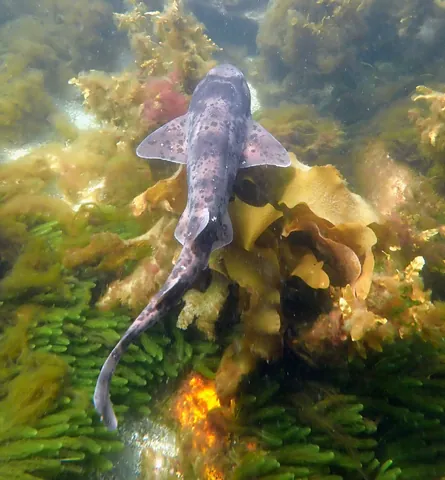
Poroderma pantherinum
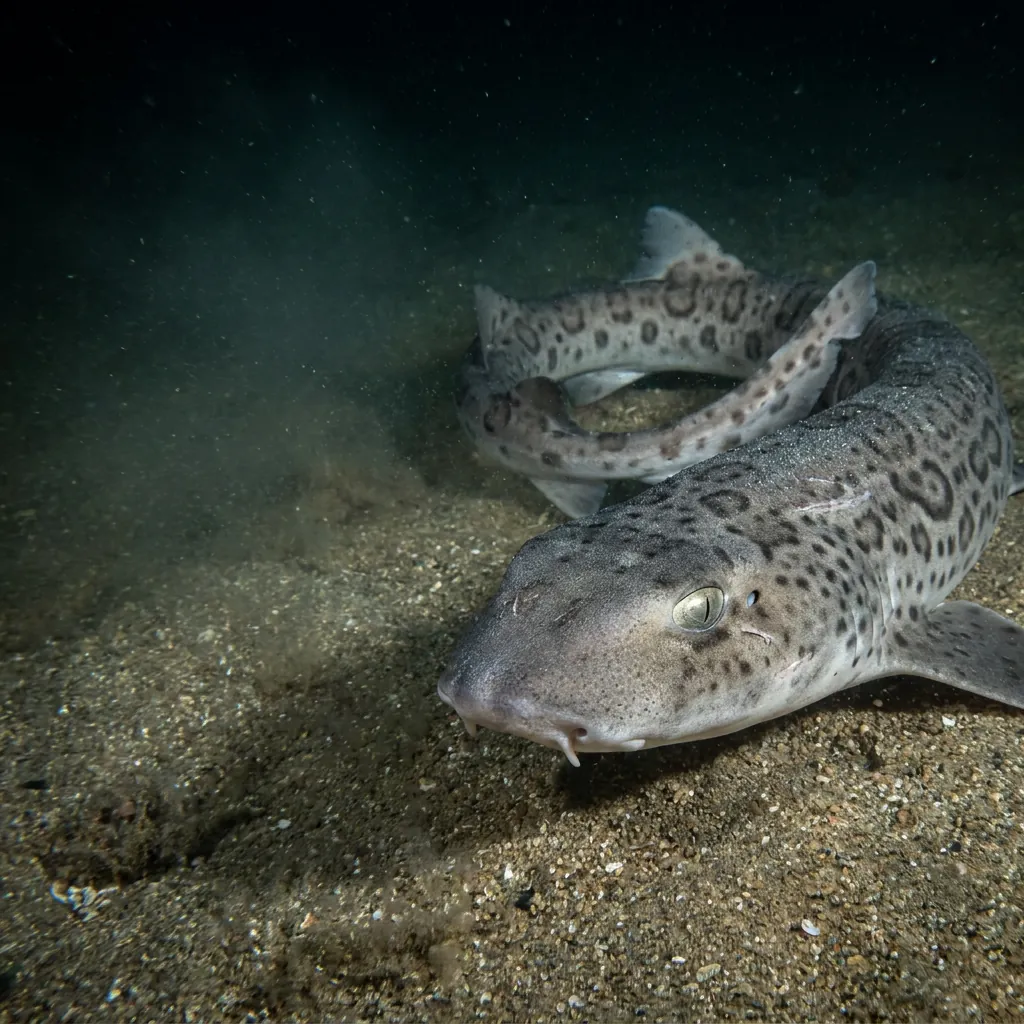
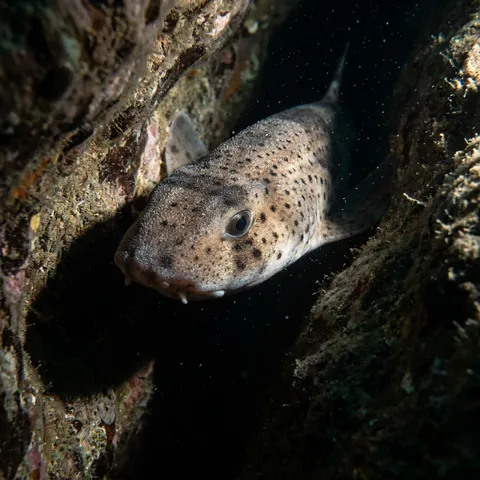
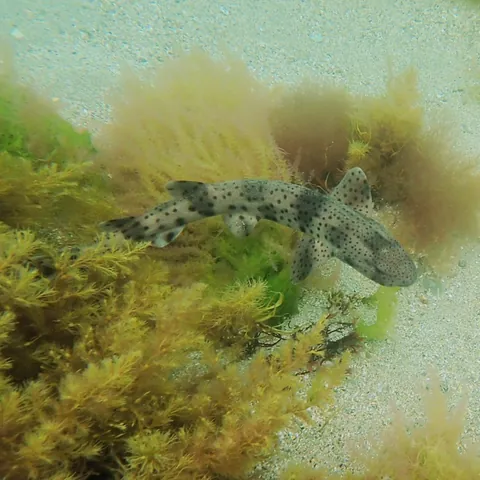
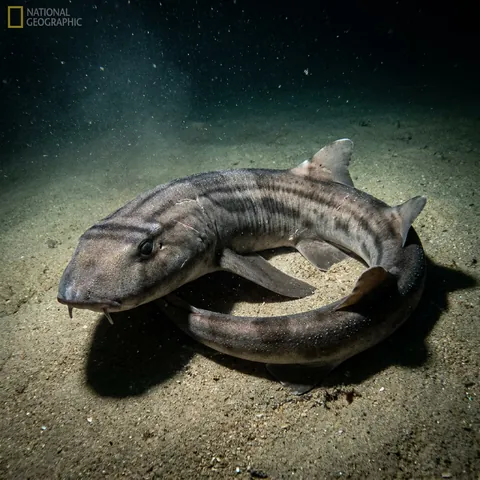
A slim, slow-moving catshark of South Africa's cool inshore reefs, the leopard catshark grows up to 84 cm long and spends its days resting out of sight.
Also known as: leopard shark
It closely resembles the pyjama shark, sharing its build and cave-dwelling habits. Look at the barbel in front of each nostril: on the leopard catshark it is slim and reaches past the mouth, while the pyjama shark's is thicker and falls short of it.
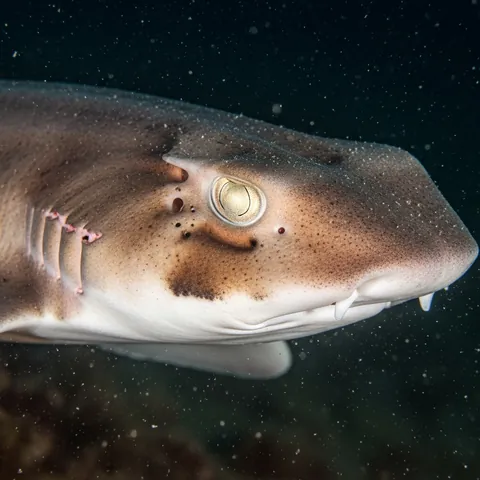
This is a slender shark with a short, slightly flattened head and a somewhat pointed snout tip. In front of each nostril is a three-lobed flap of skin, its centre lobe drawn into a slim barbel that reaches past the mouth. The eyes are oval and set high on the head, above a thick ridge. The mouth is wide and arched, with short grooves at the corners, and the upper teeth stay visible even when the mouth is closed. The body is flattened side to side and tapers toward the tail, with two dorsal fins set far back, the first much larger than the second, and large, broad pectoral fins. Thick skin covers the body, studded with small, hard, arrowhead-shaped points. Its background colour ranges from off-white to glossy black.
The leopard catshark lives only along South Africa's coast, from Saldanha Bay in the west to the mouth of the Tugela River in the east. It stays on or near the bottom, favouring rocky reefs, kelp forests, and sandy flats off beaches, most often from the shallows to about 20 metres, though it has been found as deep as 256 metres.
This shark is a slow swimmer that rests by day alone or in groups inside caves and crevices, then moves inshore at night to hunt small fish, squid and octopus, crustaceans, and worms. It has been seen gripping an octopus or cuttlefish and twisting off a tentacle. During daytime mass spawnings of chokka squid, it breaks its nocturnal habit, lying motionless among the squids' egg masses with its head hidden before lunging at a female squid.
Female leopard catsharks lay their eggs in rectangular capsules with long tendrils at the corners to anchor them to the reef, with thinner walls than the similar egg case laid by the pyjama shark.
Describe what you saw and we name it, then keep every species you find in your Oceandex.