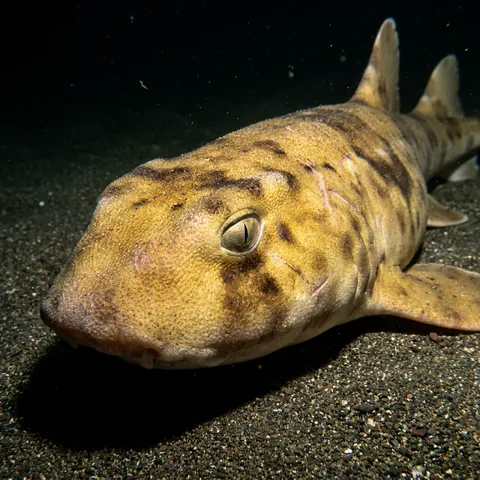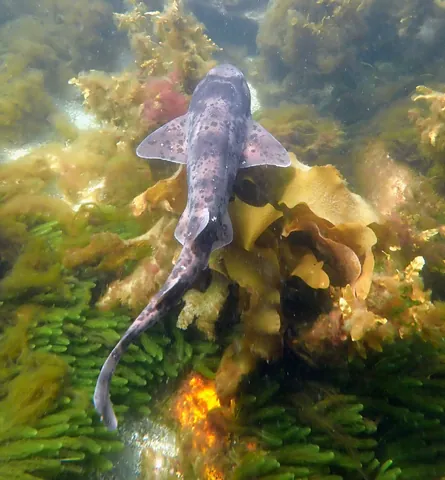
Draughtboard Shark
Cephaloscyllium laticeps
Scyliorhinus stellaris
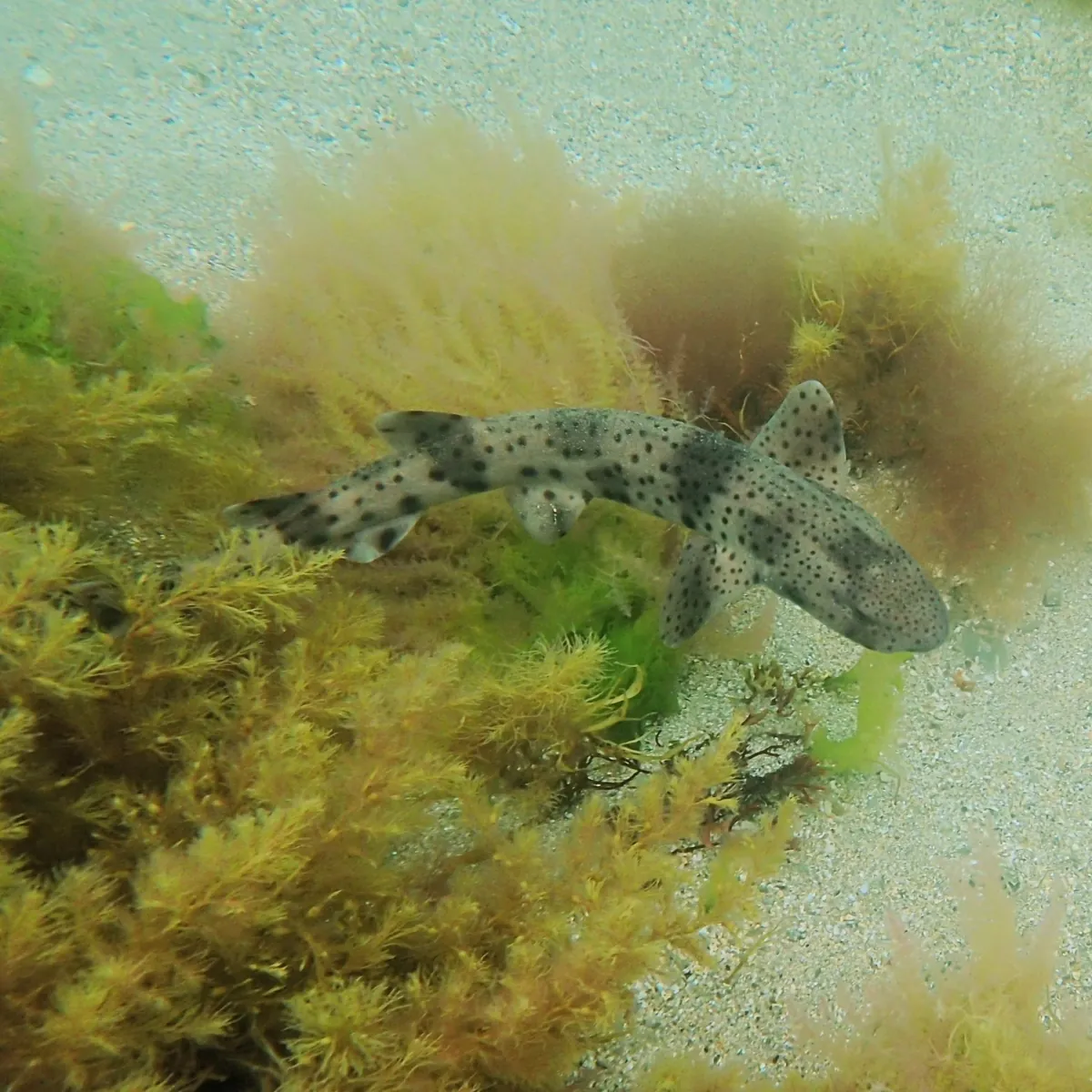
The nursehound is a heavy-bodied catshark that spends its days wedged into a rocky hole and only comes out to hunt after dark. It can reach 170 cm, though most measure around 125 cm.
Also known as: dogfish, flake catfish, flake, greater spotted dogfish, larger spotted dogfish, nurse, hound, nurse-hound, large-spotted dogfish, greate-spotted dogfish, nursehound, rigg, polkadot catshark
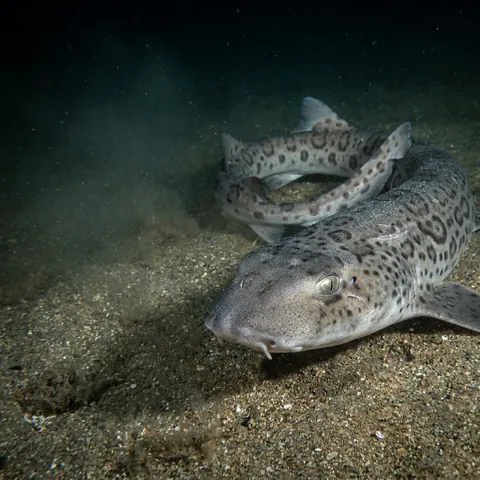
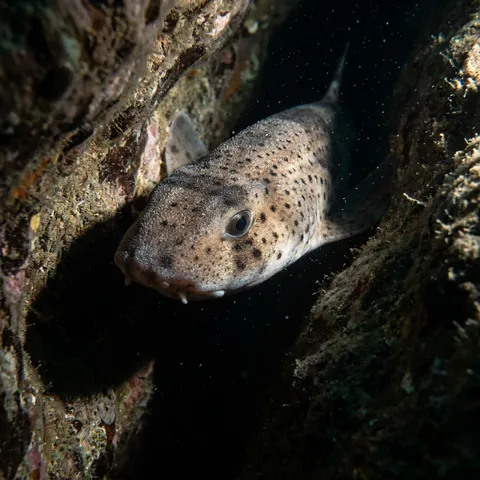
It looks much like the small-spotted catshark, but its brown spots are larger than the eye's pupil, while that species' spots are smaller.
It has a broad, rounded head and a stout body that narrows toward the tail. The skin feels very rough, covered in small upright points. The back and sides carry small black dots mixed with larger brown spots, bigger than the pupil of the eye, on a grey or brown background, while the underside is plain white. The two dorsal fins sit far back on the body, and the tail fin is broad and almost flat along its top edge.
It lives on the seabed over rough or rocky ground and algae-covered bottoms, often around reefs, from shallow water down to 400 m, though it is most common between 20 and 63 m. Its range covers the northeastern Atlantic, from the British Isles and southern Scandinavia down to West Africa, and throughout the Mediterranean.
This shark hides inside small rock holes by day, sometimes sharing a hole with another nursehound, and swims out into deeper water at night to feed. Its prey includes bottom-living fish, smaller sharks, crabs, shrimp, and squid or octopus, and it will scavenge when the chance comes up.
One tracked young nursehound used five different rock holes in turn over 168 days, returning to each one for several days running before moving on to the next.
Describe what you saw and we name it, then keep every species you find in your Oceandex.