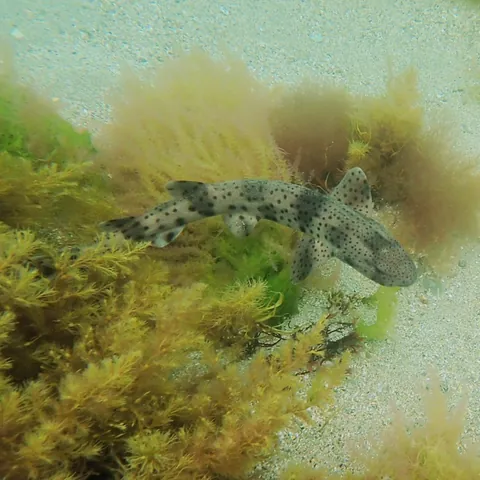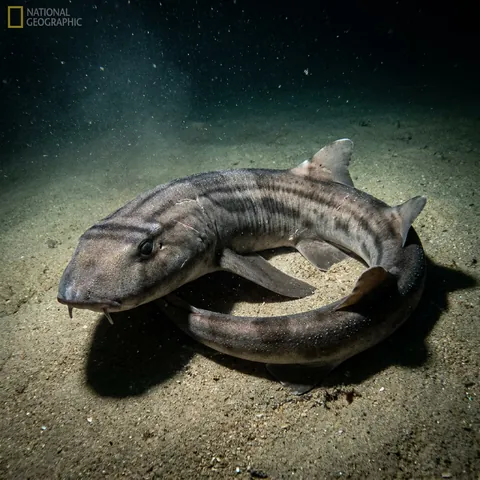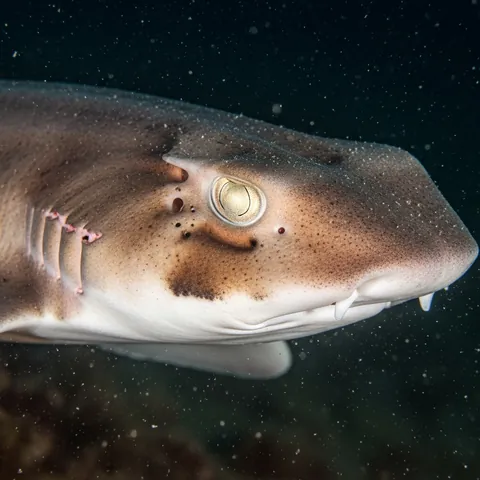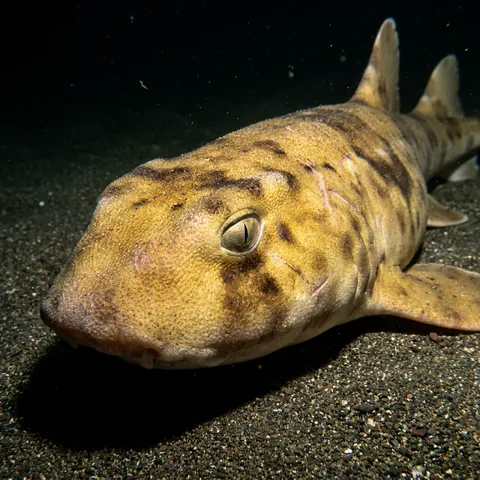
Draughtboard Shark
Cephaloscyllium laticeps
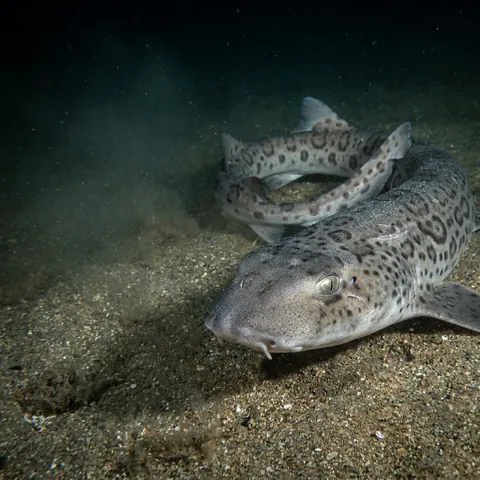
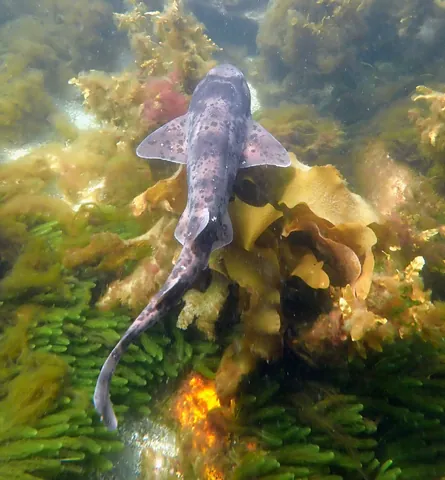
Scyliorhinus canicula
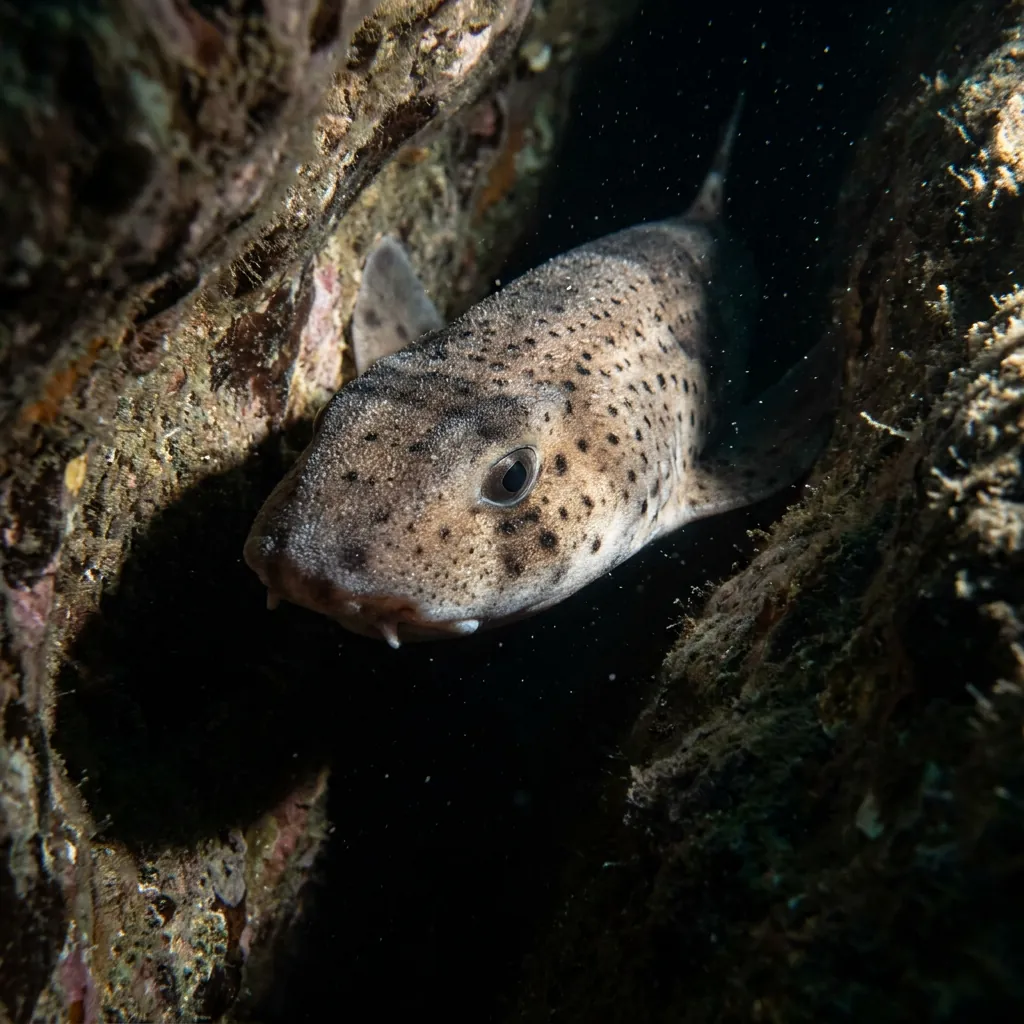
The lesser spotted dogfish is a small, common catshark found in European seas. It often rests on the seabed by day. It grows up to a metre long, though most are closer to 60 cm.
Also known as: scyliorhinus canicula, dogfish, fay dog, rough dog, rough hound, sandy dogfish, small spotted dog, small-spotted cat shark, small-spotted catshark, small-spotted dogfish, smallspotted catshark
It looks like the larger nursehound, also called the greater spotted dogfish. Its spots are smaller and packed closer together than the nursehound's bigger, more spread-out spots.
It has a slim body, a blunt head, and rough, sandpaper-like skin. It has two dorsal fins, the fins on its back, set far back near the tail, and the second one is much smaller than the first. Its back is greyish brown with many small dark spots, sometimes with faint, darker band-like markings across it. Its underside is pale greyish white.
It lives on the shallow sea floor and the slopes just beyond it, from Norway and the British Isles south to Senegal, including the Mediterranean. It likes sandy, gravelly, or muddy bottoms, usually between about 80 and 100 metres deep, though it can be found from around 10 metres down to nearly 800.
It is not a picky eater. It eats crustaceans, molluscs, and small fish, plus worms and other small animals without backbones. Young sharks favour small crustaceans, while older ones switch to hermit crabs and molluscs. It eats more in summer, when there is more food around.
Females lay egg cases in pairs, each with long threads that attach to seaweed or other growth in shallow coastal water. Egg laying can happen almost all year, though timing varies by region. How long the young take to grow inside the egg depends on the water temperature.
harmless
A 2014 study found that lesser spotted dogfish have their own personalities. Some sharks are always more friendly, bold, or curious than others.
Describe what you saw and we name it, then keep every species you find in your Oceandex.