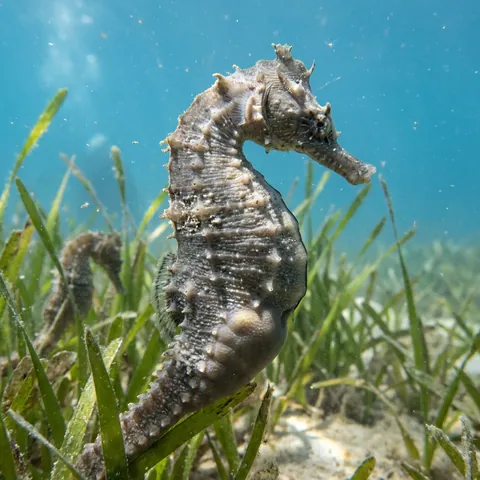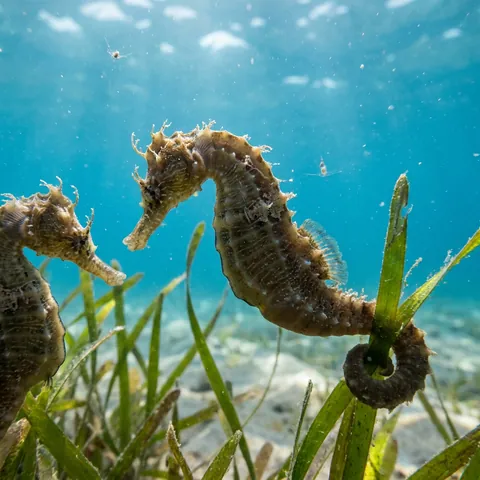
Common Seahorse
Hippocampus hippocampus
Hippocampus abdominalis
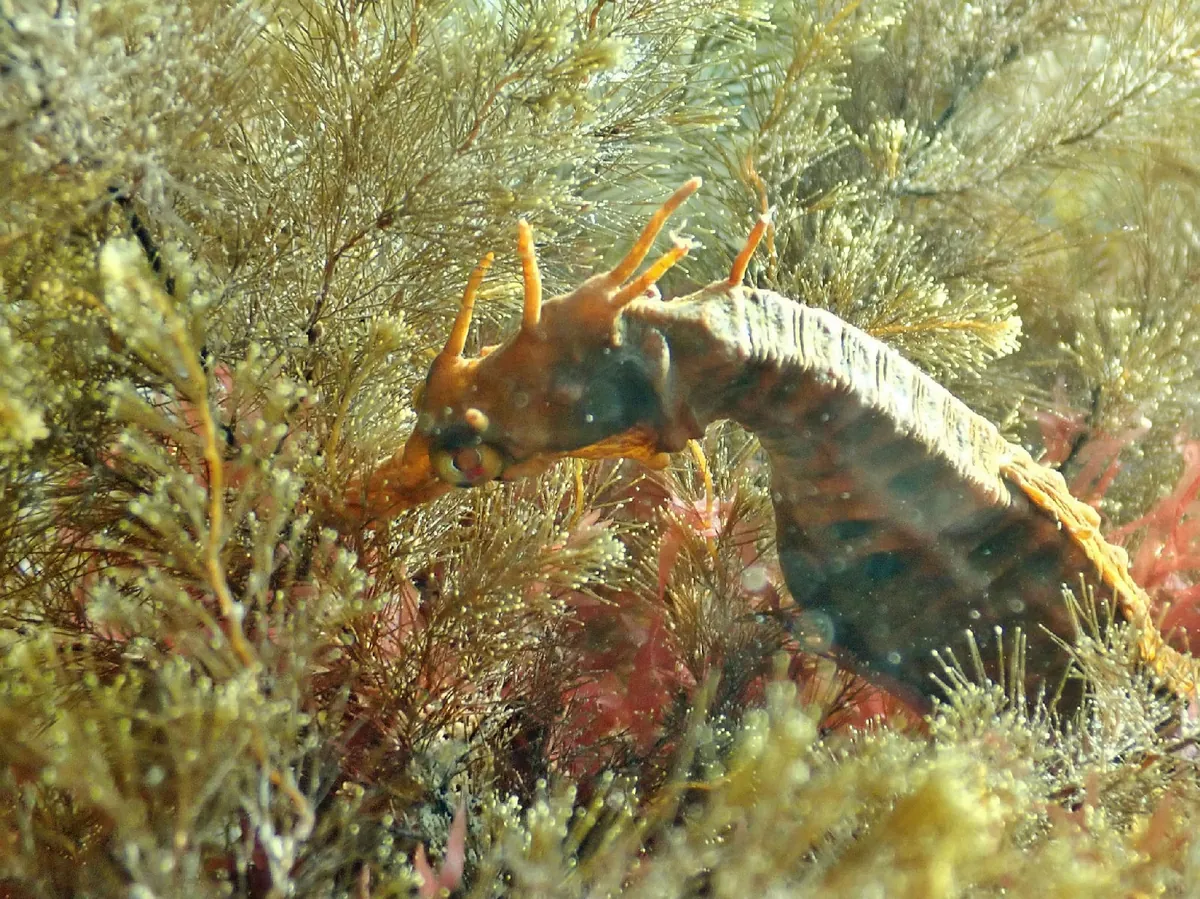
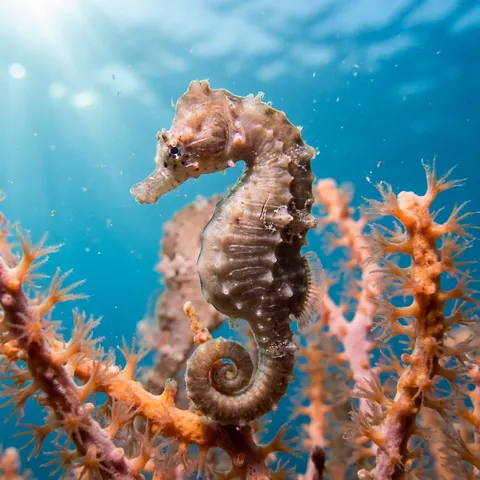
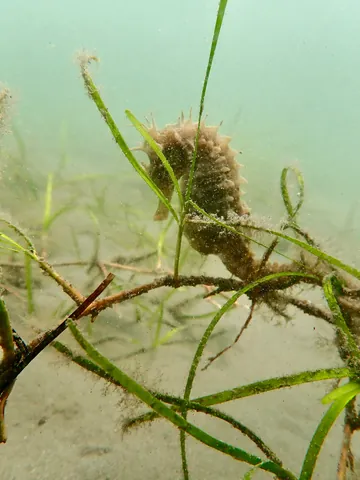
The Bigbelly Seahorse is an odd, upright little fish that spends most of its time gripping seaweed with its coiled tail, waiting for a meal to drift past.
Also known as: pot-bellied seahorse, eastern potbelly seahorse, australian pot-belly seahorse, big-bellied sea-horse, big-bellied seahorse, manaia, big-belly seahorse, potbelly seahorse
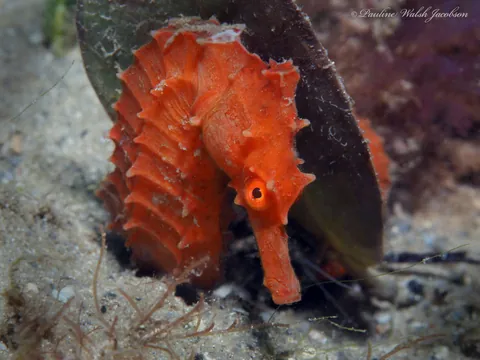
Most seahorses have a fairly flat belly; this species' swollen 'pot belly', which gives it its common name, is the easiest single feature for telling it apart from other seahorses at a glance.
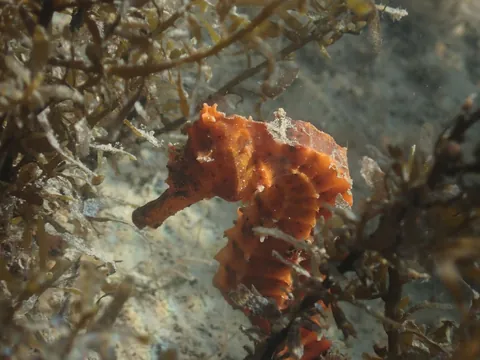
It has a forward-tilted head with a long snout, a swollen, rounded 'pot belly', and a long, coiled tail used for gripping. Colour ranges from yellow to brown to white, and it can shift shade to blend in with its surroundings. It swims upright using its dorsal fin, and each eye can move on its own, so it can watch for food and danger at the same time. Males have a smooth, soft pouch at the base of the belly where it meets the tail; females instead have a more pointed belly with an obvious fin at its base.
This species lives in shallow waters around southeastern Australia and New Zealand, including large rock pools exposed at low tide, usually less than 50 m deep but recorded as deep as 104 m. It favours areas with plenty of seaweed or other growth, staying still among it to ambush passing prey, and in deeper water it also attaches to sponges, hydroids, and jetty piles.
The Bigbelly Seahorse is mostly active at night and feeds almost constantly, since it has no stomach and can only take in small amounts at a time. It sucks prey in through its tube-like snout with a quick flick of the head, and its bony body plates make it an awkward mouthful for most predators.
It feeds on small crustaceans living among seaweed, mainly amphipods, small shrimp, and mysids, sucked up whole through its snout. Diet shifts a little with the seasons and with the seahorse's size, since smaller ones eat proportionally more amphipods.
As with other seahorses, the male carries the fertilised eggs in a brood pouch under his tail until they hatch. Breeding can start at around a year old in the wild and continues year-round, peaking in the warmer months. Courtship is a long display of colour changes, pouch inflation, and swimming together as a pair before mating.
This is the largest seahorse species found in southeastern Australia.
Describe what you saw and we name it, then keep every species you find in your Oceandex.