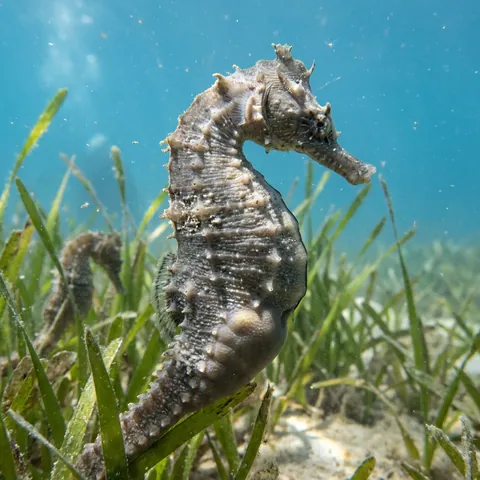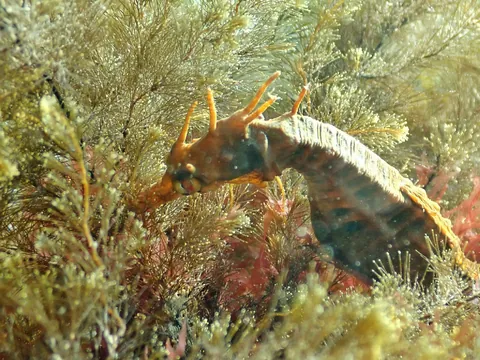
Bigbelly Seahorse
Hippocampus abdominalis
Hippocampus reidi
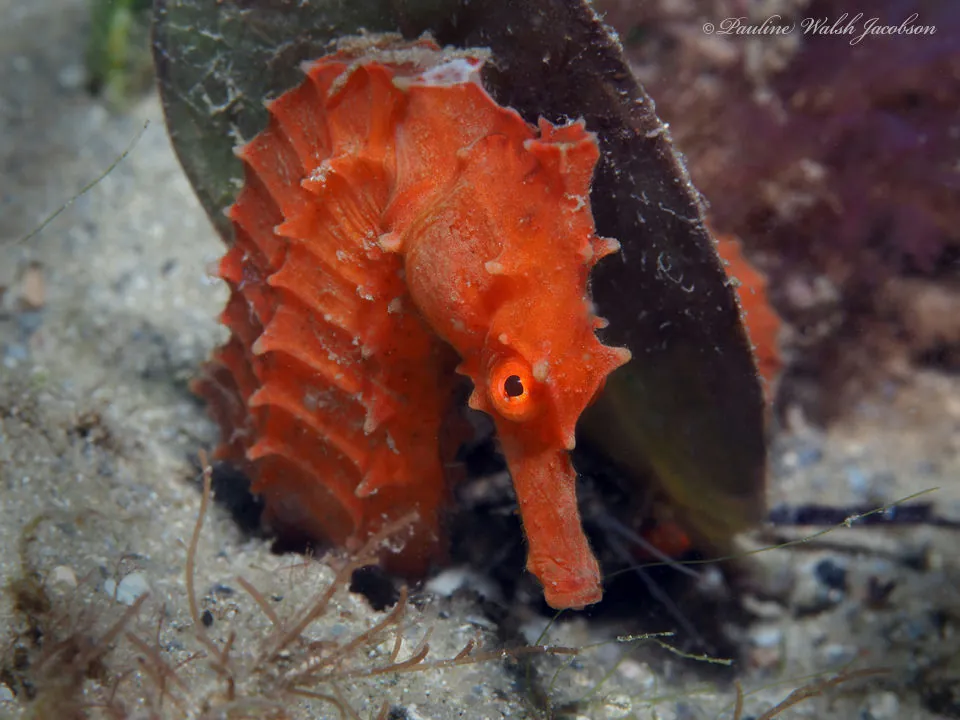
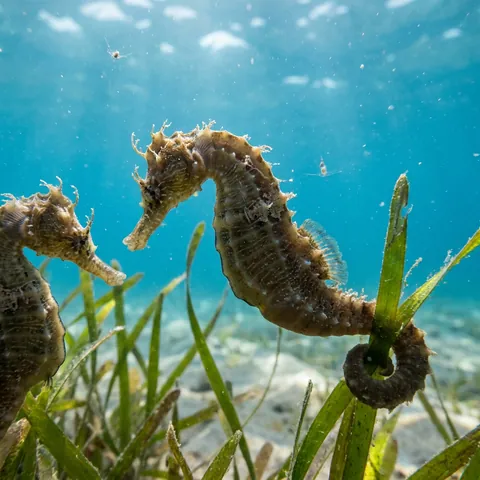
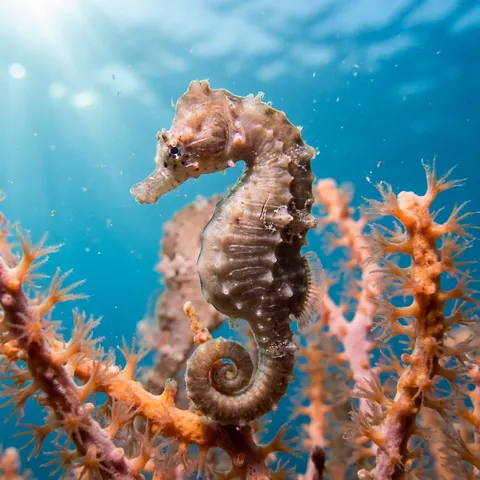
The longsnout seahorse is a slim seahorse of the tropical and subtropical Atlantic, named for its long, thin snout. It clings to gorgonian sea fans and seagrass with its tail.
Also known as: slender seahorse
Many seahorses change colour with mood or courtship, so colour alone will not confirm this species. Instead, check the coronet: its crumpled, papery texture is more irregular than the smoother crest of most other seahorses.
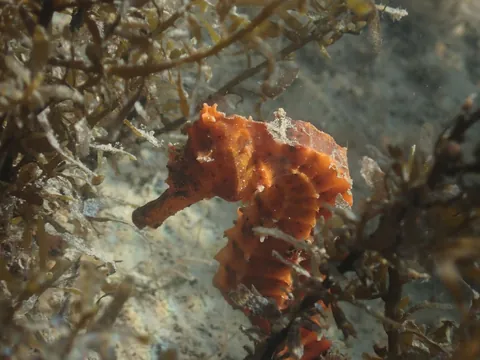
This seahorse has a narrow body and a long, thick snout. Males are usually orange and females yellow, though both sexes often carry scattered brown or white spots, along with tiny white dots that stand out on the tail. Some individuals show paler bands across the back. The crest on top of the head, called the coronet, is low to medium in height, rounded, and can look crumpled, like a piece of scrunched paper.
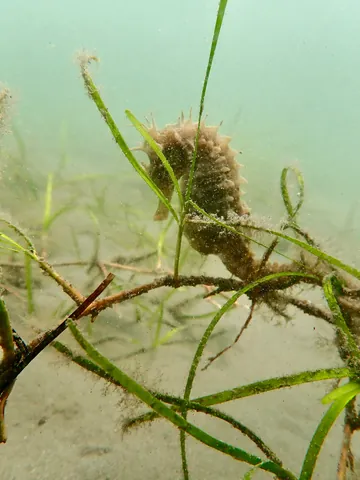
Lives on coral reefs and seagrass beds, holding onto gorgonian sea fans, seagrass, mangrove roots or floating Sargassum weed, and sometimes swims freely in open water. It is found across the tropical and subtropical western Atlantic, from shallow water down to about 55 metres.
In Brazil, an estimated 25 million longsnout seahorses are collected from the wild every year for the wildlife trade.
Describe what you saw and we name it, then keep every species you find in your Oceandex.