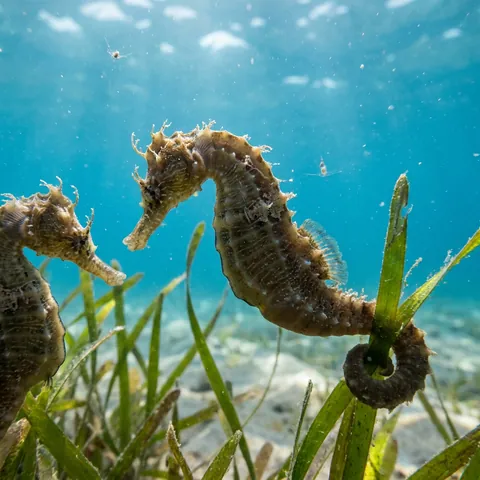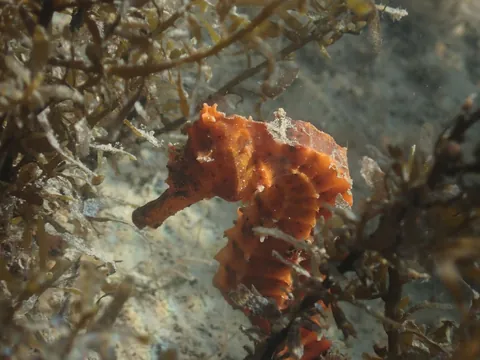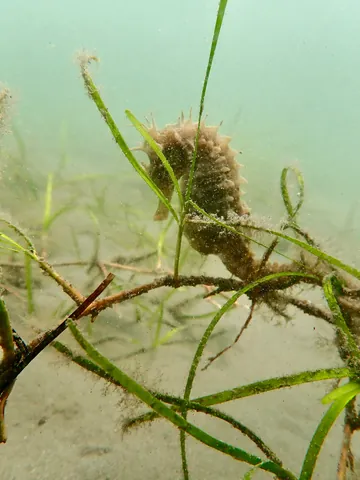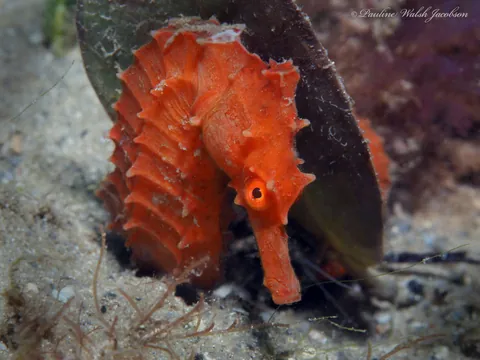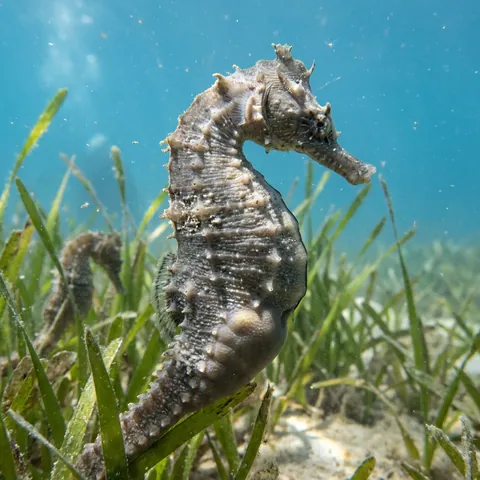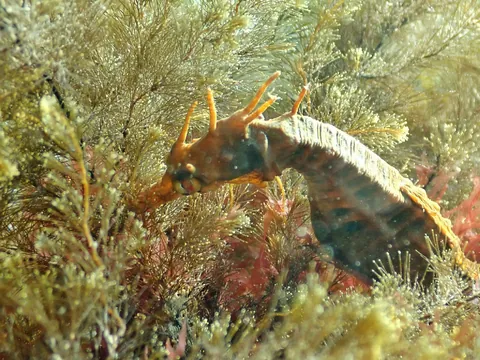
Bigbelly Seahorse
Hippocampus abdominalis
Hippocampus denise
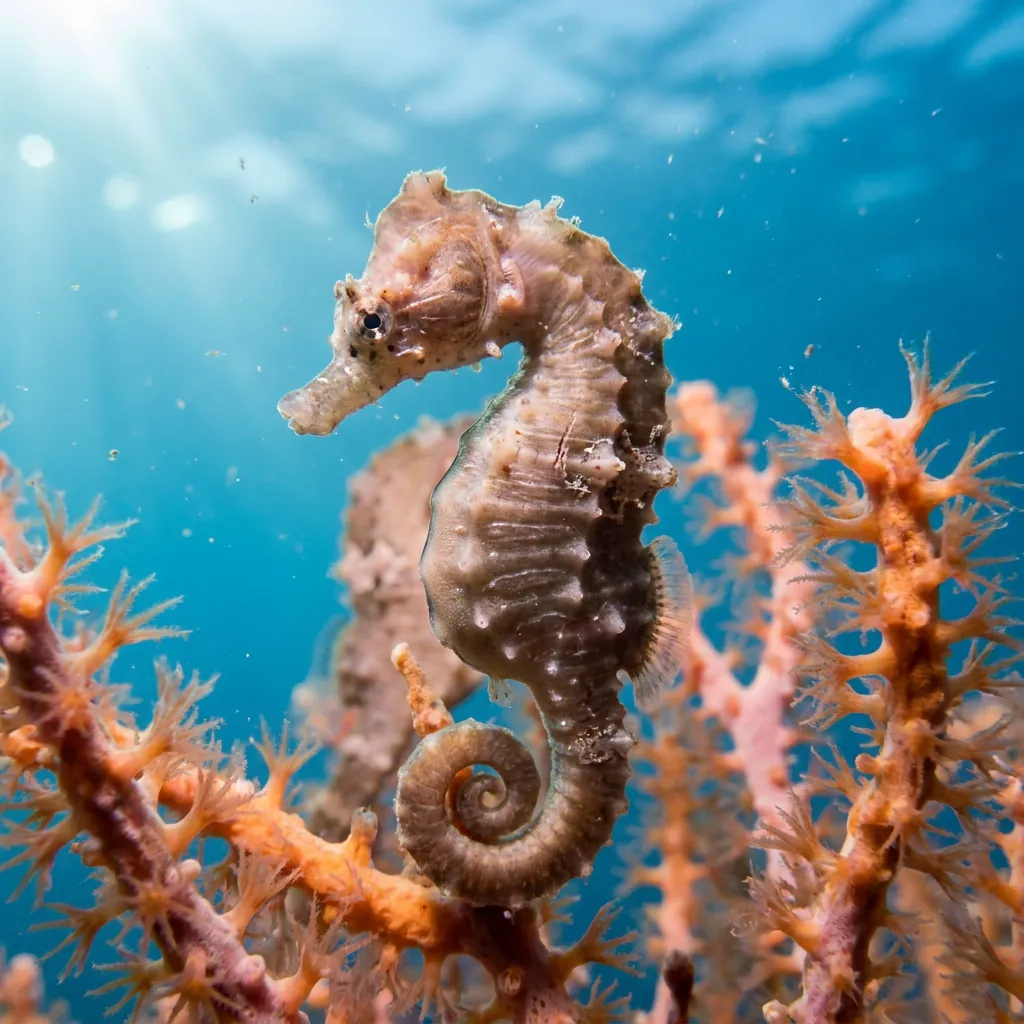
Denise's pygmy seahorse is a tiny, well-hidden fish that spends its whole life on a single gorgonian sea fan. Finding one takes a sharp eye, since it blends almost perfectly into its host.
It is easily confused with Bargibant's pygmy seahorse, which shares the same gorgonian habitat. Denise's has fewer and smaller polyp-like bumps on its skin, giving it a smoother look.
This is one of the smallest seahorses, with a short snout and a slender body ending in a gripping tail. Its skin is smooth or dotted with small, polyp-like bumps, fewer and less obvious than on Bargibant's pygmy seahorse. Colour ranges from yellow to orange, often with small dark spots and darker rings around the tail.
Found on gorgonian sea fans on reefs across the western Pacific, at depths from 13 to 90 m. It lives its whole life attached to one fan, matching its colour and texture to its host.
This seahorse changes colour to match the gorgonian it lives on, one of the best camouflage tricks among reef fish. It feeds on small crustaceans and other tiny drifting animals. Males carry the fertilised eggs in a pouch under the tail until the young are ready to be born.
Listed as Least Concern, though this small, well-camouflaged seahorse is easy to overlook, so solid population data is limited. Trade in the species is controlled under CITES.
A male gives birth to just 6 to 7 pups at a time, but can go through four such pregnancies back to back, each lasting about 11 days.
Describe what you saw and we name it, then keep every species you find in your Oceandex.