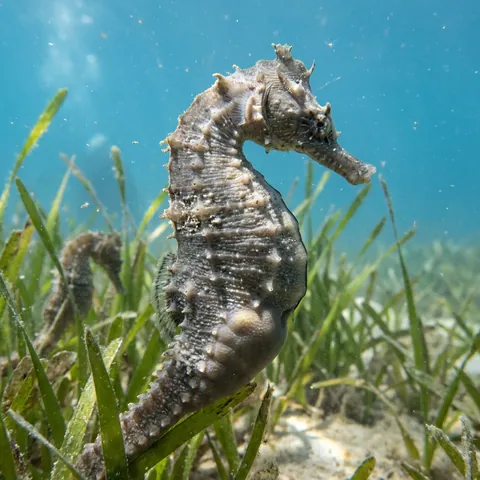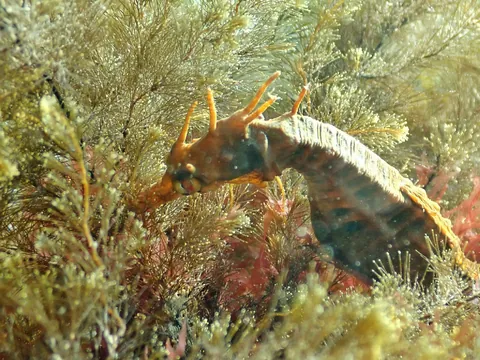
Bigbelly Seahorse
Hippocampus abdominalis
Hippocampus hippocampus
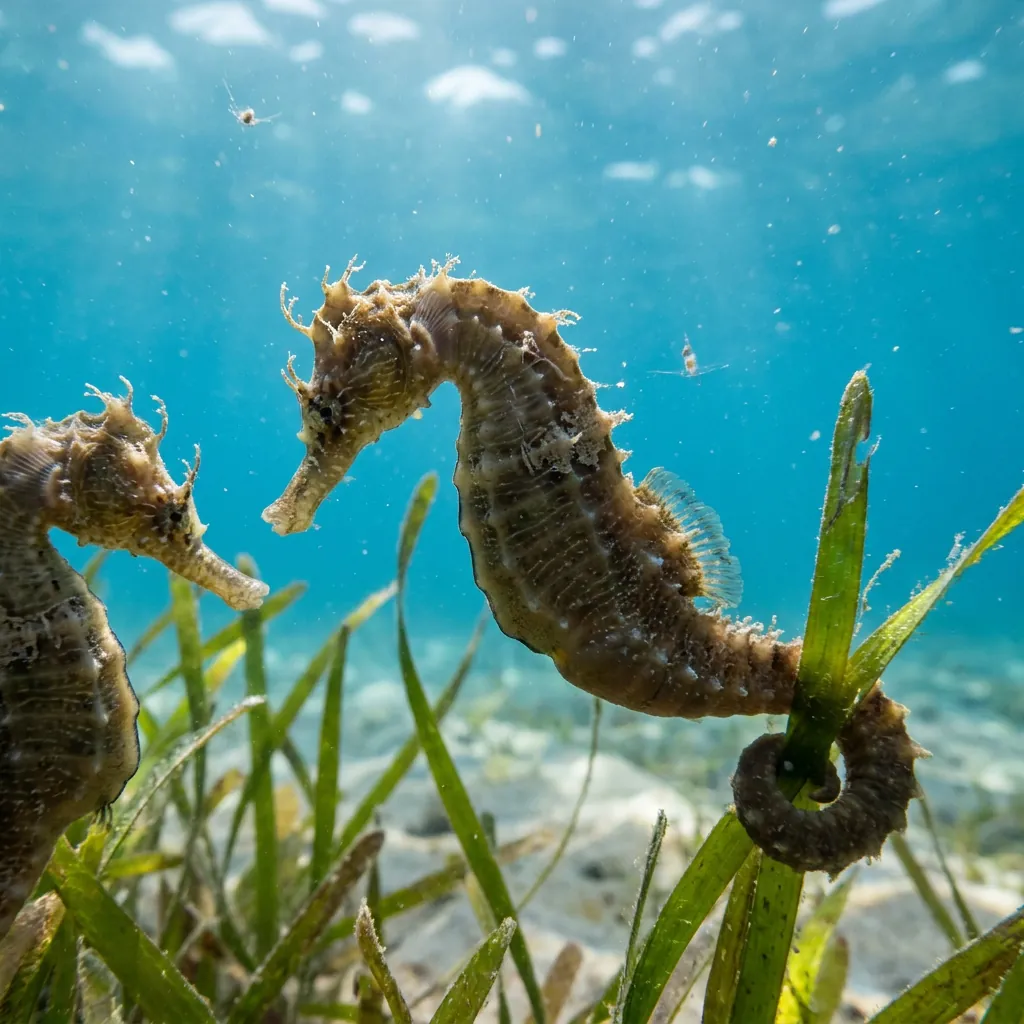
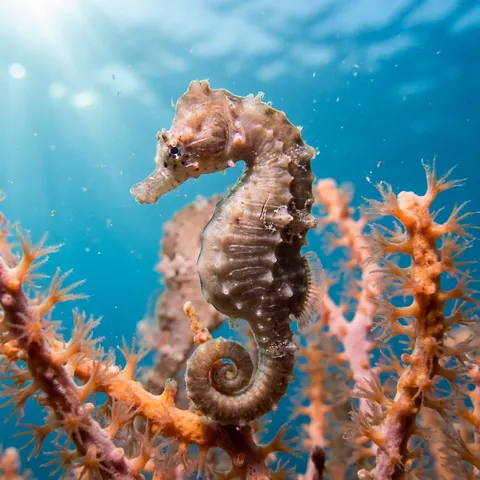
The common seahorse is a small, upright-swimming fish that spends most of its life gripped tightly to a single spot. It grows to about 15 cm and lives along rocky and weedy shallows of the northeastern Atlantic and Mediterranean.
Also known as: hippocampus hippocampus, sea horse, sea-horse, short snouted seahorse, short-snouted seahorse
It shares these waters with the long-snouted seahorse, which looks very similar at a glance. The giveaway is the snout: this species' snout is short, only about a third of its head length, while the long-snouted seahorse's snout is clearly longer.
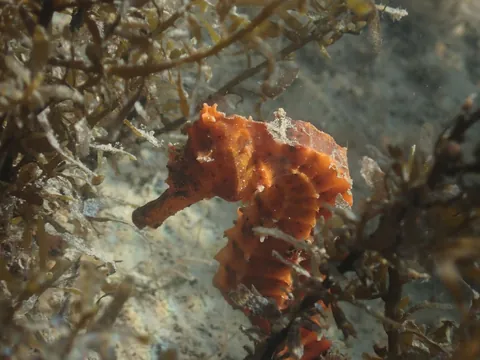
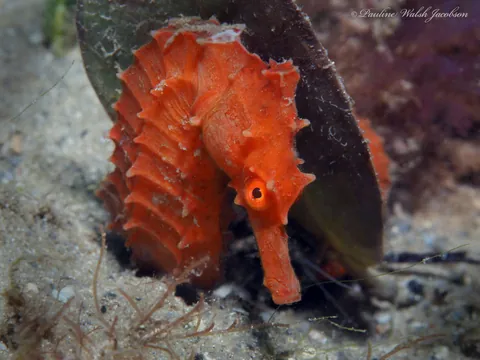
It has a short, upturned snout and a distinct spine above each eye. Bony knobs along its body rings give it an angular, knuckled look. Colour varies between black, purple, orange and brown, and its tail is stiff but can curl forward slightly, letting it anchor around coral or seagrass.
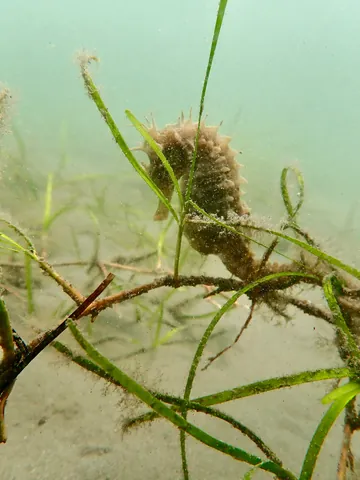
It lives among rocks, seaweed and the edges of seagrass beds in shallow, often muddy water, down to about 60 m. Its range runs from Scotland and the Netherlands south to Senegal, including the Mediterranean, the Azores, Madeira and the Canary Islands. It rarely moves far, though storms can sweep it along, and it often shifts into deeper water for the winter.
The common seahorse is an ambush hunter, staying still until small live prey drifts within reach before snapping it up. It has no teeth or stomach, so it sucks prey straight in through its snout and food passes through it quickly.
As with other seahorses, the female places her eggs into a pouch on the male's belly, and he carries and gives birth to the young. Paired males and females stay faithful to one another, confirming the bond with daily greetings.
harmless to humans
This species is currently data deficient, meaning there is not enough information to judge how at risk it is. It is caught as bycatch across parts of its range and is sometimes collected live for the aquarium trade, and all seahorses, including this one, are regulated under international trade rules.
Rival male common seahorses fight for territory by flicking their snouts at each other or locking tails and wrestling, until the loser darkens in colour and goes limp in submission.
Describe what you saw and we name it, then keep every species you find in your Oceandex.