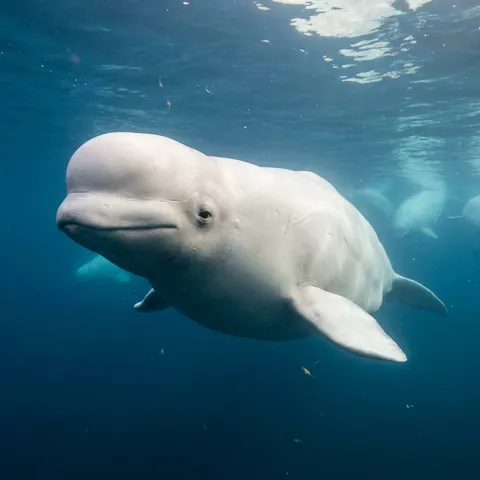
Beluga Whale
Delphinapterus leucas
whales
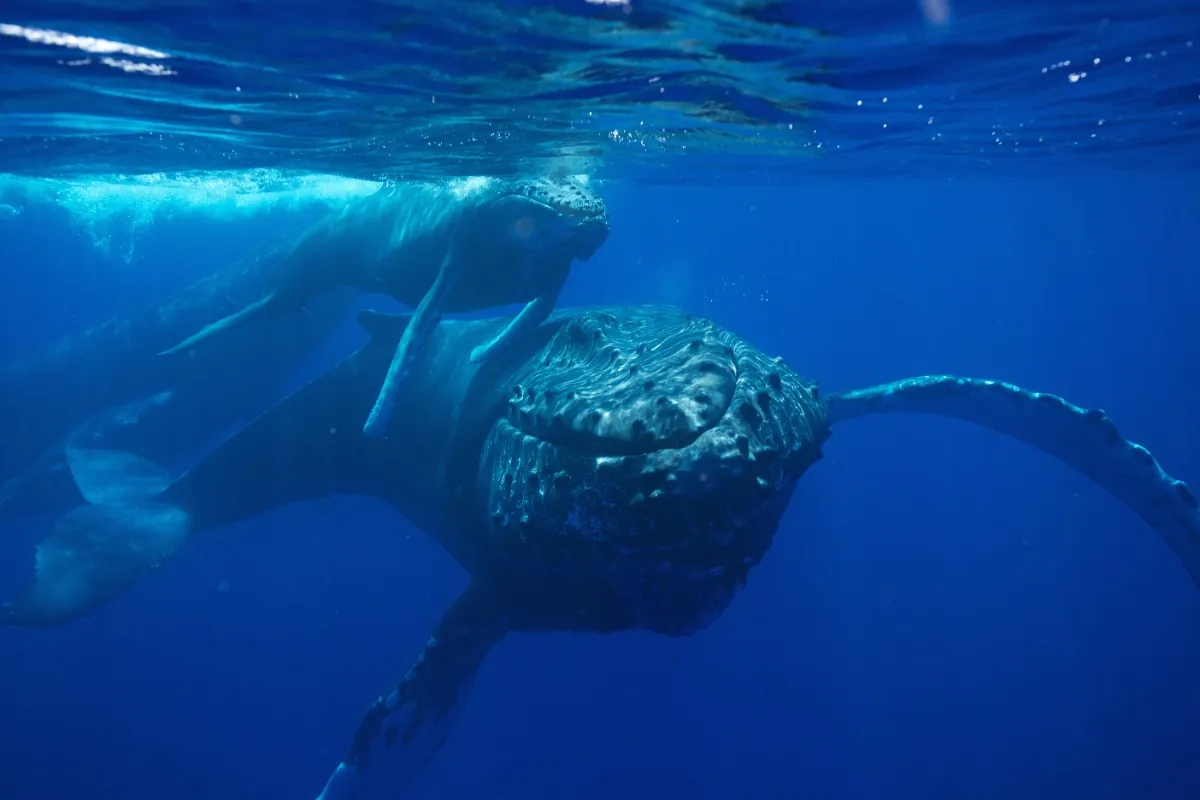
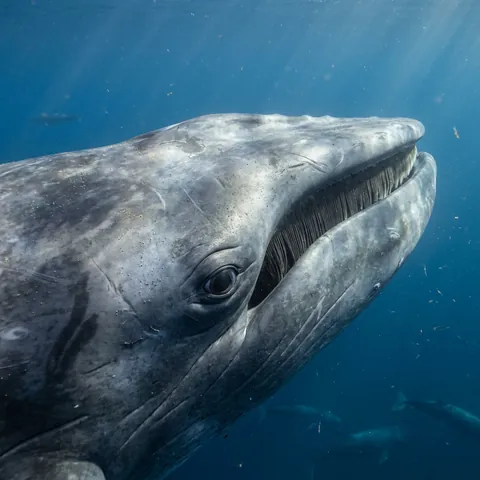
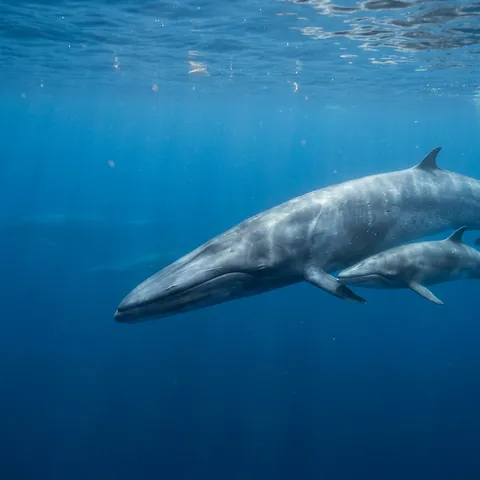
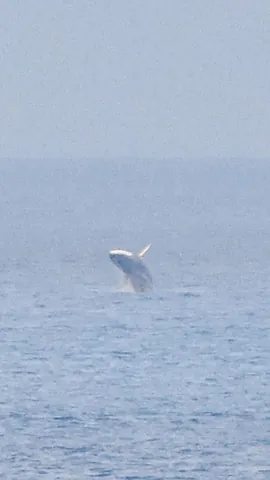
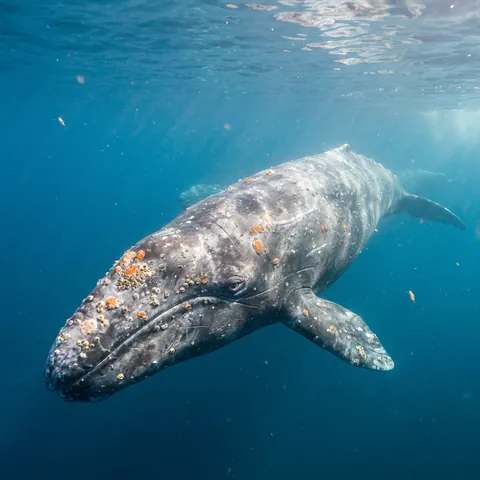
Whales are huge, air-breathing sea mammals with a torpedo-shaped body and a large tail fin. In this app the group includes the Humpback Whale, the Sperm Whale, and the Blue Whale.
Whales are most often confused with dolphins and porpoises, their closest living relatives, and in this app dolphins are listed as a separate group. Members are mostly told apart by whether the mouth has teeth or a comb-like baleen for filtering food, and by dorsal fin shape and body size.
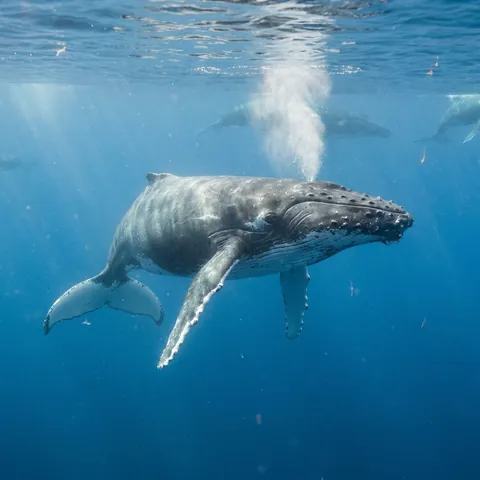
A whale has a long, streamlined body, flippers instead of front legs, and a wide tail fin. It has no visible ear flaps and cannot turn its head, because its neck bones are fused. Size ranges from around 2.6 metres up to the blue whale, the largest animal on Earth at up to 34 metres.
Whales live in open ocean worldwide, from the surface down to great depths. They are strong divers and can slow their heart rate to stay underwater for long periods.
Whales are fast, strong swimmers that move by pushing their tail fin up and down, while their flippers are mainly used for steering. Most hunt alone, but some species team up in small groups when there is plenty of food.
Toothed whales mostly eat fish and squid, and sometimes crustaceans. Baleen whales mostly filter krill and other plankton from the water using comb-like plates in their mouth, though a few, like the grey whale, feed on small animals on the seabed.
Whales feed at depth but release waste near the surface, moving huge amounts of nutrients upward. In the Gulf of Maine alone, this adds more nitrogen to the surface water each year than all the rivers combined.
Describe what you saw and we name it, then keep every species you find in your Oceandex.