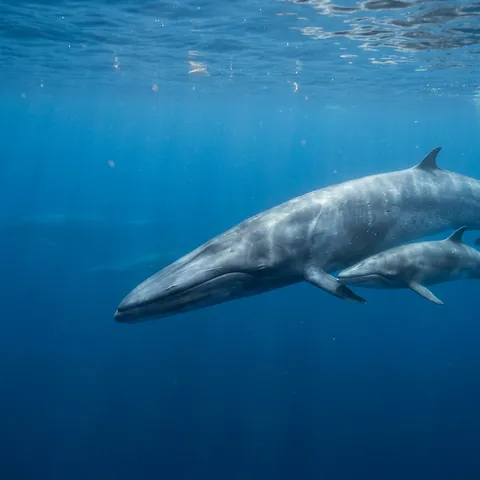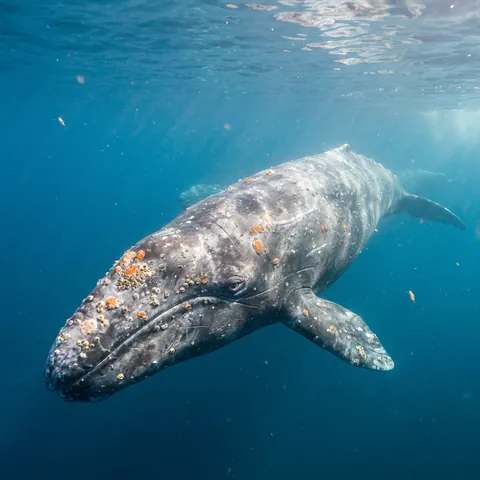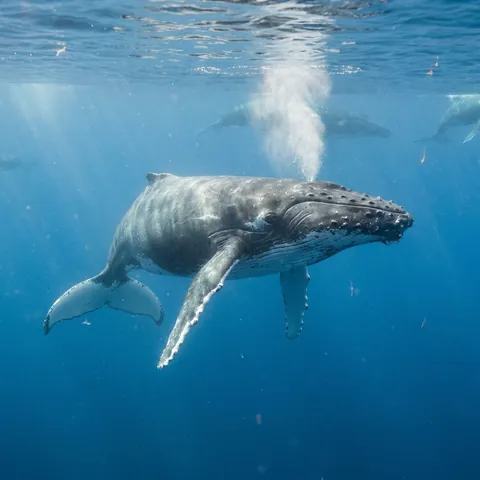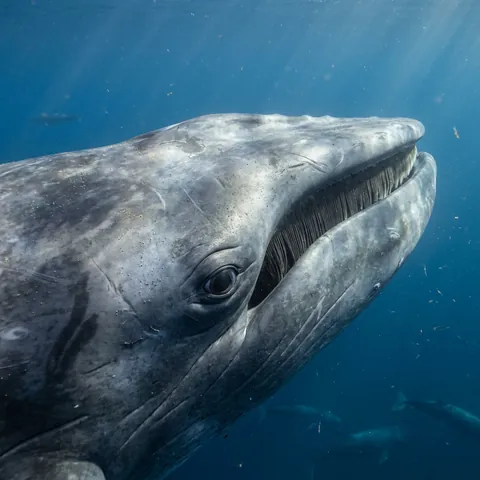
Blue Whale
Balaenoptera musculus
Delphinapterus leucas
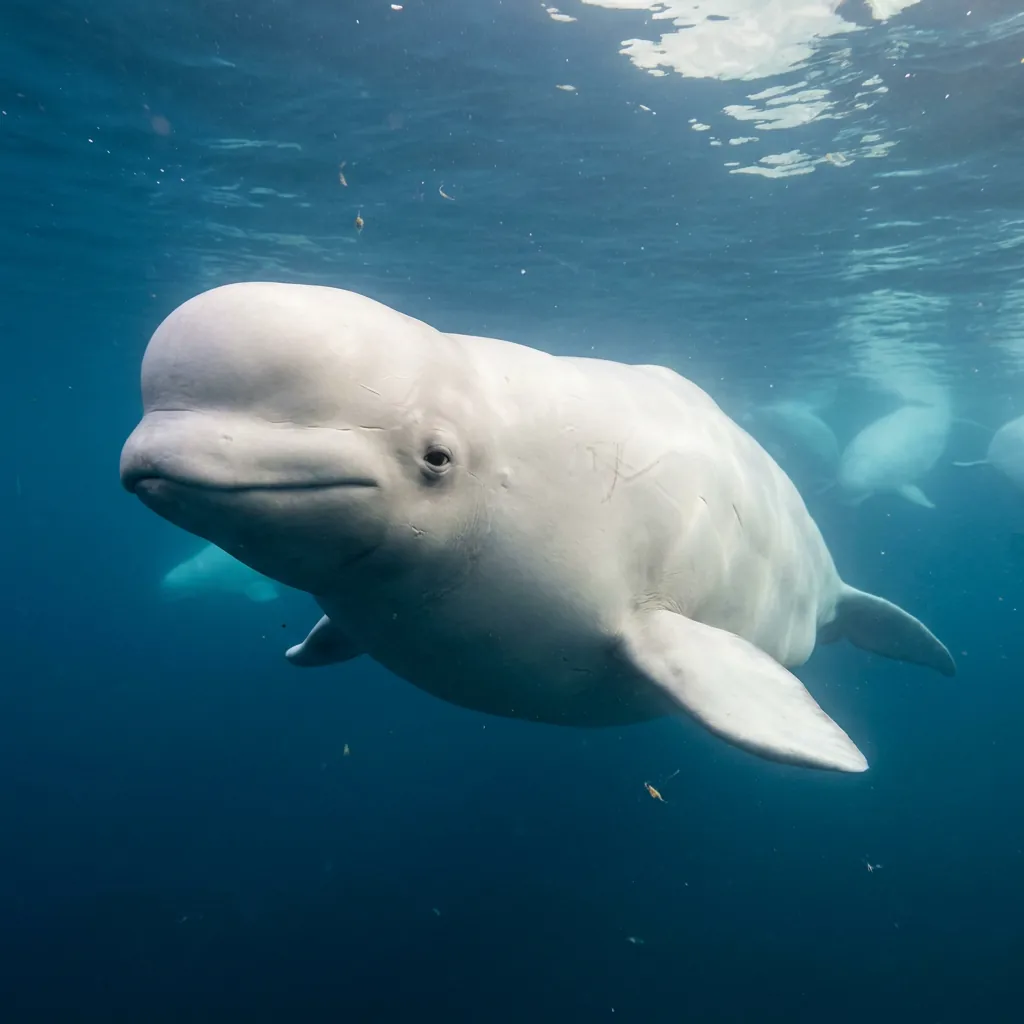
The beluga is one of the most easily recognised whales in the Arctic, known for its round body and its odd, flexible neck. It grows to a common length of about 430 cm, with the largest reaching 550 cm.
Also known as: beluga, belukha, béluga, delphinapterus leucas
This 'shouldered' shape behind the head, described above, is unique among whales. It alone rules out confusion with narwhals or any other whale sharing the beluga's Arctic waters.
The beluga has a round, muscular body that tapers at both ends. Just behind the head, the body narrows sharply, giving the impression of shoulders. Its neck bones are not fused together, so it can turn and nod its head, unlike most whales.
Belugas live across the Arctic and sub-Arctic, from the coasts of Alaska and northern Canada to Greenland and Russia. In summer they gather in shallow coastal water, river estuaries, fjords, and bays. Some populations range far south, including the St. Lawrence River and the Sea of Okhotsk.
Belugas swim more slowly than dolphins and killer whales, since they are less streamlined and get less thrust from their tail. Unlike most whales, they can swim backwards, and they rarely leap clear of the water. They dive far deeper than most divers will ever see, with dives recorded to as much as 862 m. Belugas are highly social, travelling in pods of two to 25 that often mix mothers, calves, and males. They sometimes hunt together in coordinated groups.
Belugas are opportunistic hunters that feed mainly on fish, including Arctic cod, herring, capelin, smelt, and salmon, along with shrimp. What they eat depends on where and when they are feeding, and most feeding happens in winter.
Males reach sexual maturity between nine and fifteen years old, females between eight and fourteen. Females typically have one calf every three years, mostly mating between February and May. Pregnancy lasts roughly twelve to fourteen months.
harmless to humans
Beluga numbers vary hugely between the 22 recognised populations. Some, like Western Hudson Bay, number in the tens of thousands, while others are small and at risk. The Southwest Greenland population is already extinct, and the Ungava Bay group may be as well.
Belugas can swim backwards, a trick most whales and dolphins cannot manage.
Describe what you saw and we name it, then keep every species you find in your Oceandex.