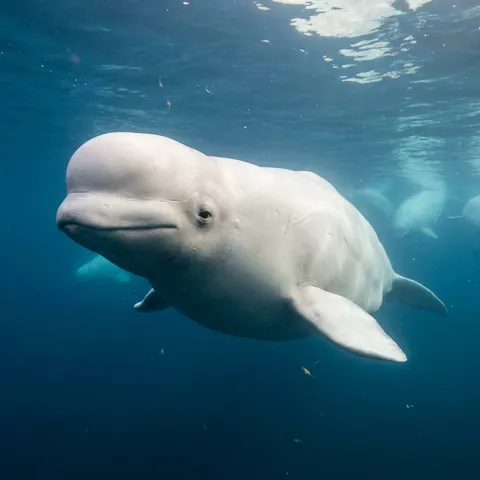
Beluga Whale
Delphinapterus leucas
Eschrichtius robustus
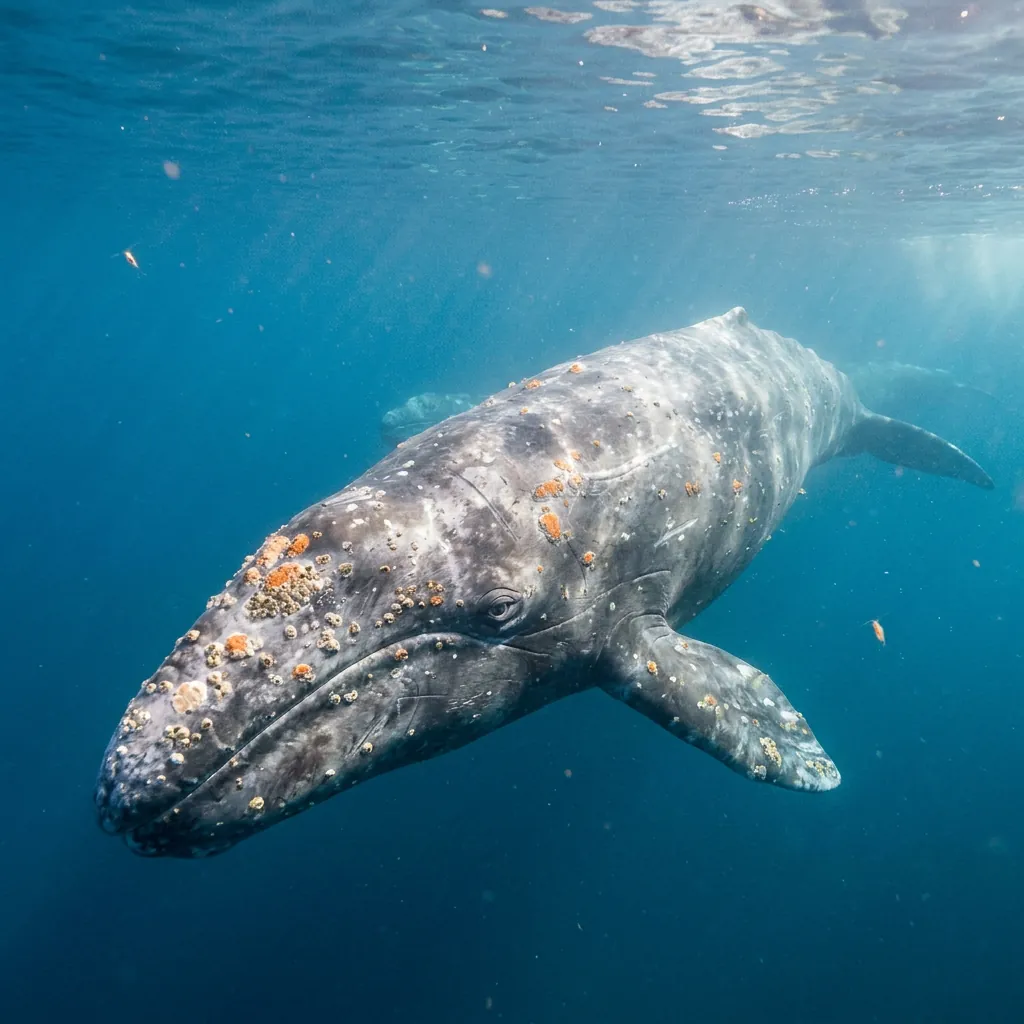
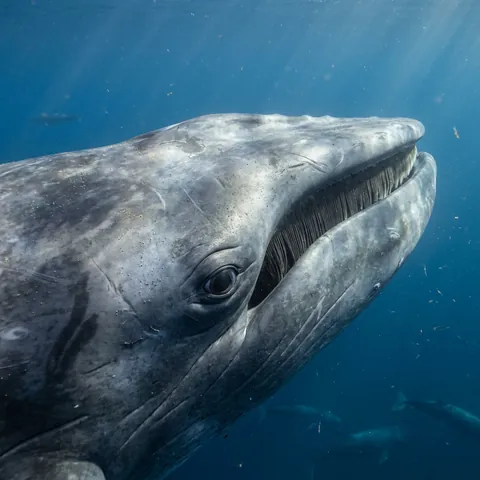
The Grey Whale is a huge baleen whale that feeds like almost no other, rolling onto its side to suck prey straight out of the sea floor. Adults can grow up to 15 m long and weigh as much as 35 tonnes.
Also known as: california gray whale, california ranger, california whale, devilfish, eschrichtius robustus, gray whale
Unlike most large whales, the Grey Whale has no dorsal fin, only a line of low knuckles along its back, which is the clearest way to rule out a rorqual or other finned whale at the surface.
Its skin is dark slate-grey and covered in pale, blotchy scars left by parasites that later drop off. It has no dorsal fin; instead, a row of knuckle-like bumps runs along the back toward the tail. Two blowholes on top of the head can produce a heart-shaped blow in calm conditions. Its baleen, the comb-like plates it feeds through, is unusually short and pale cream to blond in colour, and only a few shallow grooves run along the underside of the throat.
The Grey Whale makes the longest migration of any mammal, travelling between cold feeding grounds and warmer waters where calves are born. Its range has shifted over time, and populations that once used other regions no longer do.
It feeds mainly on small bottom-dwelling animals such as amphipods and ghost shrimp, rolling onto its side and scooping up sediment from the sea floor, then filtering the mud out through its baleen. It also feeds nearer the surface at times, skimming for crab larvae or shrimp-like mysids, and will take polychaete worms, herring eggs, and small fish when they are available.
Males and females reach puberty around eight to nine years old on average. Females come into heat in late autumn and typically give birth every one to three years, after a pregnancy of roughly thirteen and a half months. Most calves are born in a narrow window in mid-January, entering the water tail first, and nurse for around seven months before weaning.
harmless to humans
The eastern Pacific population, which migrates between Alaska and Baja California, numbered about 27,000 in 2016 but had fallen to around 13,000 by 2025 after Arctic warming brought starvation and a sharp drop in successful births. A separate, much smaller western Pacific population nearly disappeared but has been growing again since around 2018. A once-resident North Atlantic population was hunted to extinction centuries ago.
The Grey Whale makes the longest migration of any mammal on Earth.
Describe what you saw and we name it, then keep every species you find in your Oceandex.