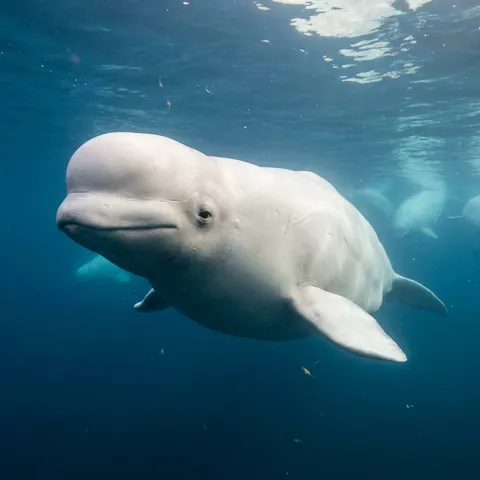
Beluga Whale
Delphinapterus leucas
Balaenoptera physalus
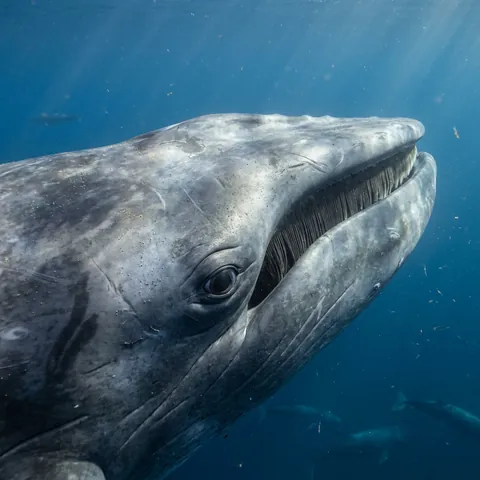
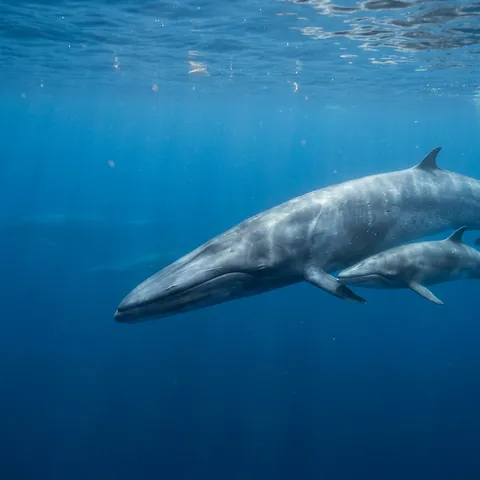
The fin whale is the second-longest animal in the ocean after the blue whale, reaching up to 27 m, yet it moves with a speed that seems impossible for something so massive. Divers lucky enough to see one usually see it passing, not lingering, since this whale rarely stays still for long.
Also known as: finback whale, common rorqual, finback, fin-backed whale, finner, herring whale, razorback, common finback, finfish, gibbar, razorback whale, common roqualor fin whale
This whale has a long, slender body that is brownish-grey above and noticeably paler underneath. That pale underside is a form of countershading, a colour pattern that makes the whale harder to spot from below against the bright surface.
Fin whales are found in every major ocean, from polar edges to the tropics, though they avoid water right up against the polar ice pack. They gather in the highest numbers in temperate and cool waters, and can dive to at least 230 m.
Fin whales often travel in small groups, keeping in contact with low, rumbling calls. They are among the fastest of all cetaceans, able to sustain a pace that few other whales can match. Mating takes place in winter, in warmer, low-latitude waters.
This whale is a filter feeder. It gulps in water containing small schooling fish, squid, and crustaceans such as copepods and krill, then strains the food out as the water passes back out through its baleen plates.
Fin whales were heavily hunted through the 20th century and are still recovering. Today they also face threats from ship strikes, entanglement in fishing gear, and disturbance from underwater noise such as military sonar and whale-watching traffic.
Fin whales sometimes interbreed with blue whales, the only larger whale in the ocean. Hybrid calves with traits of both species have been documented in the wild, something not known to happen between most other whale species.
Describe what you saw and we name it, then keep every species you find in your Oceandex.