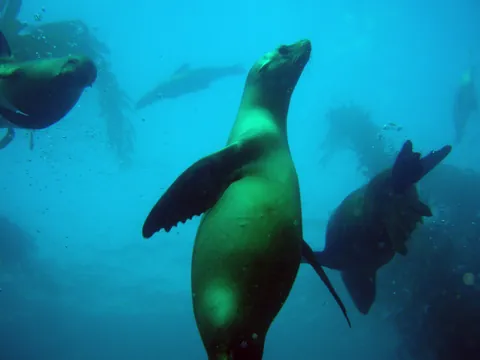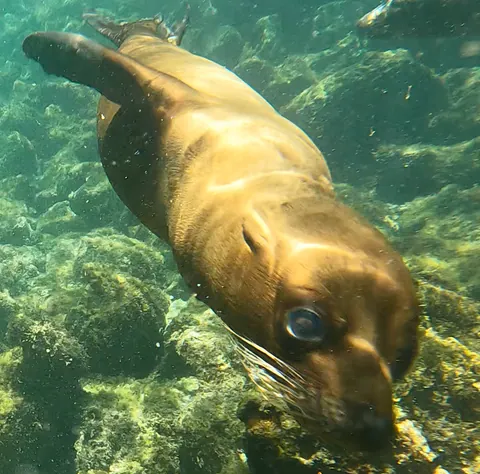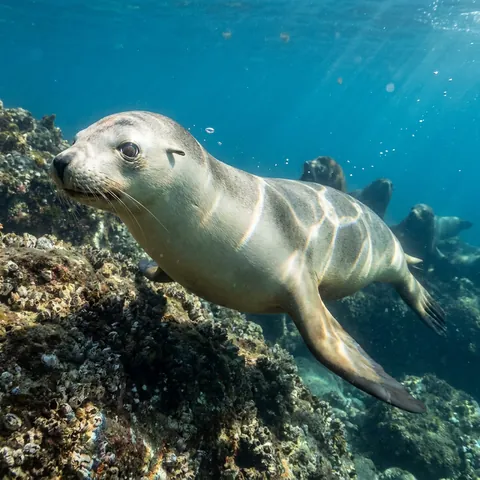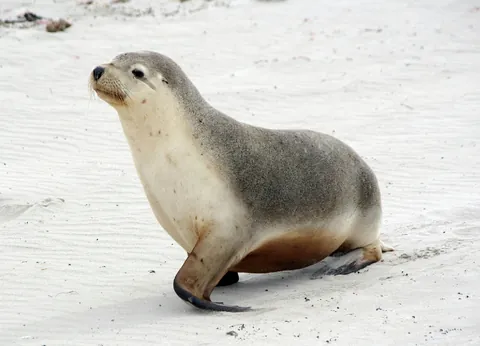
Australian Sea Lion
Neophoca cinerea
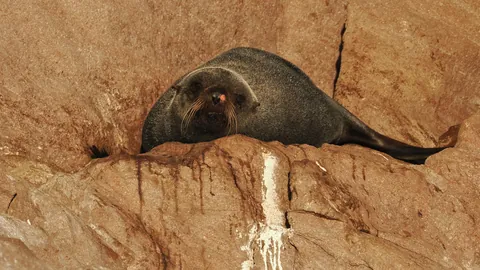
Arctocephalus tropicalis
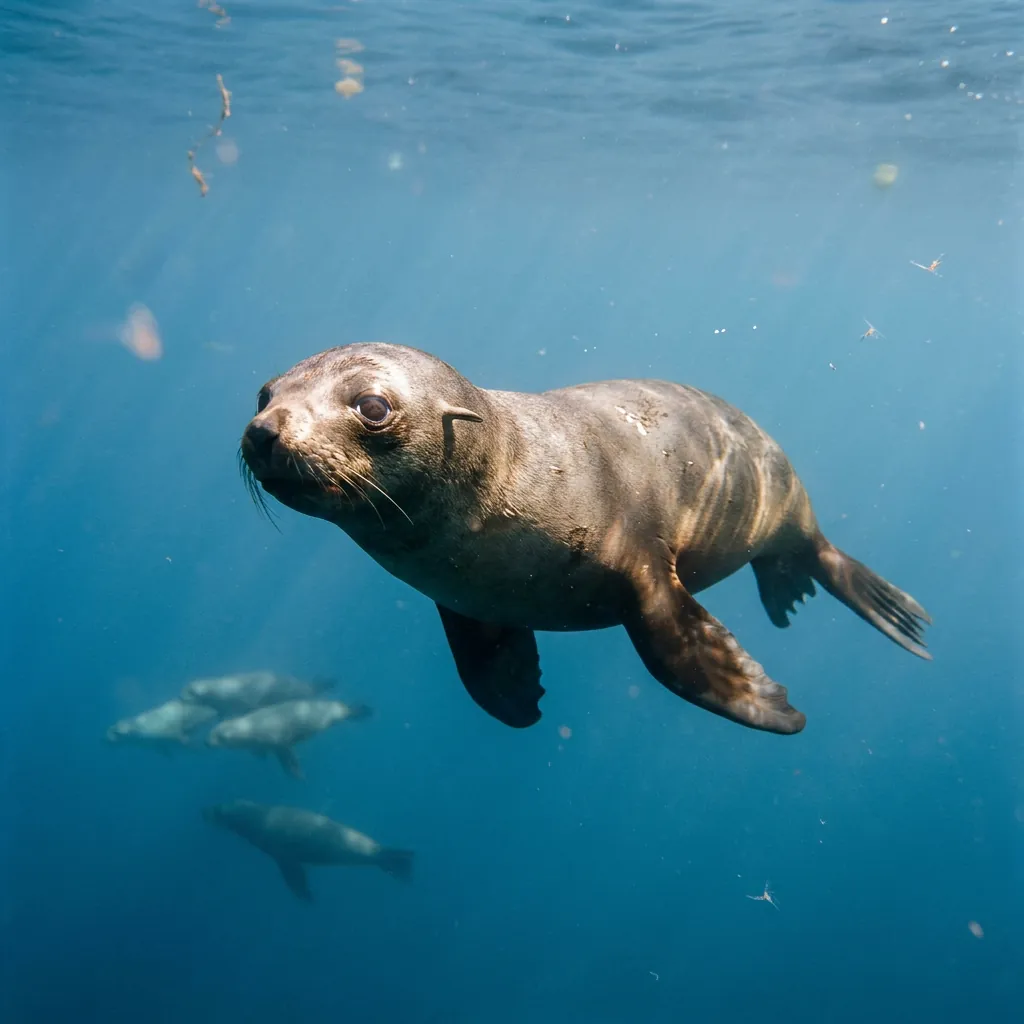
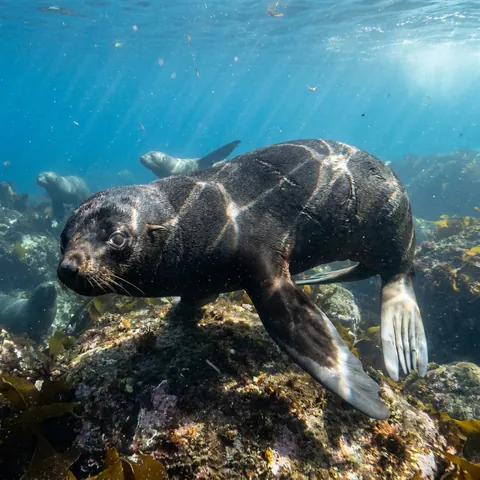
The subantarctic fur seal roams huge distances across the southern oceans, with wandering males sometimes turning up thousands of kilometres from home. It can grow to 180 cm and weigh up to 165 kg, with males far larger than females.
Also known as: amsterdam island fur seal
It shares breeding grounds with the similar Antarctic fur seal. Look for the lighter, orange colouring on the chest, which the Antarctic fur seal lacks.
Its chest and face are a warm creamy-orange, fading to a more brownish tone on the belly. Males have a dark grey to black back, while females are a lighter grey all over. Males also carry a tuft of dark hair on top of the head, which stands up when they are excited. The snout is short and flat, and the flippers are short and broad. Pups are born black and moult to a lighter coat at about three months old.
This seal breeds and lives across the southern Indian, Pacific, and Atlantic Oceans, generally in milder waters than the Antarctic fur seal further south. The largest colonies are on Gough Island and Île Amsterdam, with more breeding grounds on Marion Island, the Crozet Islands, and Macquarie Island.
Pups stay at the rookery for about 11 months while nursing, and adults moult their coat each year between March and May. Unlike most fur seals, this species sometimes travels extraordinary distances from home, with young males recorded reaching Brazil, Angola, Australia, and New Zealand, and lactating females ranging widely to find food.
It hunts mainly at night in shallow water, catching small lantern fish as they rise toward the surface, along with squid and crustaceans. It occasionally also preys on rockhopper penguins and other seabirds.
Breeding takes place from November to January, when dominant males defend a harem of 6 to 20 females and fight fiercely for mating rights. A female gives birth to a single pup and mates again 8 to 12 days later. Males may mate from about 3 to 4 years old but rarely hold a harem before age 10 or 11, while females mature around age 5.
In 2015, a young male was found off the coast of Kenya, more than 6,400 km from home, the furthest north this species has ever been recorded.
Describe what you saw and we name it, then keep every species you find in your Oceandex.