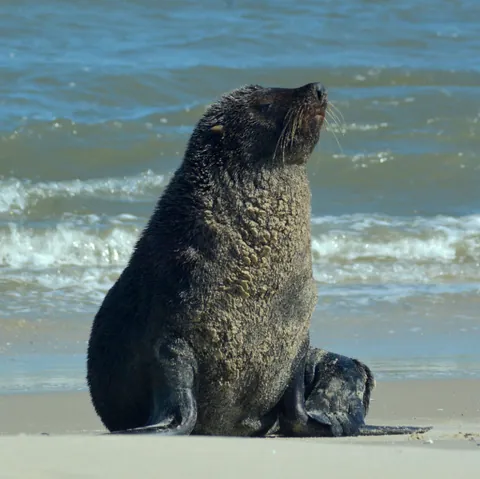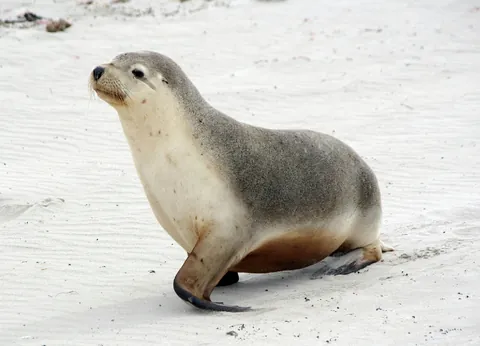
Australian Sea Lion
Neophoca cinerea
Zalophus californianus
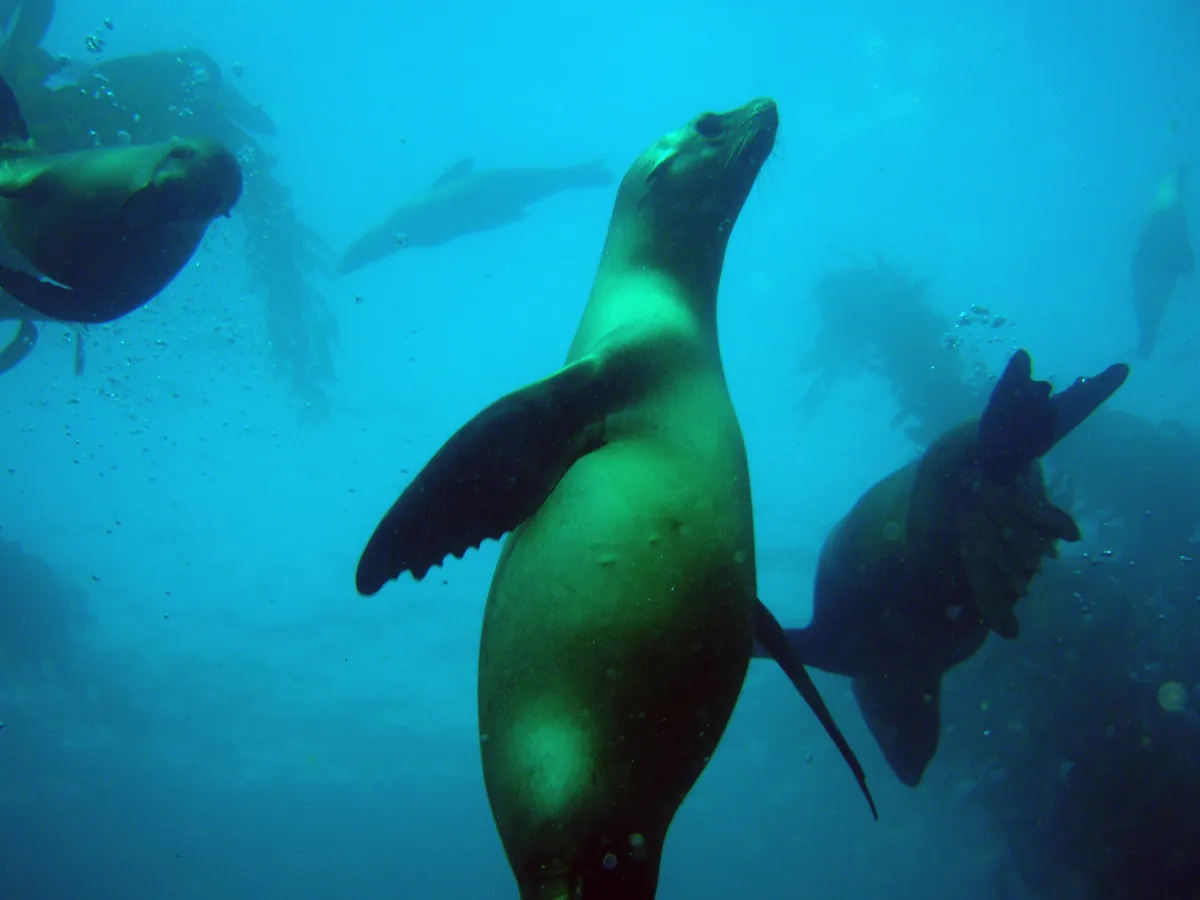
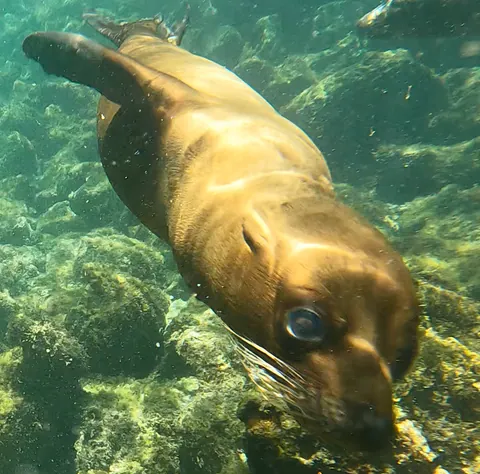
Playful, noisy, and quick to check out divers, the California sea lion is one of the most curious animals you can meet underwater. It grows up to 240 cm long and can weigh as much as 390 kg, with males much bigger than females.
Also known as: california sealion, californian sea lion, le 6 n marino de california, zalophus californianus, zalophus californianus (lesson, 1828)
Males can be mistaken for the larger Steller sea lion. The quickest check is the mane: this species' mane is far less bushy, so a thick, shaggy mane points to a Steller instead.
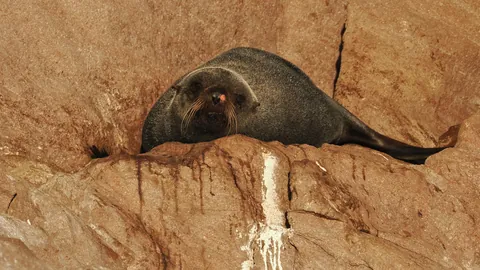
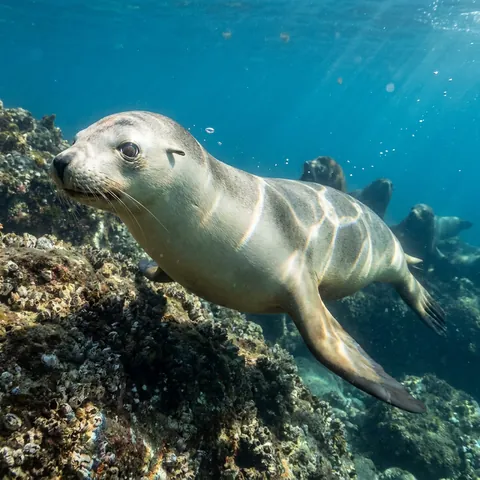
Females and young sea lions have tawny brown fur, while adult males range from light brown to almost black. Both sexes have a long, narrow muzzle. Adult males build thick necks and shoulders, topped by a high, domed forehead tufted with white hair. They also grow a mane, though it is less bushy than in some other sea lion species.
It lives along the western coast of North America, from southeast Alaska down to central Mexico. It comes ashore, called hauling out, on rocky and sandy shores and islands to rest and breed.
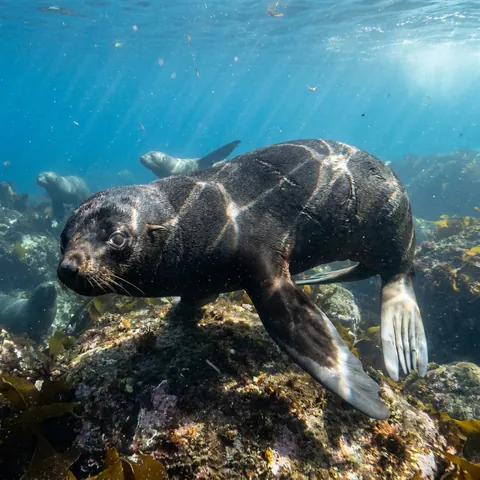
It swims by stroking with its long foreflippers, gliding between strokes. It can bend its neck back far enough to touch its hind flippers when turning. On land it turns its hind flippers forward and walks on all fours. It typically dives to about 80 m for under three minutes, though it can reach 274 m and stay down for close to ten minutes. Orcas and large sharks hunt it.
It eats mostly squid, octopus, and fish such as anchovy, herring, and rockfish, foraging near the coast, over the continental shelf, and around seamounts. It may hunt alone or in groups, and sometimes follows dolphins to take advantage of their hunting.
Outside the breeding season, males travel north to feed while females stay closer to the breeding grounds. A sea lion can remain at sea for up to two weeks, diving again and again with short rests at the surface between dives.
This species is listed as Least Concern, with a large population along the US and Mexican coasts. Some regional groups, such as those in the Gulf of California, have declined, and sea lions are still killed in conflicts with fishermen, caught in marine debris, and exposed to pollutants that build up in their food.
A California sea lion named Ronan was recorded bobbing her head in time with music. Scientists call this skill rhythmic entrainment. Before Ronan, it had only been seen in humans and a few birds that copy sounds.
Describe what you saw and we name it, then keep every species you find in your Oceandex.