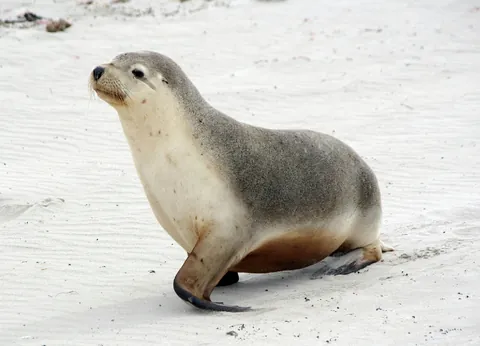
Australian Sea Lion
Neophoca cinerea
Callorhinus ursinus
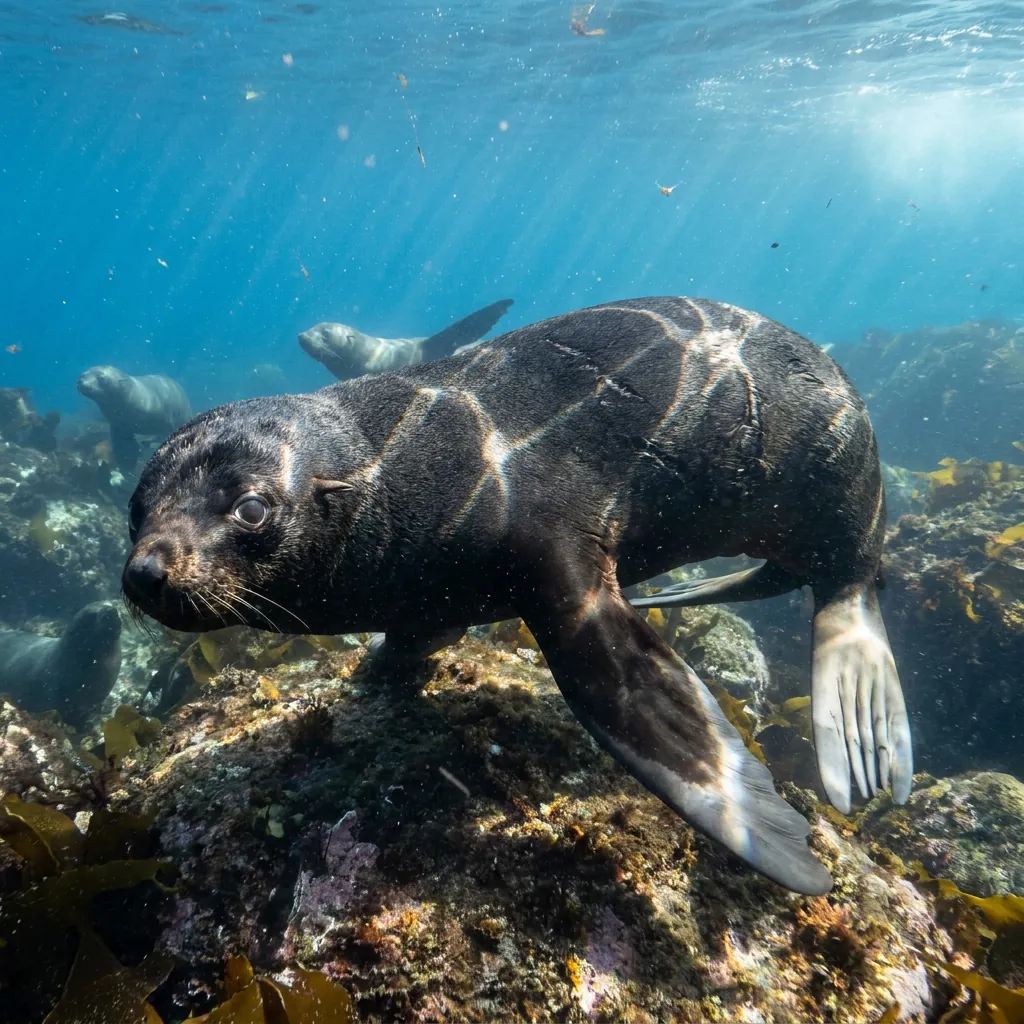
The northern fur seal is a fast, sleek swimmer of the cold North Pacific, built for long dives and even longer migrations. It can grow up to 210 cm, though males dwarf females by a wide margin.
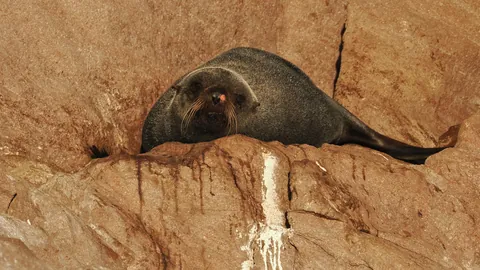
Its range overlaps with the much bigger Steller sea lion and, in California, slightly with the Guadalupe fur seal. Look for the northern fur seal's short, snub muzzle and long, obvious ear flaps on a comparatively small, dense-furred body.
Males and females look strikingly different in size, with males far bigger and heavier. Both have a short, down-curved muzzle and a small nose, giving the head a foreshortened look. Thick fur covers the body, and a paler underfur shows through when the coat is wet. The ear flaps are long and easy to see, unlike in true seals. Long, dark or white whiskers often reach past the ears, and the eyes are large, especially in females and young animals. Adult males grow a thick, maned neck and shoulders covered in coarse, longer hair.
Northern fur seals live in the cold waters of the north Pacific, from Japan across to Baja California, and through the Sea of Okhotsk and the Bering Sea. Most come ashore only to breed, gathering in dense colonies on remote rocky islands. Outside the breeding season they range far out to sea, often moving south for winter.
Older males arrive at breeding colonies first and fight for the best space on the rocks, then fast for weeks while guarding it. Females arrive later and give birth soon after. Males hold and defend groups of females, and fights between rival males can turn violent. Mothers stay close to their pups at first, then leave on foraging trips that grow longer as the pup ages, feeding on fish and squid mostly at night. Most animals leave the colony and head out to sea toward the end of the season.
The northern fur seal is listed as vulnerable. Pup numbers at its largest colony have been falling for decades, and possible causes include predation, competition with fisheries, and a changing climate, though no single cause has been confirmed.
On its front flippers, the fur stops in a sharp, clean line at the wrist, leaving bare skin beyond it - a marking unique to this species among fur seals.
Describe what you saw and we name it, then keep every species you find in your Oceandex.