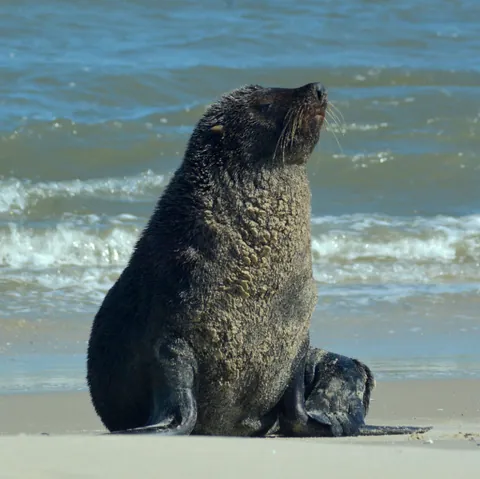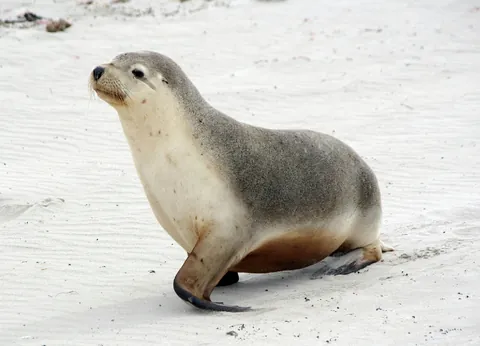
Australian Sea Lion
Neophoca cinerea
Zalophus wollebaeki
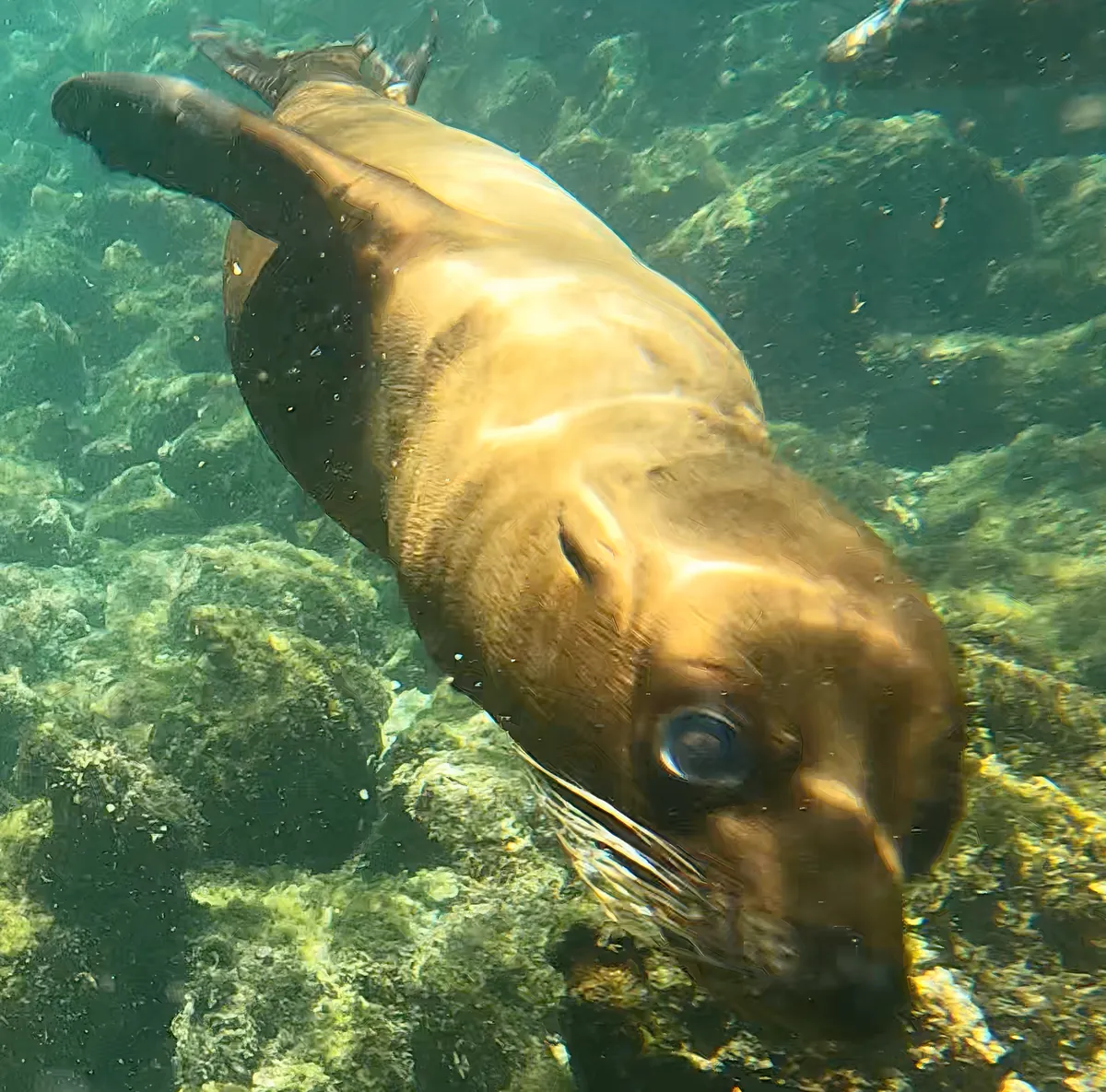
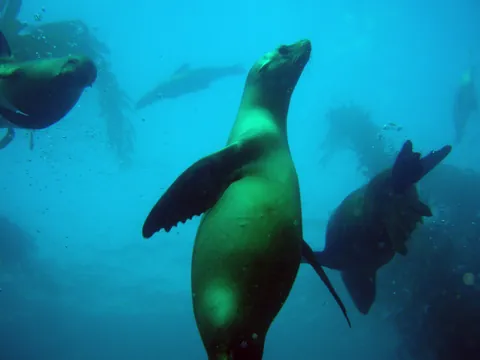
The Galapagos sea lion lives nowhere else on Earth. Curious and bold, it often swims right up to divers and plays with their bubbles. Males can weigh up to 200 kg, with a thick neck and shoulders that females lack.
Also known as: galapagos sea lion
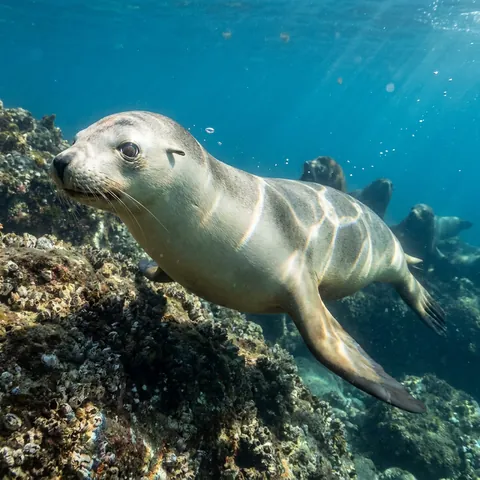
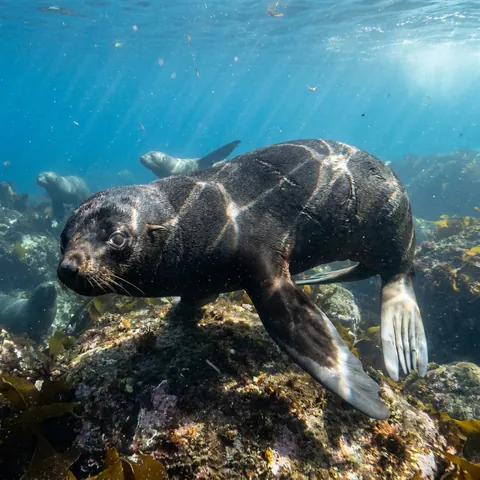
True seals look similar underwater but have no external ear flaps. Galapagos sea lions have small, visible ear flaps on the sides of the head, the easiest way to tell the two apart at a glance.
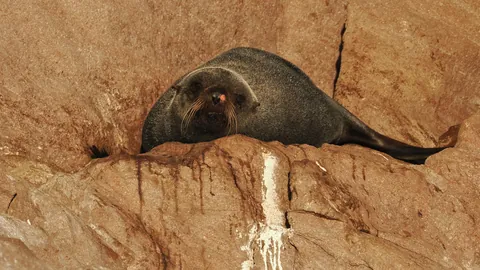
This sea lion has a pointy, whiskered nose and a long, narrow muzzle. Pups look almost dog-like in profile. Once a male matures, a raised bump grows on his forehead, a thickened ridge of bone. Females and young animals keep a flatter head with little or no forehead bump. The foreflippers are covered in black, leathery skin, with a short strip of fur near the wrist.
It lives around the Galapagos Islands, on rocky cliffs and low sandy beaches alike. Some animals have spread north along the Ecuadorian coast and out to nearby islands off Colombia. During the day it often rests in the shade of rocks or vegetation to avoid overheating.
Galapagos sea lions are social and noisy. Adult males bark in long, loud, repeated sequences to guard their territory and mates. Pups and females growl instead of barking. The animals are unusually relaxed around people, which makes them easy to watch but also easy to disturb.
It eats mostly sardines, along with crustaceans, squid, other small fish, and octopus. Sea lions have been seen hunting cooperatively, herding fish into a rocky inlet to catch them. Sharks, including great whites and broadnose sevengill sharks, and killer whales prey on them.
Breeding runs from May through January, so colonies have pups at every stage all year round. Each mother has a single pup and cares for it closely, later taking it into the water while it learns to swim and hunt. Mothers and pups recognise each other by bark and stay bonded long after birth.
The IUCN has not assessed this species. Most of the population lives inside an Ecuadorian national park and marine reserve, with strict rules to limit disturbance from tourists. Warming water during El Nino events cuts off its food supply and is a major threat, along with boats, fishing nets, and introduced dogs on land.
A group of Galapagos sea lions was filmed cooperatively herding yellowfin tuna into a rocky inlet, driving some fish onto land to catch them, a hunting method rarely documented in this species.
Describe what you saw and we name it, then keep every species you find in your Oceandex.