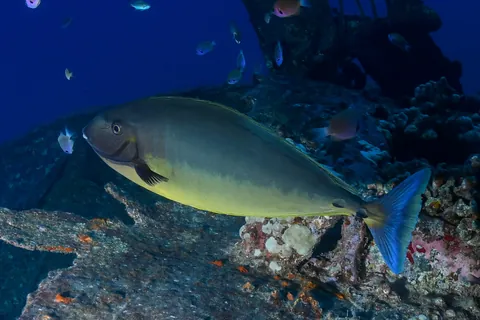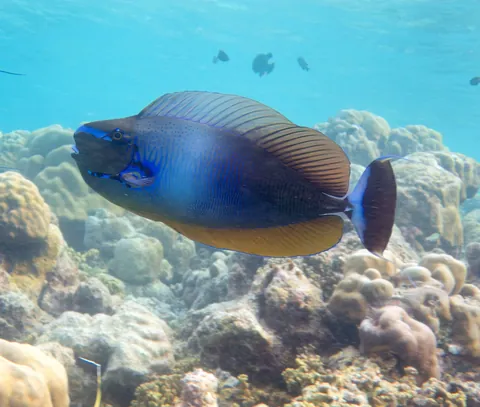
Bignose unicornfish
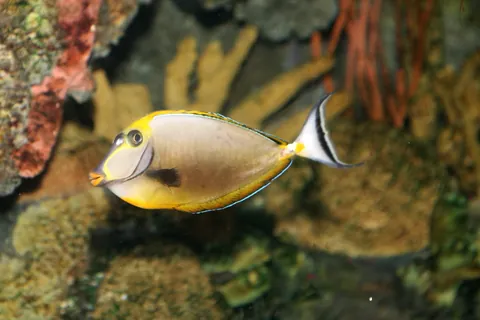
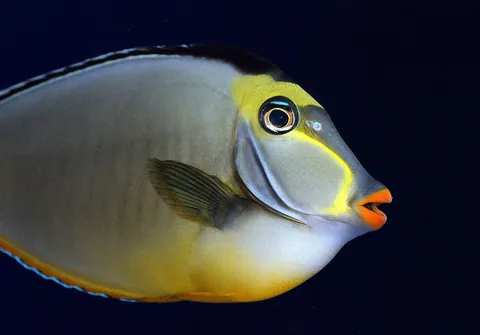
Naso vlamingii
Naso brevirostris
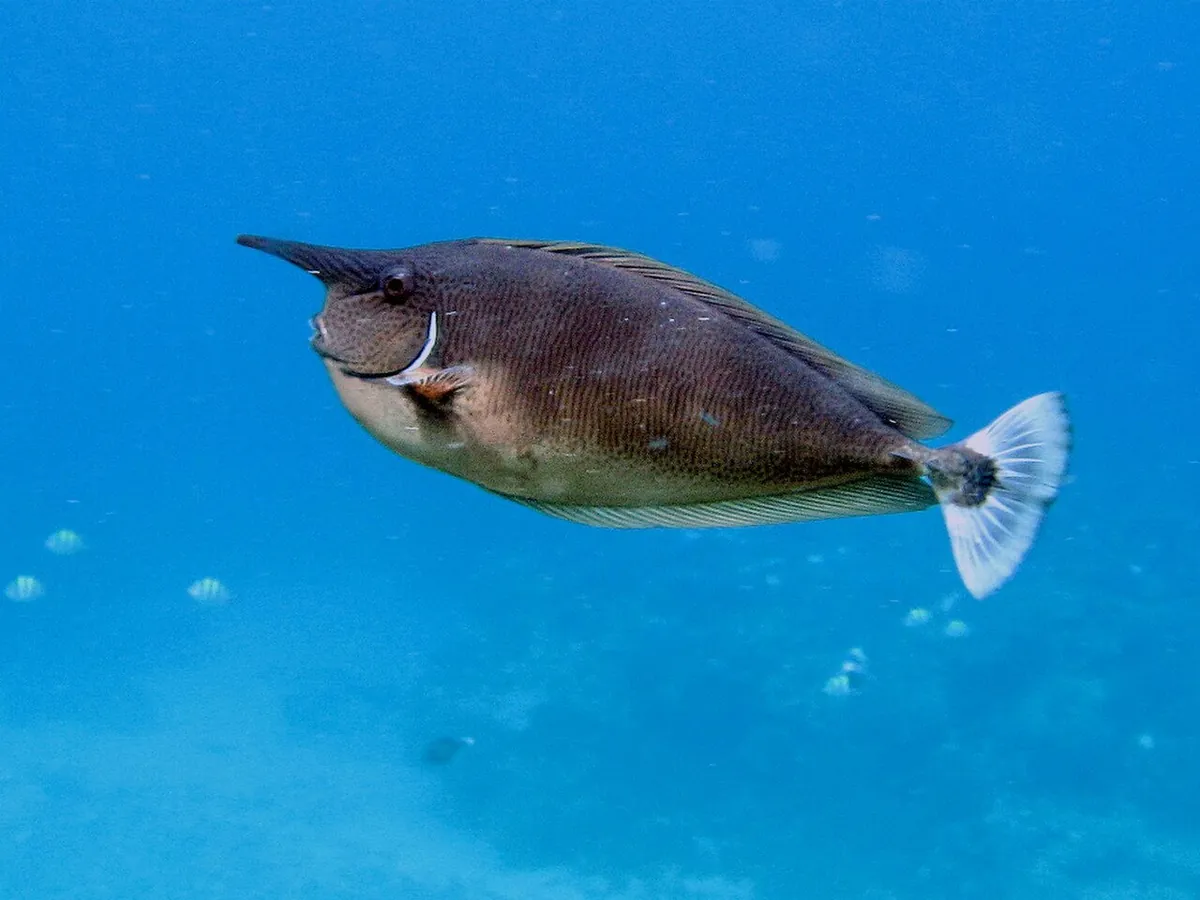
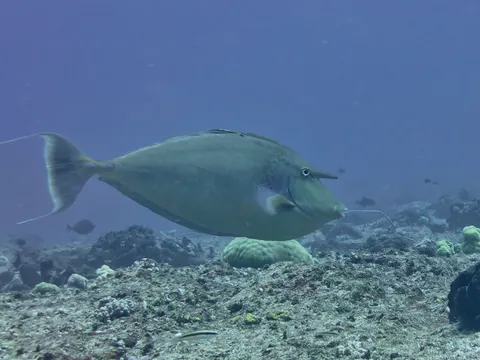
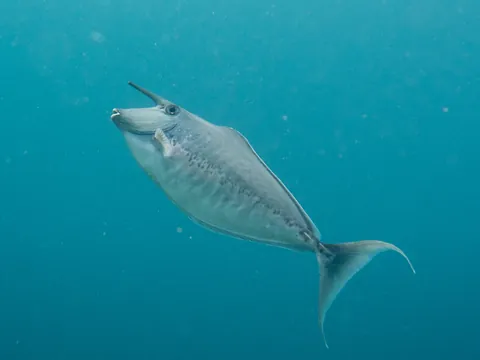
As it grows, this surgeonfish sprouts a long bony horn from its forehead, earning it the name unicornfish. It reaches about 60 cm and cruises the reef in small groups.
Also known as: longnose unicornfish, palefin unicornfish, short-nosed unicornfish, shortnose unicornfish, shortnosed kala, shortsnout unicornfish, spotted unicornfish, shortnose unicornfish, shortnosed unicorn tang, short-snouted unicornfish, shortnosed kala, paletail unicornfish, short-nosed unicornfish, unicornfish, longnose unicornfish, lined unicornfish, surgeonfish, spotted unicorn, unicorn fish, shortsnout unicornfish, palefin unicornfish, paletail unicornfish, spotted unicornfish, short-horned unicornfish, short-snouted unicornfish, spotted unicorn, longnosed unicornfish, longnose surgeonfish
Its long forehead horn separates it at a glance from other surgeonfish and tangs, which have plain, rounded heads.
The body is light blueish-grey to olive-brown, with a short, steep snout. From about 10 cm in length, adults grow a tapering bony horn in front of the eyes that can be as long as the head. A pair of bony plates with low keels sit on each side of the base of the tail, and the tail fin is squared off to slightly rounded.
It is found across the Indian and Pacific Oceans on lagoon and seaward reefs, usually between about 4 and 46 m deep, in water between 24 and 28°C.
It forms spawning pairs, and males carry larger keels on the tail base than females. Young fish graze algae on the reef bottom, then switch to feeding on drifting gelatinous plankton as adults, a change that happens alongside the growth of the forehead horn. It is usually seen in small groups but gathers into large schools on reefs with strong currents or in open water.
Around 10 cm in length, this unicornfish starts growing a long bony horn on its forehead. As the horn develops, its diet changes too, from grazing algae on the reef to hunting drifting jellies and other gelatinous plankton out in open water.
Describe what you saw and we name it, then keep every species you find in your Oceandex.