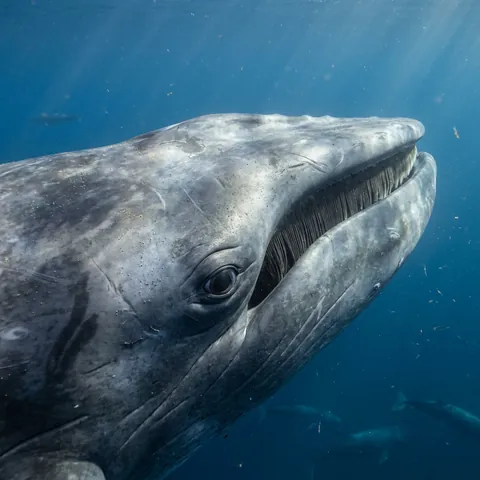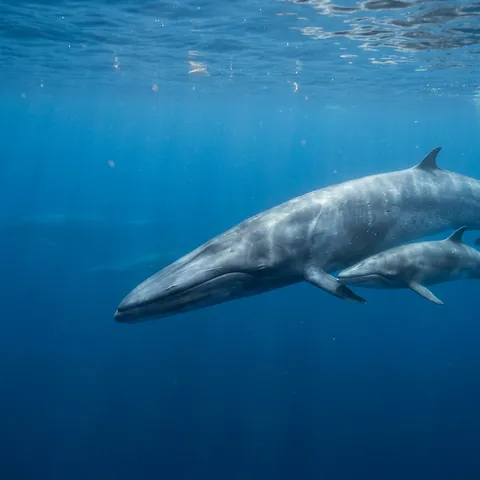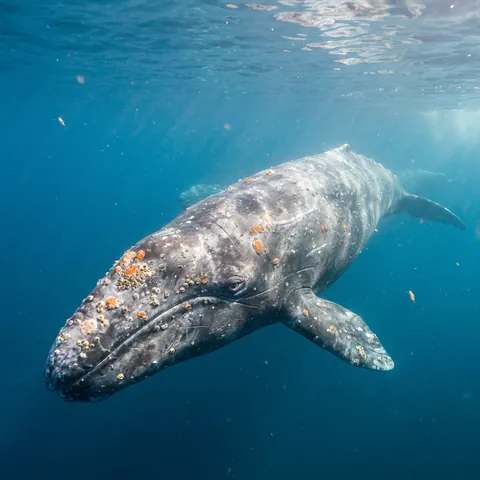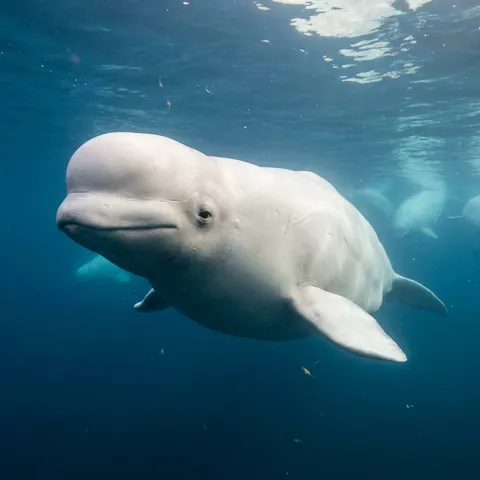
Beluga Whale
Delphinapterus leucas
Physeter macrocephalus
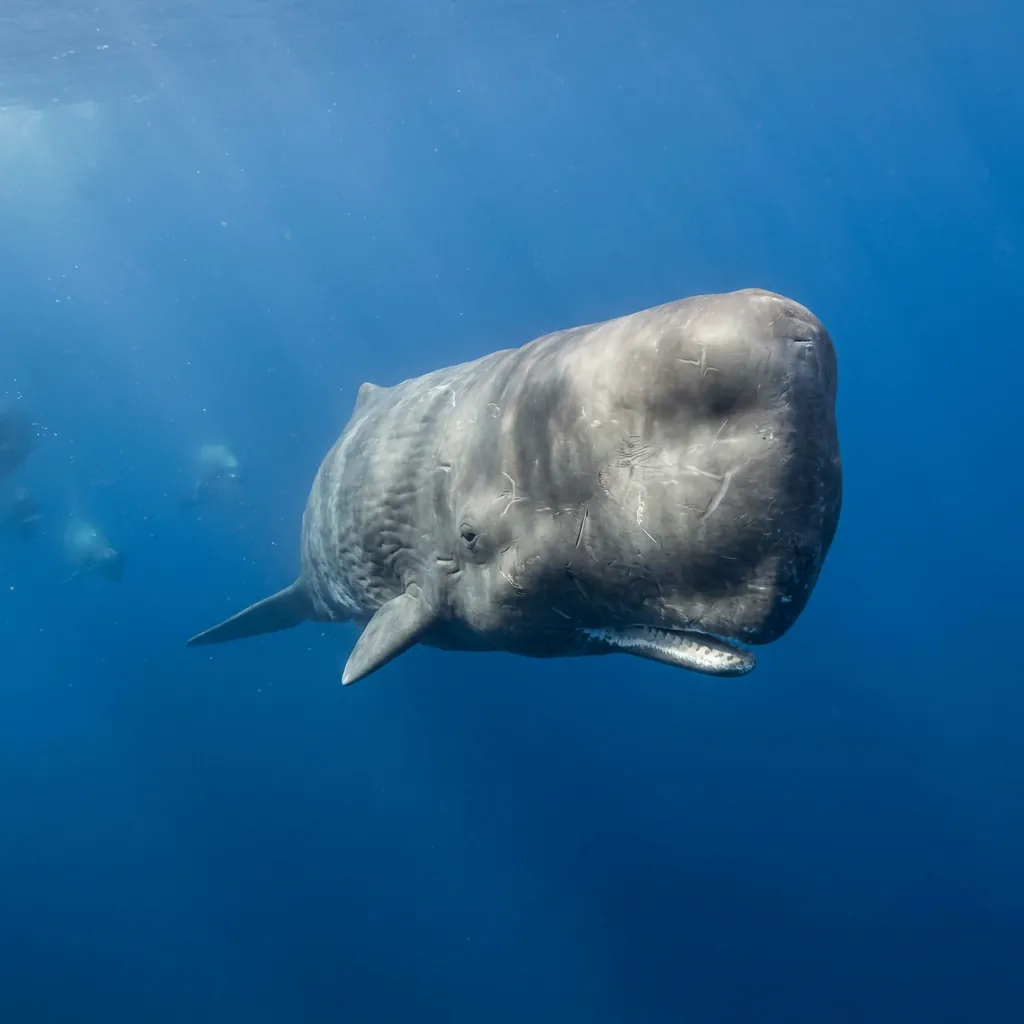
The sperm whale is the largest of the toothed whales, a deep-diving hunter built to chase giant squid in total darkness far below the surface. Males can grow to 24 m and weigh up to 57 tonnes.
Also known as: cachalot, cachelot, physeter macrocephalus, pot whale
Sperm whales can be confused with other giant whales at a distance, but no other whale has this species' blocky, square-fronted head - the single most reliable mark, especially when the whale surfaces to breathe.
Sperm whales show extreme sexual dimorphism (a large difference in size between males and females): mature males are typically 30 to 50% longer than females and about three times as heavy. The whale's most obvious feature is its huge, block-shaped head, which takes up a large part of the body and houses an organ filled with waxy oil called spermaceti. Unlike most toothed whales, it has visible teeth only in its lower jaw.
Sperm whales are found in every ocean, from the poles to the equator, and prefer deep, ice-free water. They are most common close to continental shelves and underwater canyons, where deep water lies near a steep drop-off. Dives can reach as deep as 3,200 m, though they typically hunt around 500 m down.
Females and their young live together for life in matriarchal groups called pods, while males leave to roam alone or in loose bachelor groups as they grow older, returning to pods only to breed. Sperm whales communicate through patterns of clicks called codas. Their ribcage can collapse under pressure rather than break, an adaptation for their long, deep dives.
Sperm whales dive deep to hunt, often spending a long time submerged between breaths. Their diet is mostly medium-sized squid, though they also take giant squid, colossal squid, octopuses, and some fish such as rays and sharks.
harmless to humans
The IUCN lists the sperm whale as Vulnerable.
The sperm whale's name comes from spermaceti, the waxy oil in its head, which early whalers mistook for whale sperm.
Describe what you saw and we name it, then keep every species you find in your Oceandex.