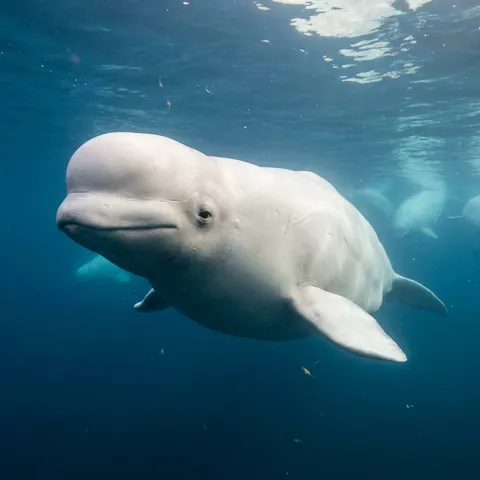
Beluga Whale
Delphinapterus leucas
Eubalaena australis
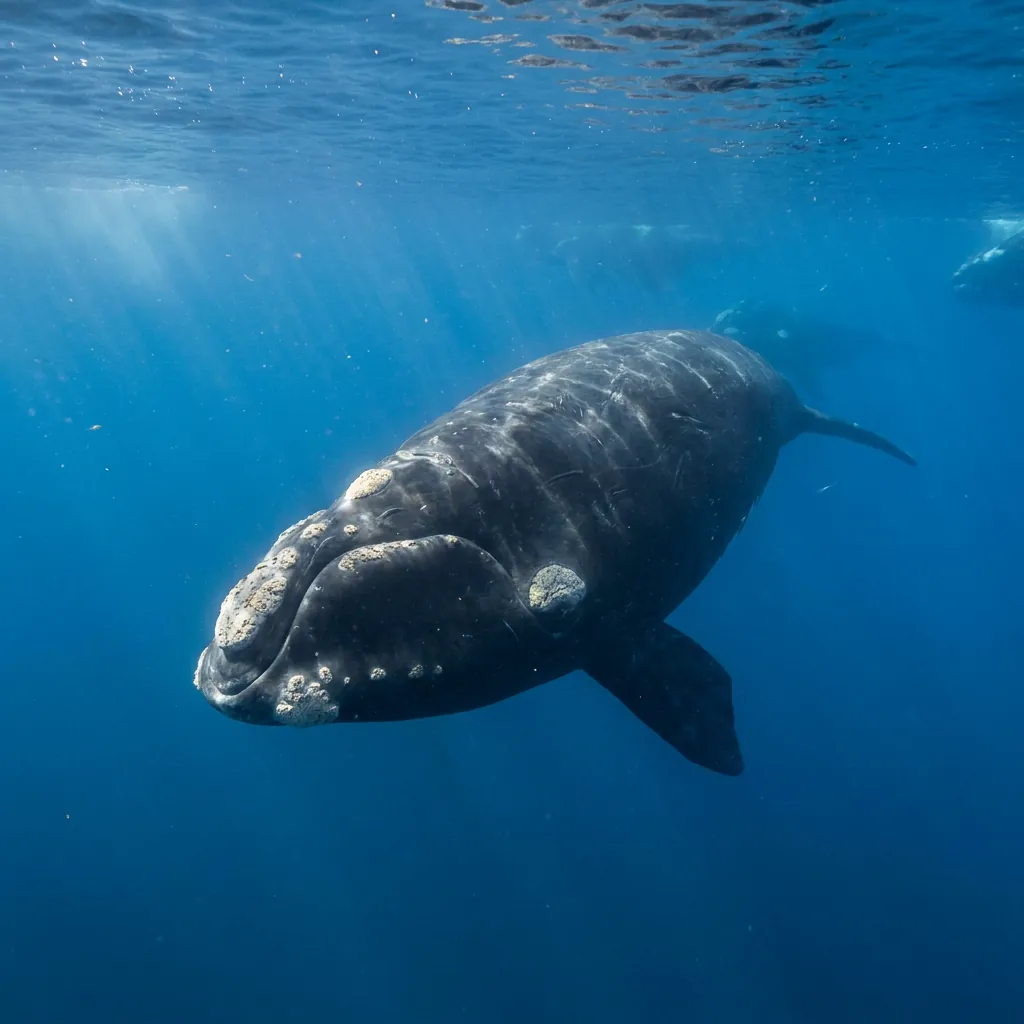
The southern right whale is a giant of the open ocean, reaching up to 17 m long, yet divers who cross paths with it in coastal waters often find it curious rather than shy. It comes close to boats and swimmers of its own accord, and its playful surface habits make it one of the most watchable of the great whales.
Also known as: southern right whale (tohora), black right whale
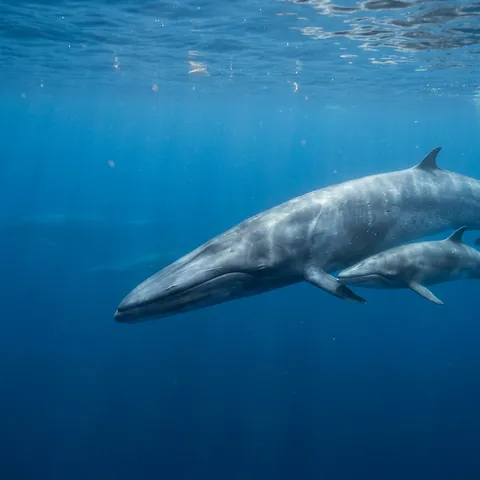
Right whales are easy to mistake for other large whales at a distance, but this species has no dorsal fin at all, unlike most whales you might see on a dive boat. Combine that with the pale, crusty callosities on its head and there is little room for confusion.
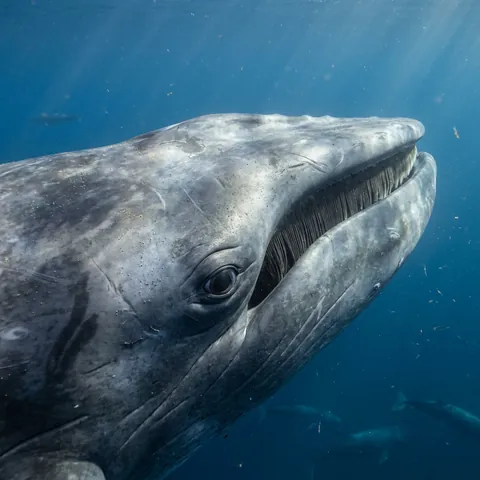
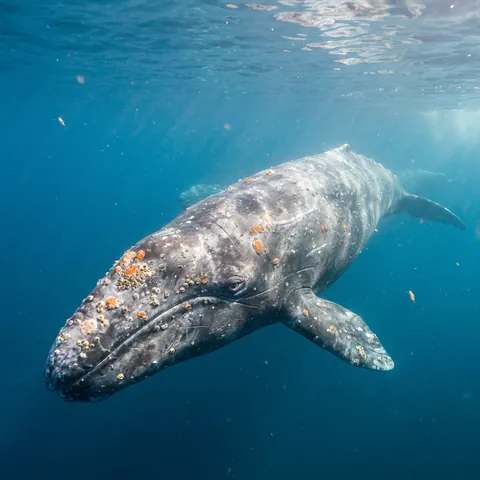
This whale has a broad, rounded back with no dorsal fin at all, and a long mouth that arches upward at the corners. Patches of rough, raised skin called callosities grow on its head, and these patches often look white because of the whale lice that colonise them.
Southern right whales spend summer feeding in the cold waters of the Southern Ocean, often close to Antarctica, then migrate north each winter to warmer coastal waters off places like Argentina, Australia, Brazil, and South Africa to breed and calve.
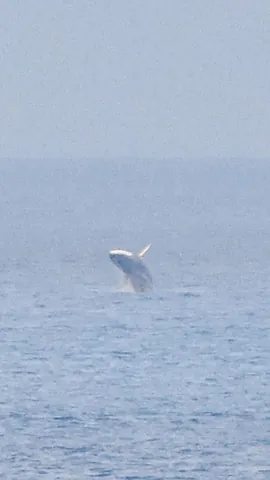
This whale is unusually active at the surface, breaching and interacting readily with boats and other cetaceans such as humpback whales and dolphins. It also performs a behaviour found in no other whale: 'tail sailing', where it raises its flukes, the two lobes of its tail, out of the water and holds still to catch the wind, apparently just for play. Killer whales are its only known predator, and have been recorded hunting southern right whale calves.
It feeds almost entirely on zooplankton, especially tiny crustaceans called krill. Swimming with its mouth partly open just beneath the surface, it strains the water continuously through its baleen, the comb-like plates in its mouth.
Females show strong loyalty to their own calving grounds, returning there at multi-year intervals to give birth. Calving happens between June and November. After a pregnancy of about a year, a single calf is born, and it stays with its mother through its first year, growing quickly during that time.
Southern right whales were hunted almost to extinction between the 18th and 20th centuries, which is how the species got its name: whalers considered it the 'right' whale to hunt. Since hunting stopped, the population has been recovering, and the species is now protected in every country where it breeds.
Southern right whales are the only whale known to 'tail sail': they lift their tail flukes into the air and hold the pose, letting the wind push them along, apparently just for fun.
Describe what you saw and we name it, then keep every species you find in your Oceandex.