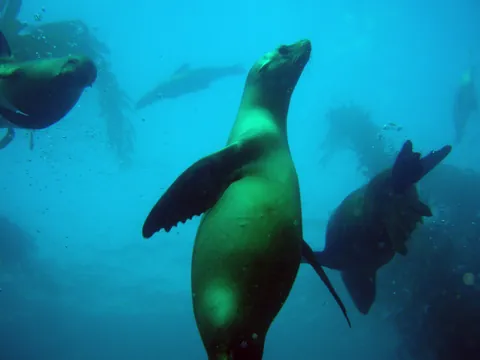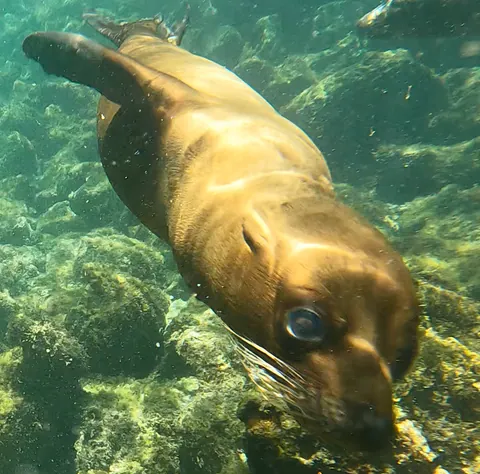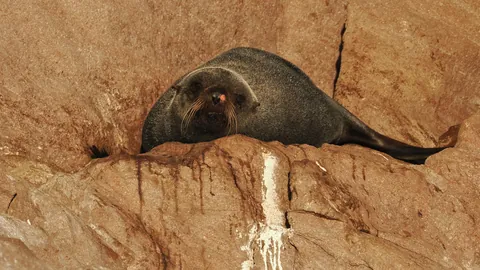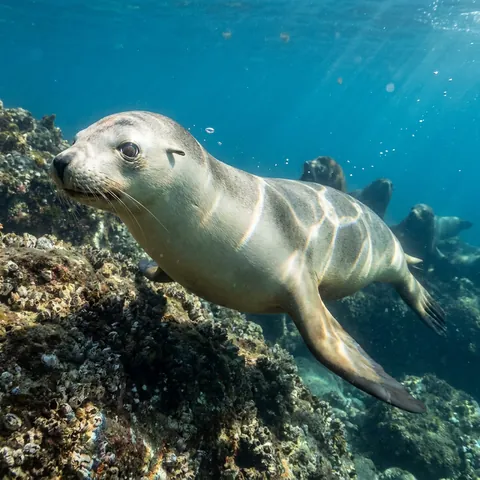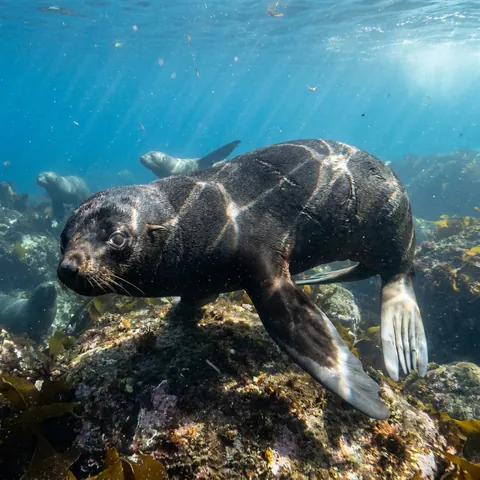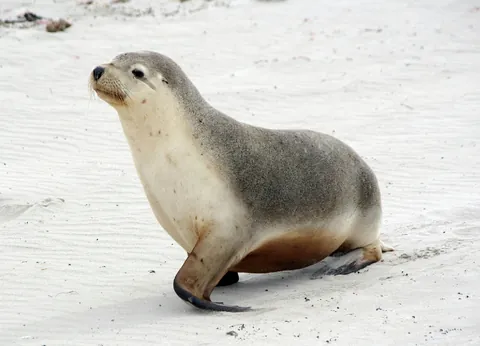
Australian Sea Lion
Neophoca cinerea
Otaria flavescens
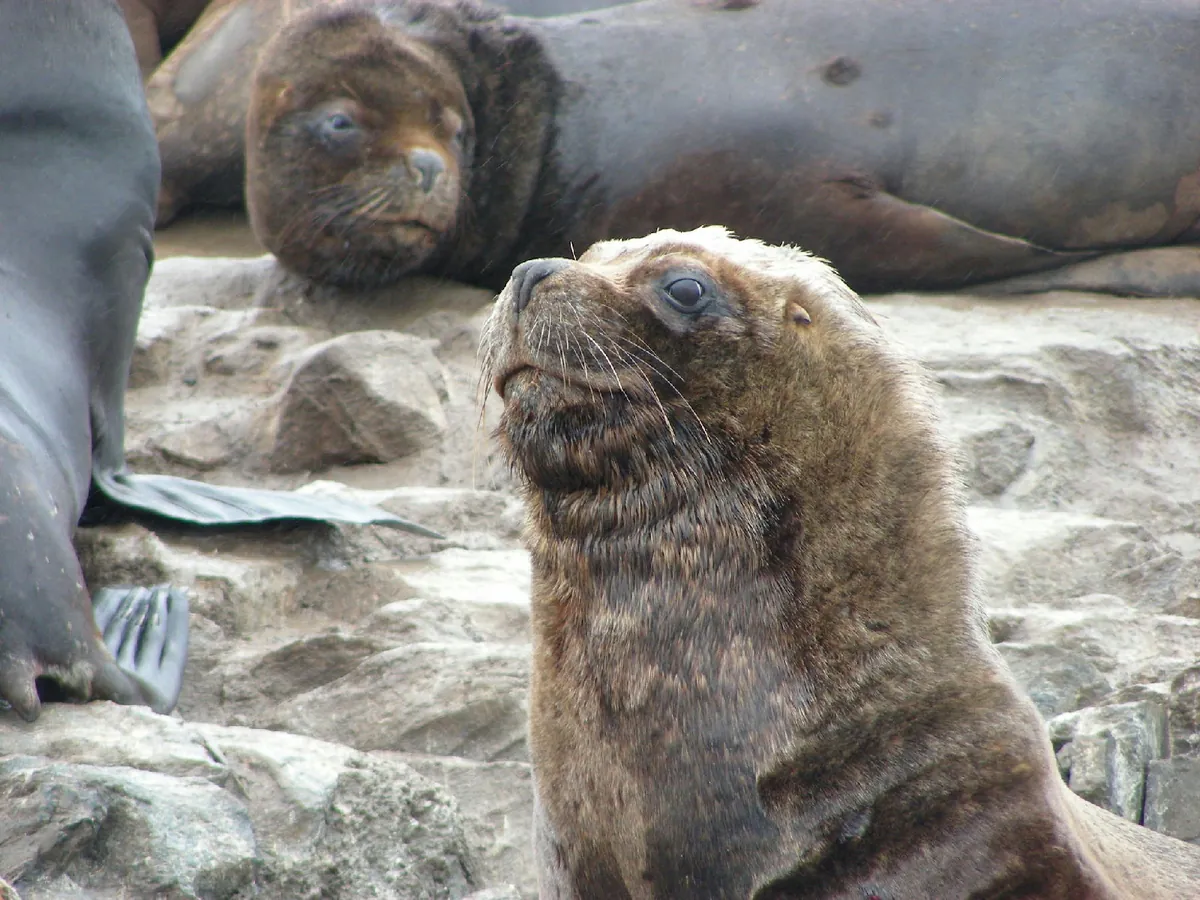
The South American sea lion is a big, noisy animal of rocky and sandy shores, where bull males with thick manes guard beaches full of females and pups. Males can reach 260 cm long and weigh up to 350 kg, dwarfing the females.
Its size and the male's thick mane can suggest a fur seal, but true fur seals have a much denser, finer coat over a smaller body. The short, upturned snout on the male's large head is the clearest mark of this species.
Males and females look very different. Males have a large head, a short upturned snout, and a long mane reaching the shoulders, with dark brown fur. Females are smaller, with a plainer head and yellowish fur. Pups are born black and turn reddish brown after their first moult.
It lives along the coasts and offshore islands of South America, from Peru around Cape Horn to southern Brazil. It hauls out on sand, gravel, rocky, or pebble beaches, and can also be seen on flat rocky cliffs with tidepools, sometimes venturing into deep water or even rivers near glaciers.
Bull males arrive first each breeding season to claim territory, then defend groups of females once they arrive, herding and guarding them from rivals. Males without a territory sometimes raid a harem, causing chaos and occasionally seizing a female or a pup. Sea lions hunt fish, squid, and other prey, and are themselves hunted by orcas and sharks.
At Peninsula Valdes, orcas hunt this sea lion by beaching themselves on the shore to grab animals near the water's edge.
Describe what you saw and we name it, then keep every species you find in your Oceandex.