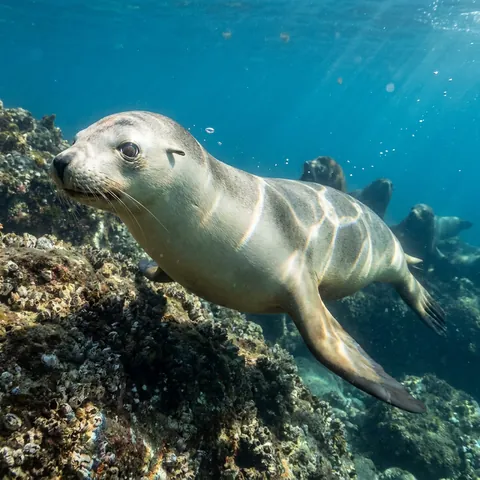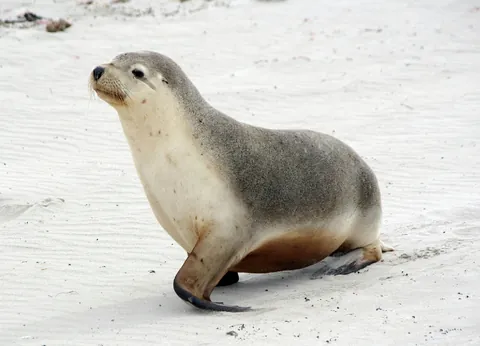
Australian Sea Lion
Neophoca cinerea
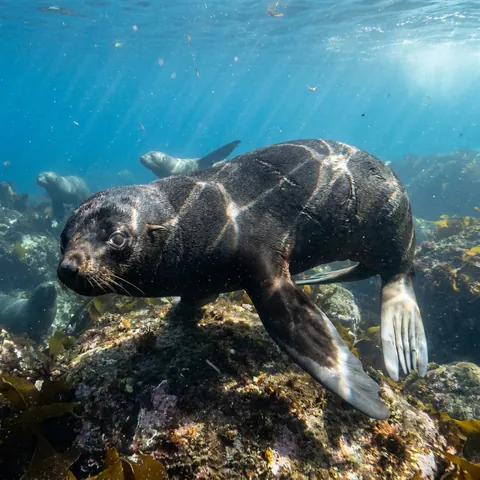
Arctocephalus australis
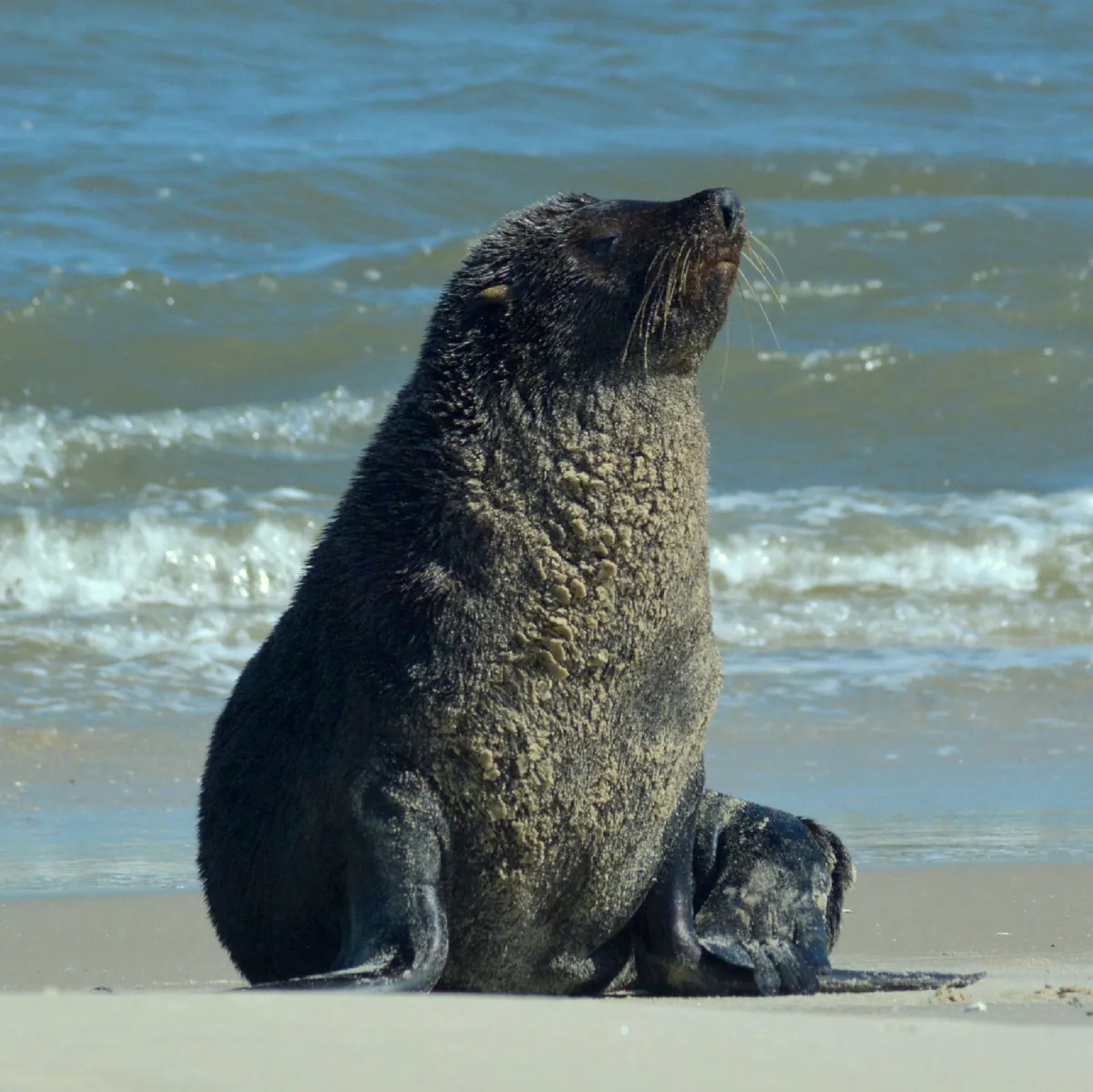
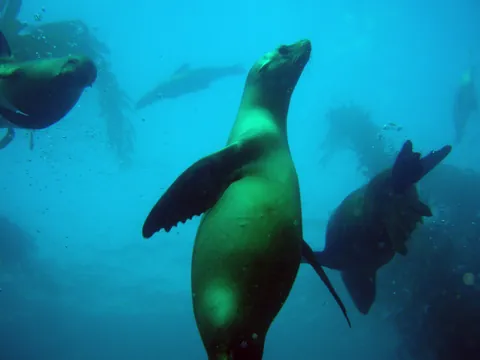
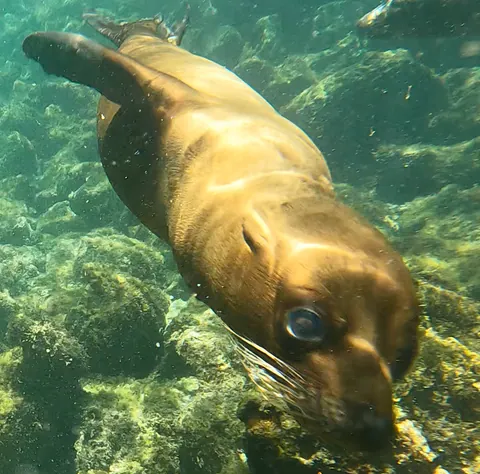
The South American fur seal is a stocky, agile hunter that spends most of its life at sea, only crowding onto rocky shores to breed. Males can grow to 190 cm and weigh up to 200 kg, dwarfing the smaller females.
Also known as: southern fur seal
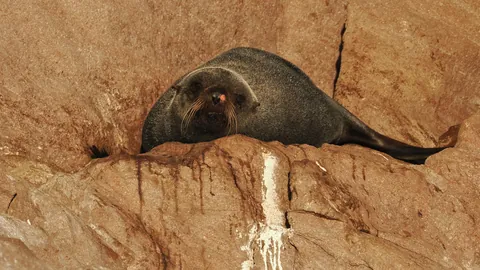
This seal has a dark grey or brown coat, with females and young paler underneath in tan or rusty brown. Adult males are more uniformly dark, with a thick neck, longer guard hairs forming a mane, and larger teeth than females. Both sexes are stocky with large eyes, a fairly long muzzle, and a rounded crown. The hairless, leathery flippers have a long first digit at the front.
It lives along rocky coasts and islands with steep slopes, from southern Peru around Cape Horn to southern Brazil, including the Falkland Islands. Some seals climb into sea caves, resting well above the waterline.
These seals are social and often hunt together, spending most of their time swimming and fishing. During the breeding season they gather on land, where males fight over the best rocky, shaded territory. They communicate with barks, growls, and whimpers, and mothers use a call their pups alone recognise.
Breeding runs from October to December. Males compete for territory and mate with several females each season, while females raise pups that wean between 6 and 12 months, sometimes later. Mortality among pups can be high in crowded colonies, where they risk being separated from their mother or trampled by adults.
Hunters have taken this seal for its fur, oil, and leather for thousands of years, and commercial hunting is now banned in Uruguay. Oil spills, entanglement in fishing gear, and El Nino events have all caused sharp local die-offs in the past.
Describe what you saw and we name it, then keep every species you find in your Oceandex.