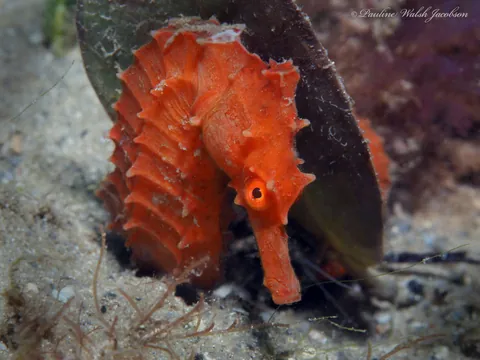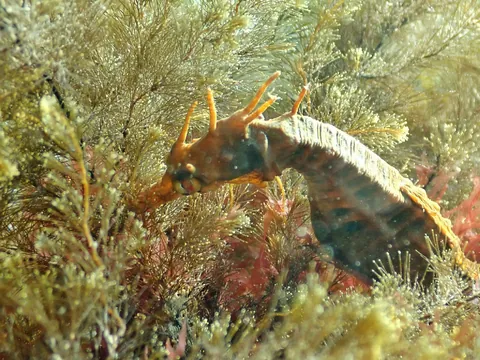
Bigbelly Seahorse
Hippocampus abdominalis
seahorses
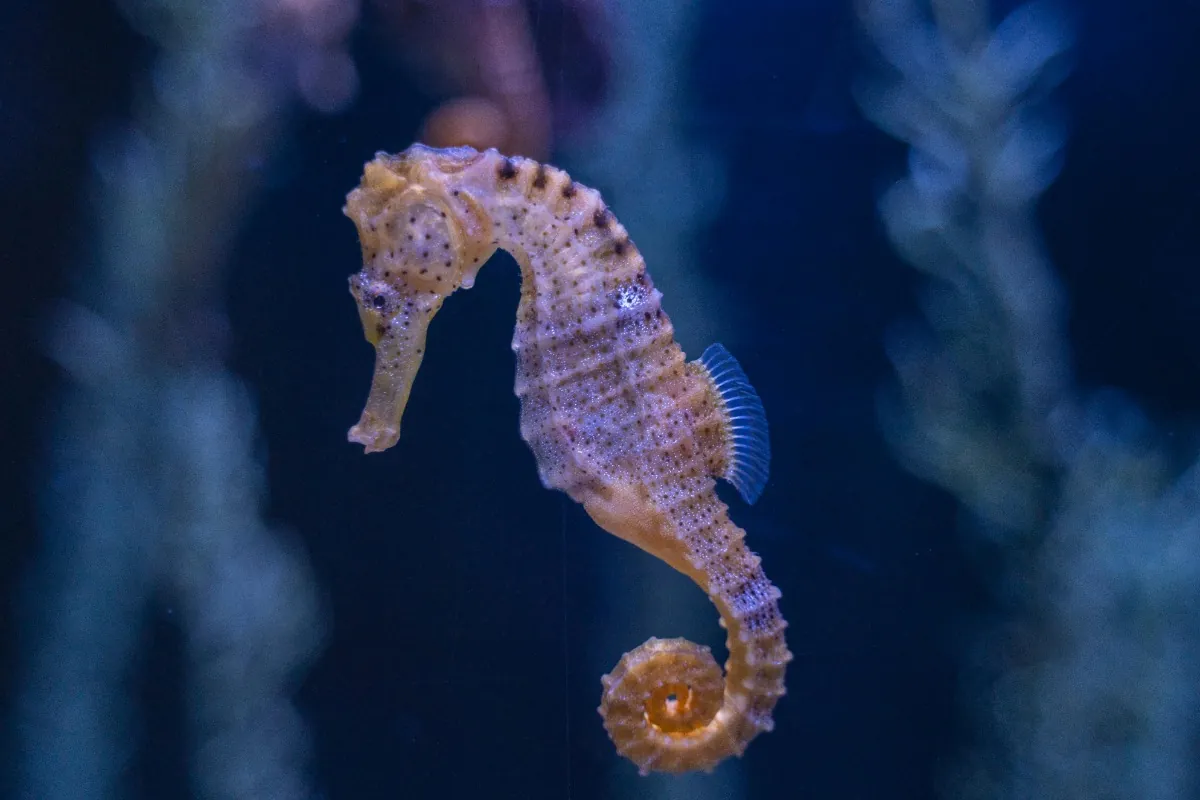
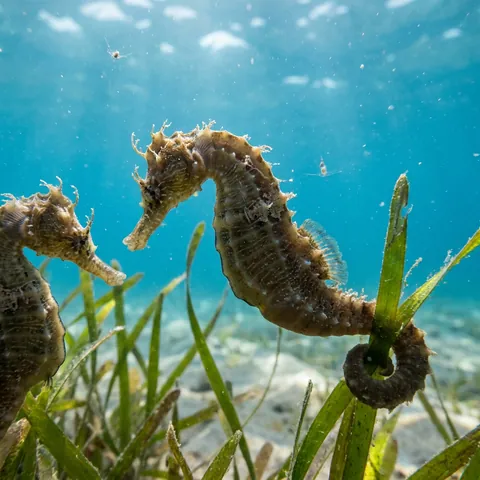
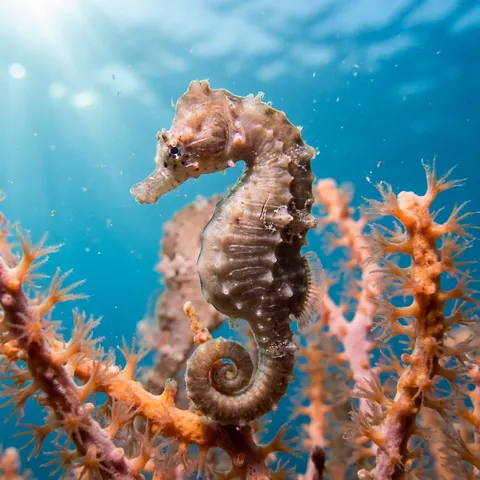
Seahorses are small fish with a horse-like head, a bent neck, and a curled tail that grips onto plants. In this app the group includes the Common Seahorse, the Spiny Seahorse, and the Pygmy Seahorse.
The upright swimming pose, horse-like head, and gripping tail set seahorses apart from every other reef fish, including their close relatives the pipefish, which swim lying flat. Members differ mainly in size, snout length, and how spiny or smooth their skin looks.
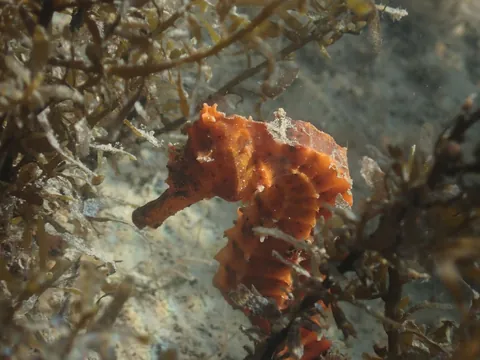
A seahorse has a long snout, a bent neck, and a curled tail instead of a tail fin. Its body is covered in thin skin over bony rings, not scales, and it often has small spines. Adults range from about 1.5 cm to 35 cm long, and they swim upright instead of lying flat.
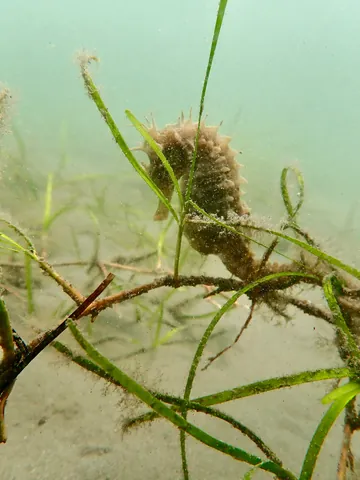
Seahorses live in shallow, warm to mild seas worldwide, in sheltered spots such as seagrass beds, coral reefs, mangroves, and estuaries. They often stay close to one small patch of habitat for life.
Seahorses are slow, weak swimmers that rely on camouflage rather than speed to avoid danger. They grip seagrass or coral with their tail and wait, and some pairs stay close together, holding tails or swimming side by side.
Seahorses eat small crustaceans and other tiny animals that drift by or crawl nearby. They have no stomach, so they must feed almost constantly, sucking up prey through their long snout.
It is the male seahorse that carries the young, in a pouch on the front of his tail. The female places up to 1,500 eggs into his pouch, and he carries them for 9 to 45 days before releasing fully formed young into the water.
In every seahorse species, it is the male, not the female, who becomes pregnant and gives birth to the young.
Describe what you saw and we name it, then keep every species you find in your Oceandex.