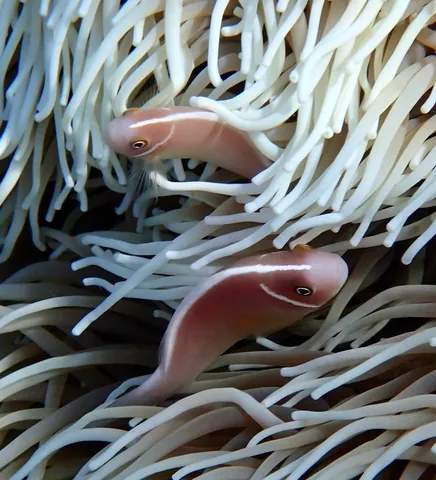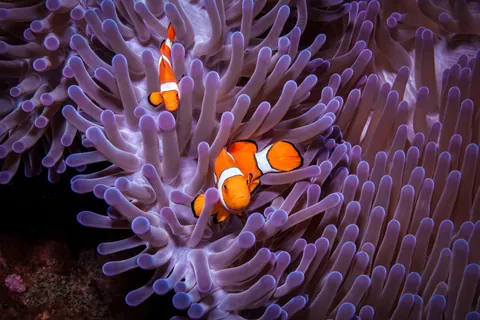
Clownfish
clownfish
Amphiprion polymnus
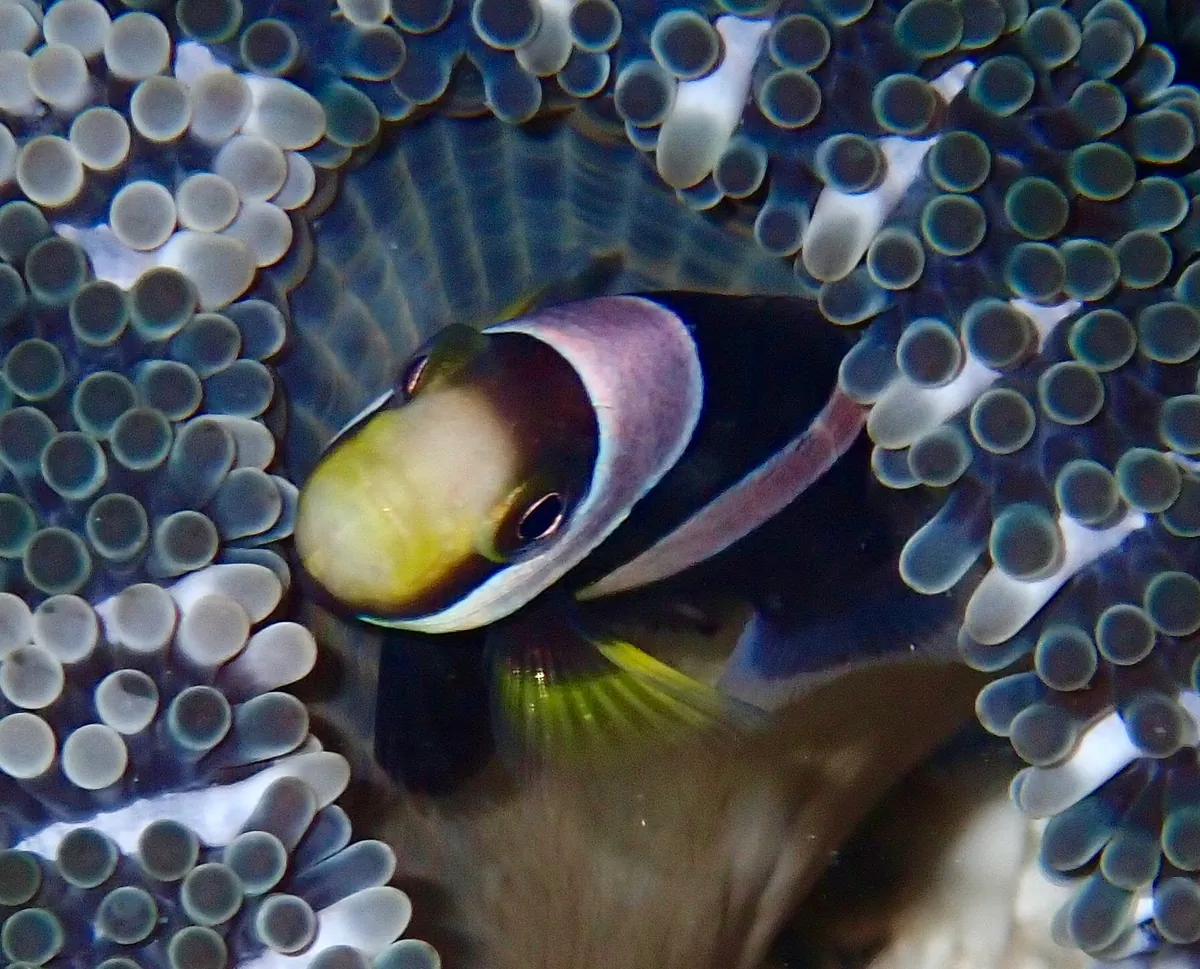
The saddleback clownfish is a small, stocky anemonefish named for the bold white patch across its back. It rarely tops 13 cm and spends its whole life close to a single host anemone.
Also known as: saddle back clown, saddleback anemonefish, white-tipped anemonefish, brownsaddle clownfish, saddleback clownfish, yellowfinned anemonefish, saddle back clown, clown fish, saddleback anemonefish, saddleback clownfish, yellow-finned anemone-fish, white-tipped anemonefish, brownsaddle clownfish, yellow-finned anemone-fish
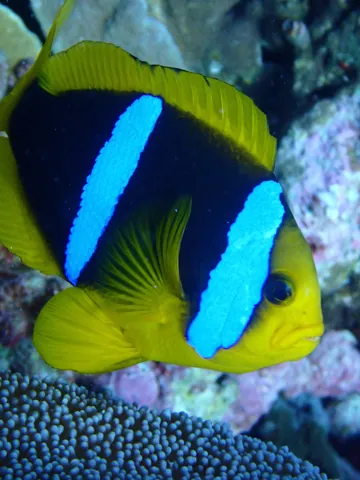
It can be confused with the similarly patterned sebae clownfish, but that species has a yellow tail, while this one's tail is not yellow.
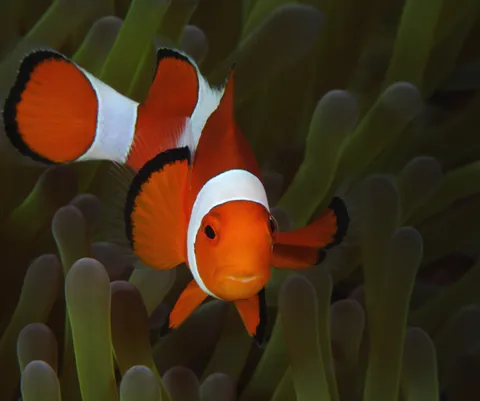
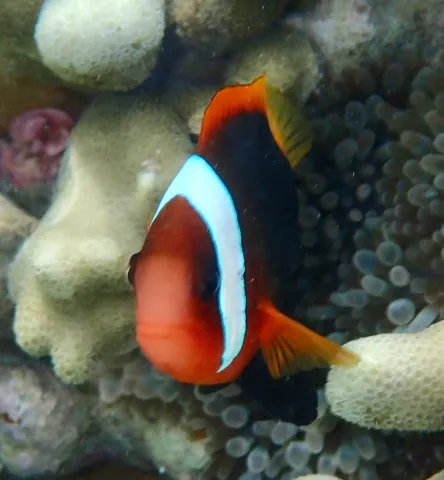
The body is stocky, oval, and flattened from side to side, coloured dark brown to yellow-orange. A thick white bar sits just behind the eyes, and a large white saddle-shaped patch crosses the middle of the body. Some fish also show a third white bar near the tail base, and the tail and anal fins are edged in white. The snout and pectoral fins are orange-yellow to brownish-orange.
This fish lives in the Coral Triangle region of the Indo-Pacific, from the Philippines and Indonesia to northern Australia. Adults stay in silty lagoons and harbour areas, from about 2 to 30 m deep.
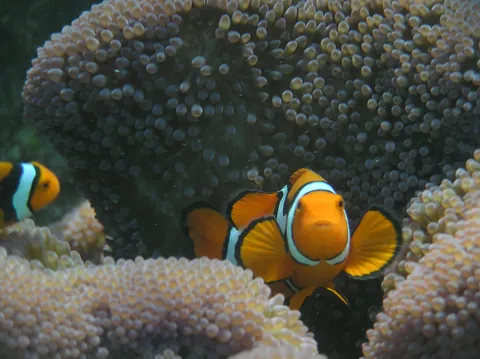
Active by day, it is fiercely territorial and never strays far from its host anemone, which shelters both the group and its nest. It will chase off reef fish, such as butterflyfish, that try to eat the anemone's tentacles. It only pairs with two of the ten known anemone species that host clownfish, making it a habitat specialist.
This species is of Least Concern, but its host anemones can suffer bleaching from warmer or more acidic water, and wild collection for the home aquarium trade also puts pressure on local populations.
Unlike most anemonefish, where females dwarf their male partners, the male saddleback clownfish grows almost as large as the female, possibly helping him dart to safety if the anemone withdraws under stress.
Describe what you saw and we name it, then keep every species you find in your Oceandex.