Clownfish
clownfish
Amphiprion perideraion
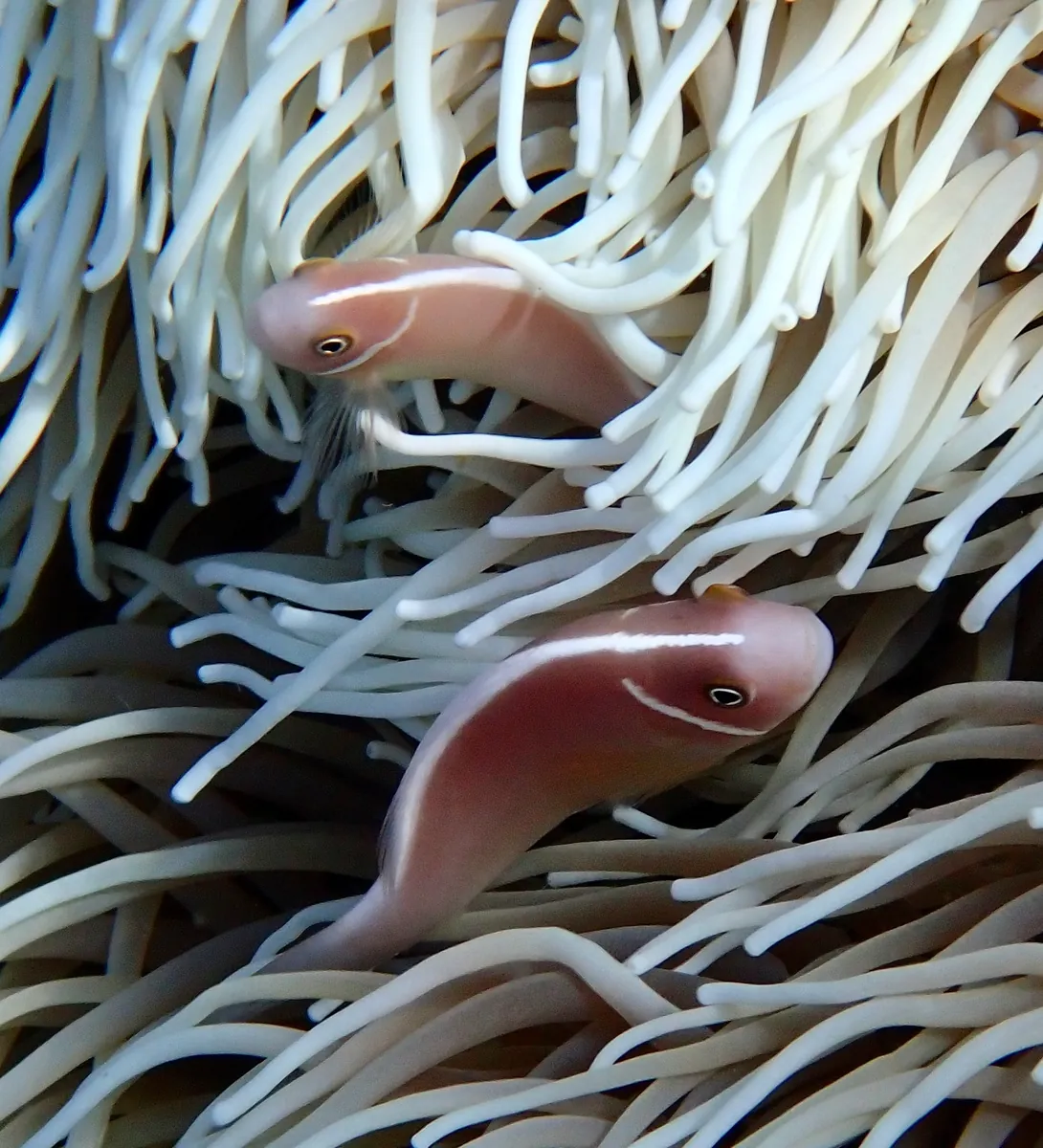
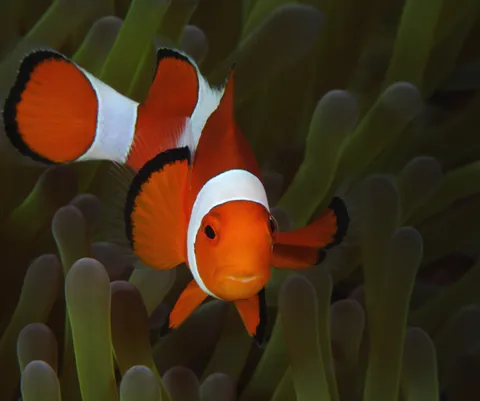
The pink anemonefish, also called the pink skunk clownfish, is one of the smallest anemonefish. It grows to about 10 cm. Like all anemonefish, it lives safely among the stinging arms of a host sea anemone. This team-up protects both animals.
Also known as: false skunk-striped anemonefish, false skunkstriped anemonefish, false skunkstriped anemonefish, pink anemonefish, pink skunk clown, salmon clownfish, whitebanded anemonefish, false skunk striped anemonefish, salmon clownfish, clown fish, pink skunk anemonefish, whitebanded anemonefish, pink skunk clown, pink anemonefish, false skunk-striped anemonefish, false skunkstriped anemonefish, white-maned anemonefish, pink anemonefish, white-maned anemonefish, pink skunk clownfish, pink skunk anemonefish
This species belongs to the 'skunk' group of anemonefish, and several of them look alike. The white back stripe plus the white head bar is the giveaway. Other skunk species have one of these marks but not the other, or lack both.
The body is pink to peach, with a white stripe along the top of the back and a white bar crossing just behind the eye.
It lives across the Malay Archipelago and Melanesia, in reef lagoons and on outer reef slopes. It mostly stays in the shallows, but has been seen as deep as 38 m. It always shares its home with a host sea anemone.
This species is listed as Least Concern. Even so, it and its host anemone can still suffer harm. Warmer or more acidic water can cause the anemone to bleach and die. Local numbers can also drop when too many fish are caught for the pet trade.
Most anemonefish mainly eat plankton and small invertebrates. The pink anemonefish is different: it feeds mainly on algae.
Describe what you saw and we name it, then keep every species you find in your Oceandex.