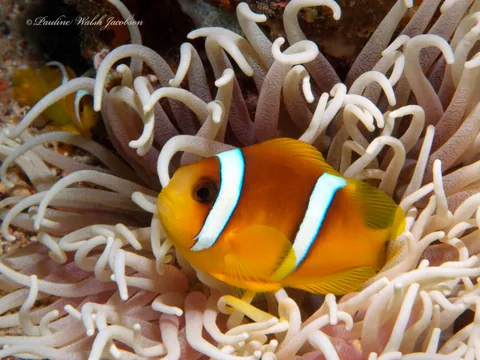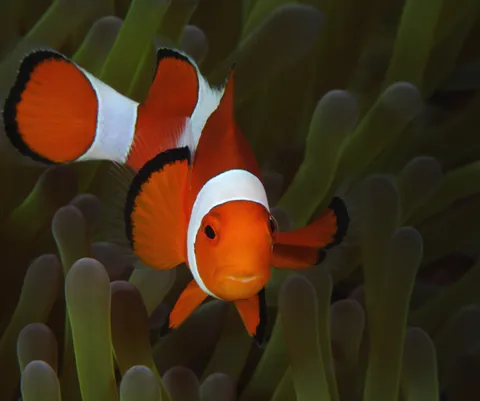
Common clownfish
Amphiprion ocellaris
clownfish
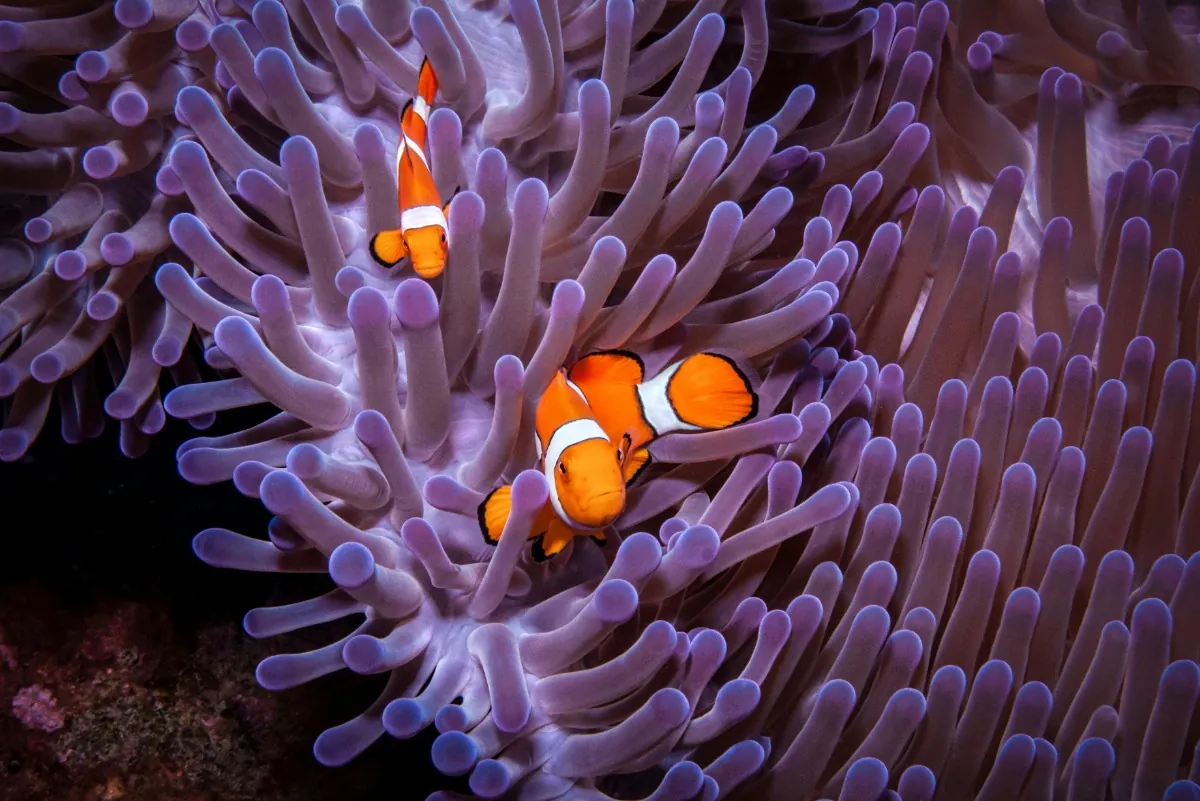
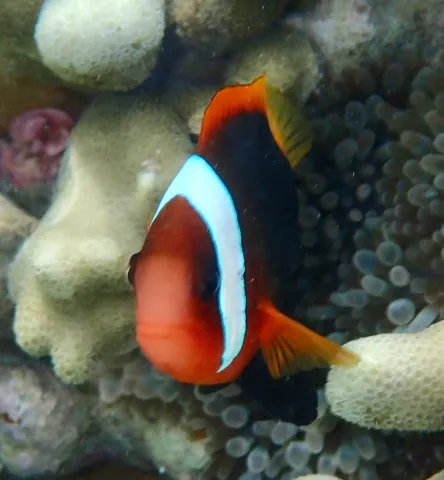
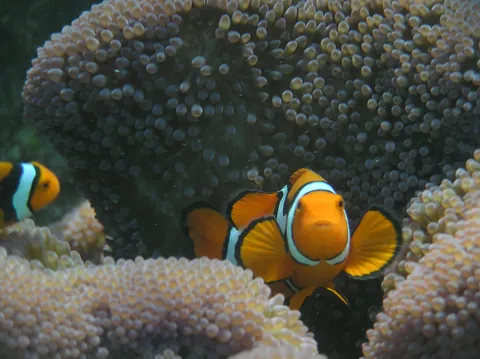
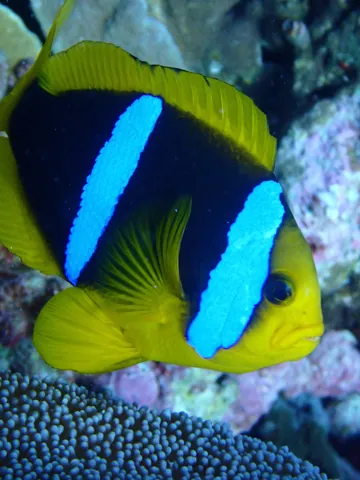
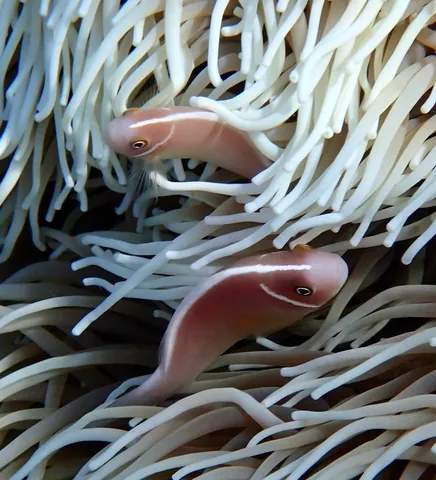
Clownfish are small, colourful reef fish famous for living inside sea anemones. In this app the group includes the Common clownfish, Pink anemonefish, and Skunk anemonefish.
The easiest way to spot a clownfish is to look for a sea anemone; clownfish stay close to their host and rarely swim far from it. To tell the species apart, look at colour and the number and shape of white bands or patches on the body.
Clownfish have an oval to streamlined body with a rounded head. Sizes range from about 6 millimetres for the smallest young fish up to 160 millimetres for the largest adults, and females grow larger than males. Colour patterns vary between species, often with bands or patches of orange, red, yellow, black, or white.
Clownfish live on coral reefs and nearby areas in warm, shallow water across the Indian Ocean and western Pacific, from the Red Sea to French Polynesia. They are limited to spots where their host sea anemones live, close to the surface where there is enough light.
Clownfish live in groups on a single sea anemone, with one breeding pair and several smaller, non-breeding fish. They shelter among the anemone's stinging tentacles for safety and rest there at night, while helping guard the anemone from fish that eat it.
Clownfish eat mostly small drifting food such as algae, copepods, and tiny tunicate larvae. They also feed on waste released by their host anemone.
Only the largest male and female in a group breed, usually around a full moon. The pair clean a patch of rock, where the female lays up to a thousand eggs for the male to fertilise, guard, and fan until they hatch about a week later.
harmless to humans (may nip to defend their anemone)
Every clownfish group has one breeding male, and if the breeding female dies, he changes sex and takes her place, while the largest non-breeder becomes the new male.
Describe what you saw and we name it, then keep every species you find in your Oceandex.