Clownfish
clownfish
Amphiprion percula
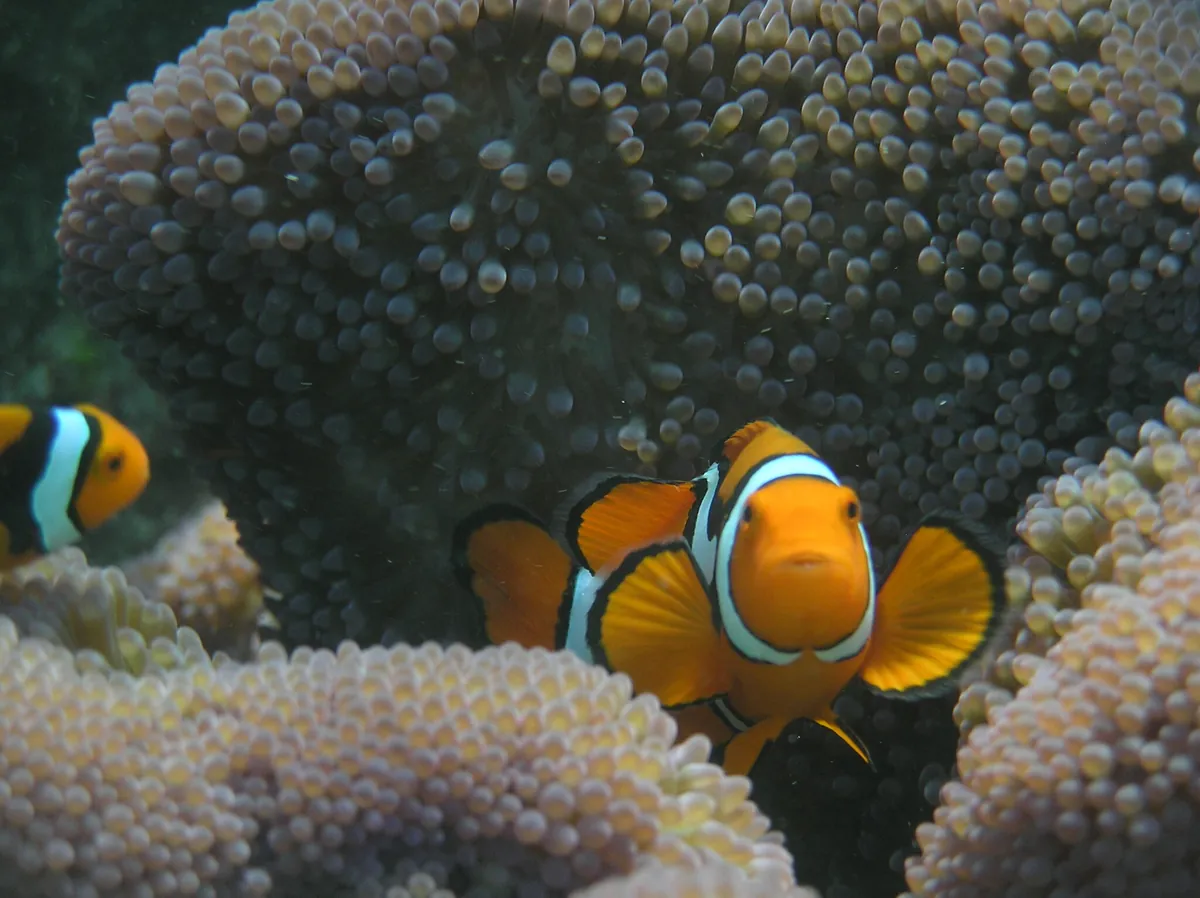
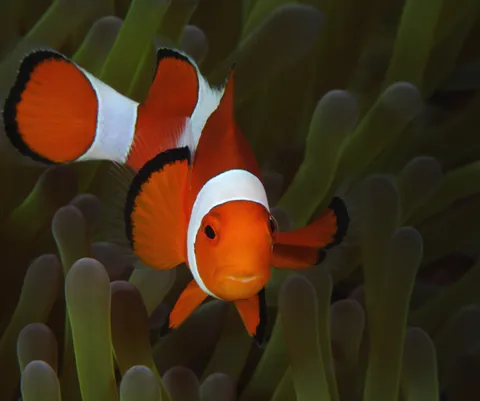
The orange clownfish never strays far from its host anemone, darting among the stinging tentacles that keep it safe from predators. It is a small, bold reef fish, growing up to 11 cm long.
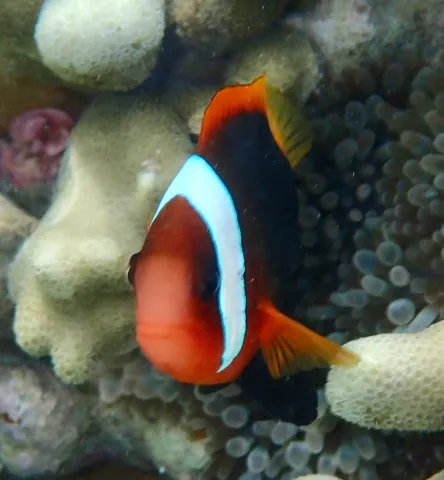
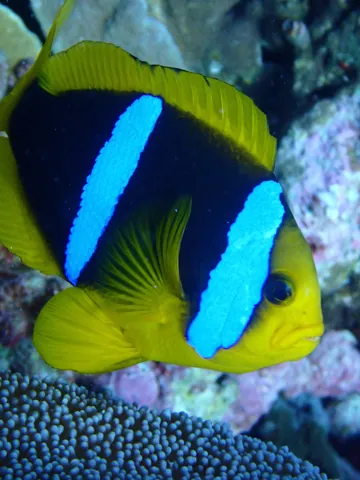
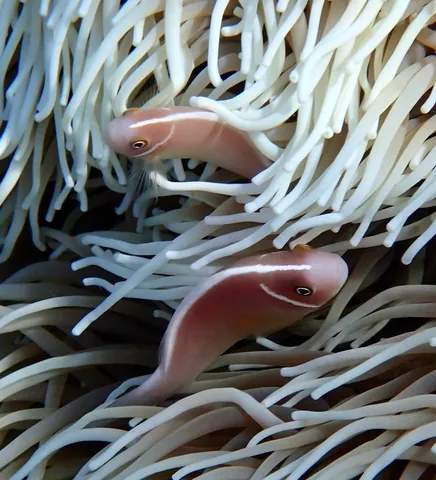
Also known as: amphiprion percula, anemone fish, blackfinned clownfish, clown anemonefish, clownfish, damselfish, demoiselle, eastern clown anemonefish, eastern clownfish, orange anemonefish, puller
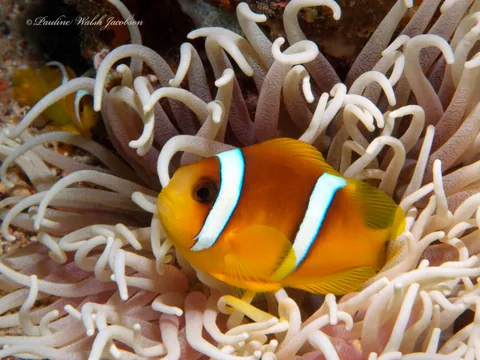
The orange clownfish is often confused with the ocellaris clownfish, which shares the same pattern. Look for thick black borders on the fins; the ocellaris has thin or no black edging.
This fish has a bright orange body crossed by three white bars edged in black: one just behind the eye, one across the middle, and one near the tail. Every fin also carries a black-edged orange border.
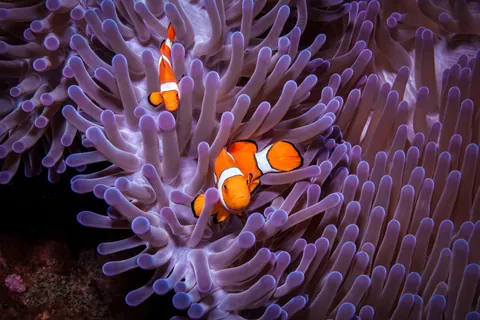
Orange clownfish live on coral reefs in shallow water, usually no deeper than about 15 m. They live only within a host sea anemone, most often Heteractis magnifica or Stichodactyla gigantea, and rarely move more than a few metres from it.
Each anemone holds one breeding pair plus a few smaller non-breeding fish, ranked by size. Every fish starts life as a male; if the breeding female dies, the breeding male changes sex to take her place. A female lays 400 to 1,500 eggs per spawning.
harmless
During marine heatwaves, orange clownfish can shrink their own bodies, and pairs where both partners shrink together have a better chance of surviving the heat.
Describe what you saw and we name it, then keep every species you find in your Oceandex.