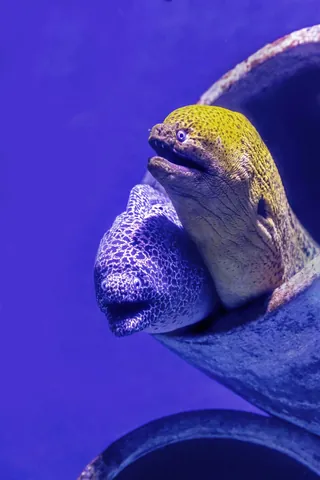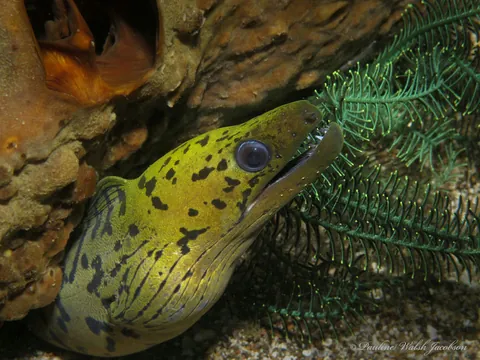
Fimbriated moray
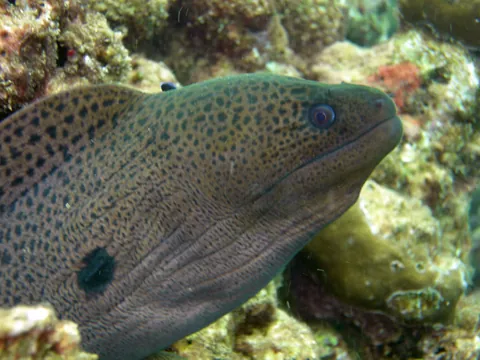
Gymnothorax fimbriatus
Rhinomuraena quaesita
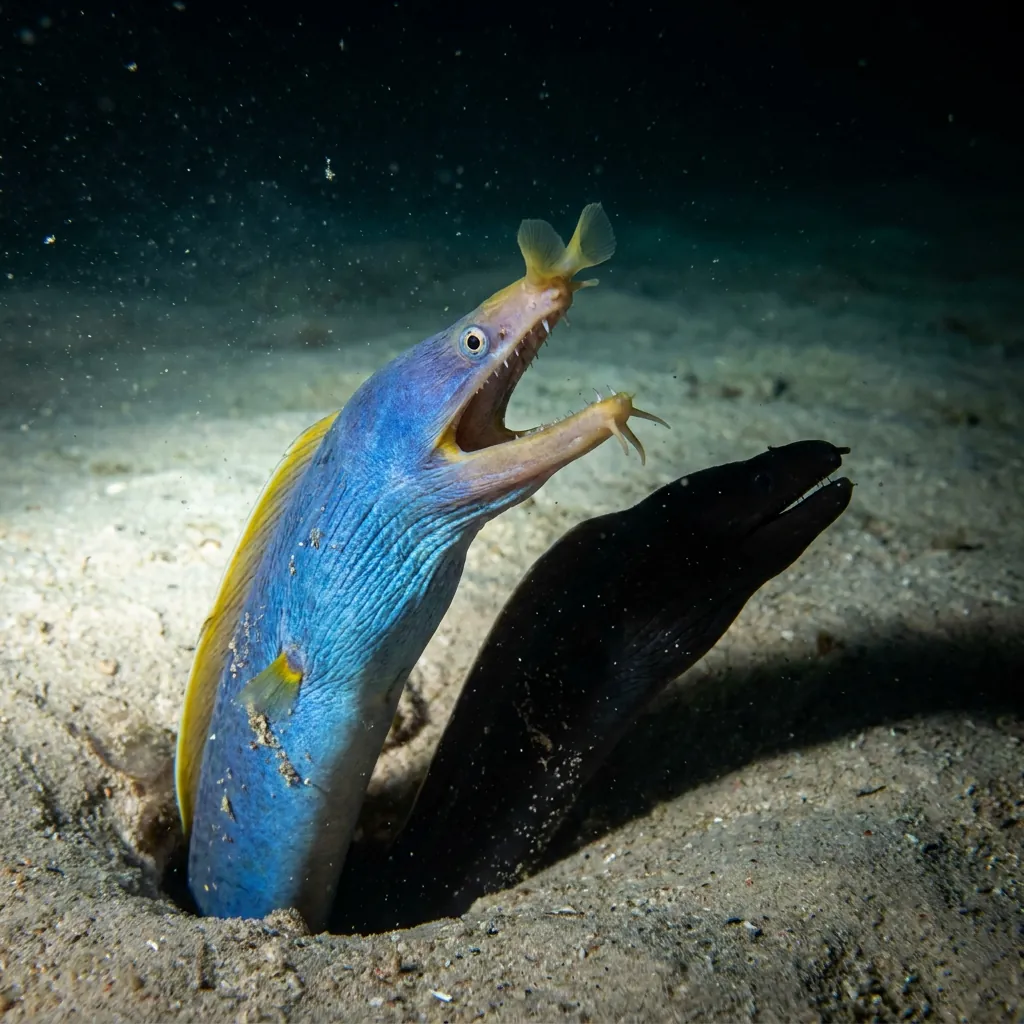
Few reef animals change so completely during their life as this eel does, arriving on the reef as a jet-black juvenile and leaving it, decades later, as a bright yellow female. It can reach 130 cm in length.
Also known as: black leafnosed moray eel, black ribbon eel, rhinomuraena quaesita, ribbon eel, ribbon moray
Regular moray eels have plain, tube-shaped nostrils and keep their jaws mostly closed at rest. This eel's flared, frilly nostrils and permanently open jaw are what set it apart from any other moray on the reef - a more reliable check than colour, since colour changes with sex and age.
The body is extremely long and thin, with a tall fin running along the back. The nostrils flare open into wide, fan-like frills, and the jaws sit permanently open. A slender fleshy point sits at the tip of the snout, with three more fleshy tentacles at the tip of the lower jaw. Juveniles and young adults are jet-black with a yellow dorsal fin. As they mature into males, the black is replaced by vivid blue with yellow on the head and fin. Fully grown females are yellow all over, sometimes with a little blue near the tail.
It lives across lagoon and seaward reefs in the tropical Indian and Pacific Oceans, in shallow water down to about 67 m. It hides in sand or rubble, often with just its head and the front of its body poking out, and can slide through tight crevices thanks to a slippery mucus coating.
It is active during the day, unusual for a moray eel. Over its life it changes from a functioning male into a female - when the change is triggered, a male will develop female reproductive organs, lay eggs, and then die, all within about a month. It is likely colourblind, so its dramatic colour changes probably serve some purpose other than attracting mates.
harmless
This species is of least concern. Because it favours shallow, coral-associated habitat, it is vulnerable to coral bleaching and other reef damage from climate change and pollution, which can reduce both its shelter and its prey. Overfishing in its habitat is a further concern.
It is the only moray eel known to go through such a dramatic change in both colour and sex over its lifetime.
Describe what you saw and we name it, then keep every species you find in your Oceandex.