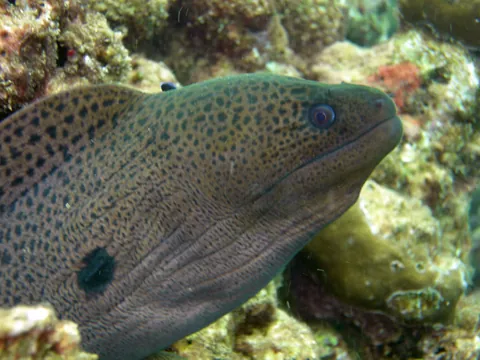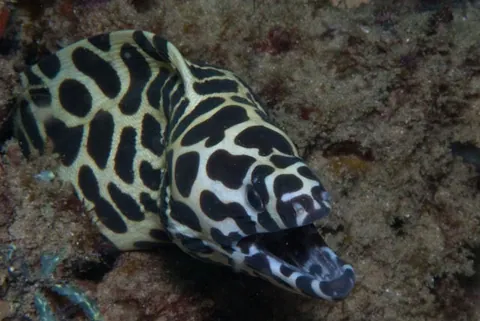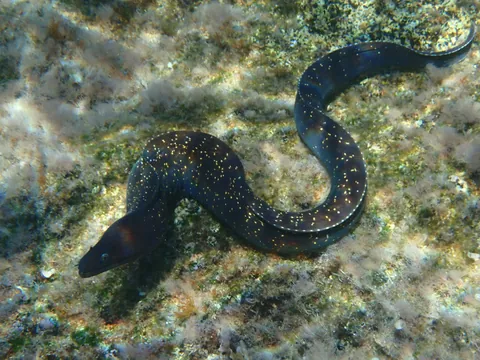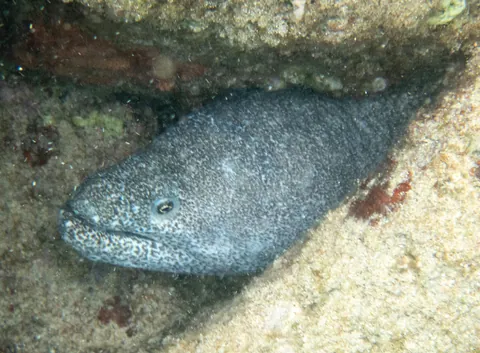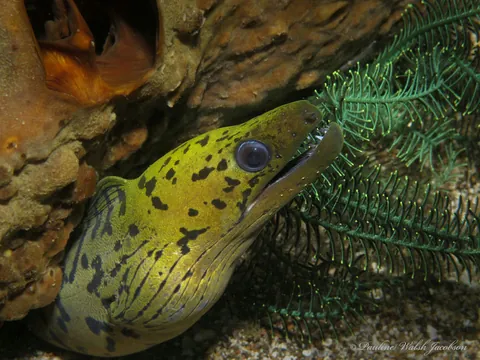
Fimbriated moray
Gymnothorax fimbriatus
Gymnothorax funebris
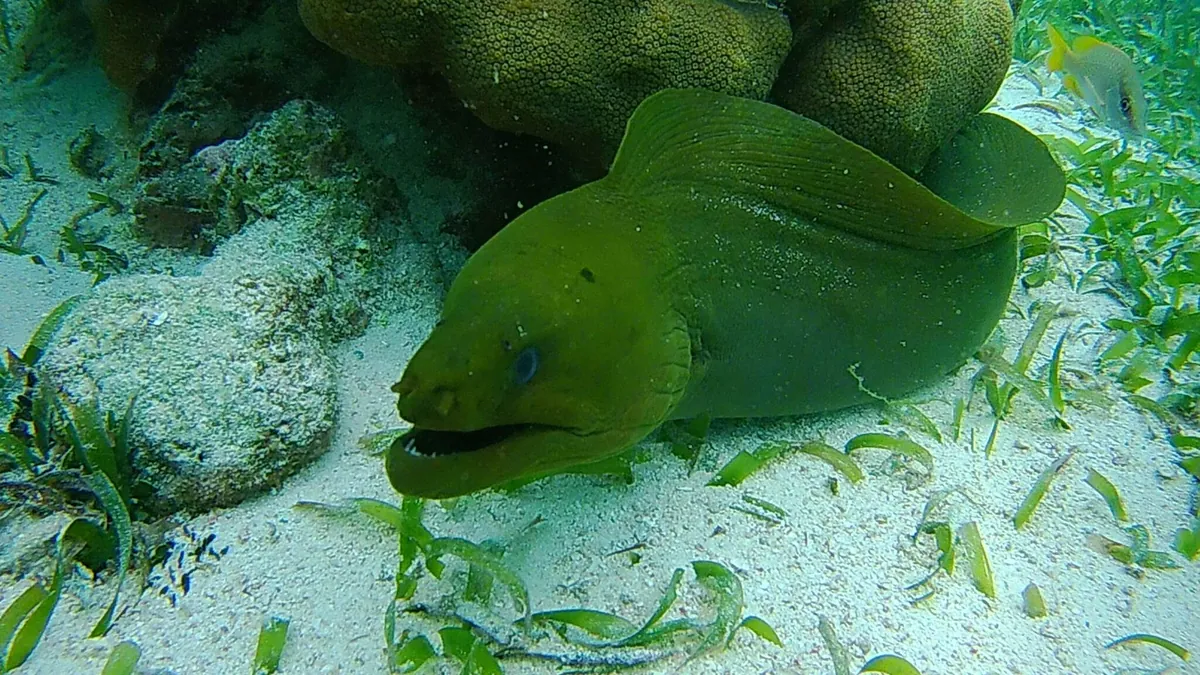
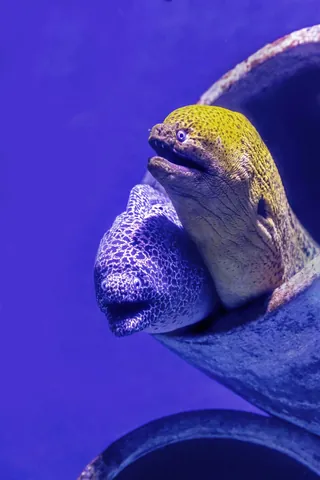
The green moray hides its bulk in reef crevices by day, a thick eel with jaws that seem too big for its head. It ranges through the western Atlantic, from the Gulf of Mexico down to Brazil.
Also known as: caribbean green moray, green cong, green conger, green congo, green eel, olive-green moray eel
It is one of the largest morays in the tropical Atlantic, so a big, uniformly green eel in this region is likely this species rather than a smaller local moray.
This moray has a long, thick, snake-like body with no scales. Its skin looks green because of a layer of protective mucus; under that mucus the eel is actually a darker colour.
Green morays hunt mainly at night, resting in crevices during the day. They eat fish and crabs, and studies have tracked them staying within a home range of open reef and mangrove water for months at a time. Some fish, such as snapper, follow green morays around as they hunt, snapping up prey the moray flushes out.
Snapper in Brazilian mangroves have been seen actively seeking out green morays to hunt alongside, following the eel as it forages.
Describe what you saw and we name it, then keep every species you find in your Oceandex.