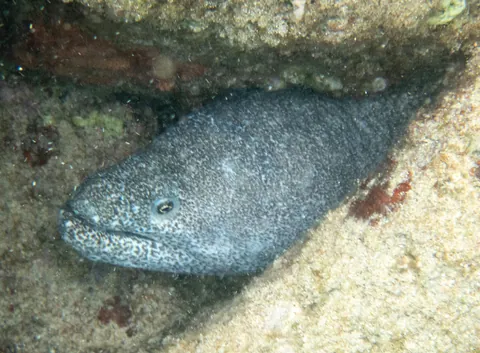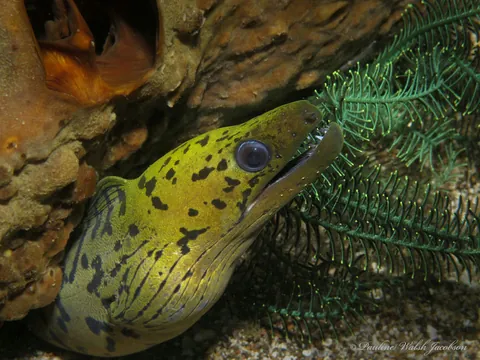
Fimbriated moray
Gymnothorax fimbriatus
moray_eel
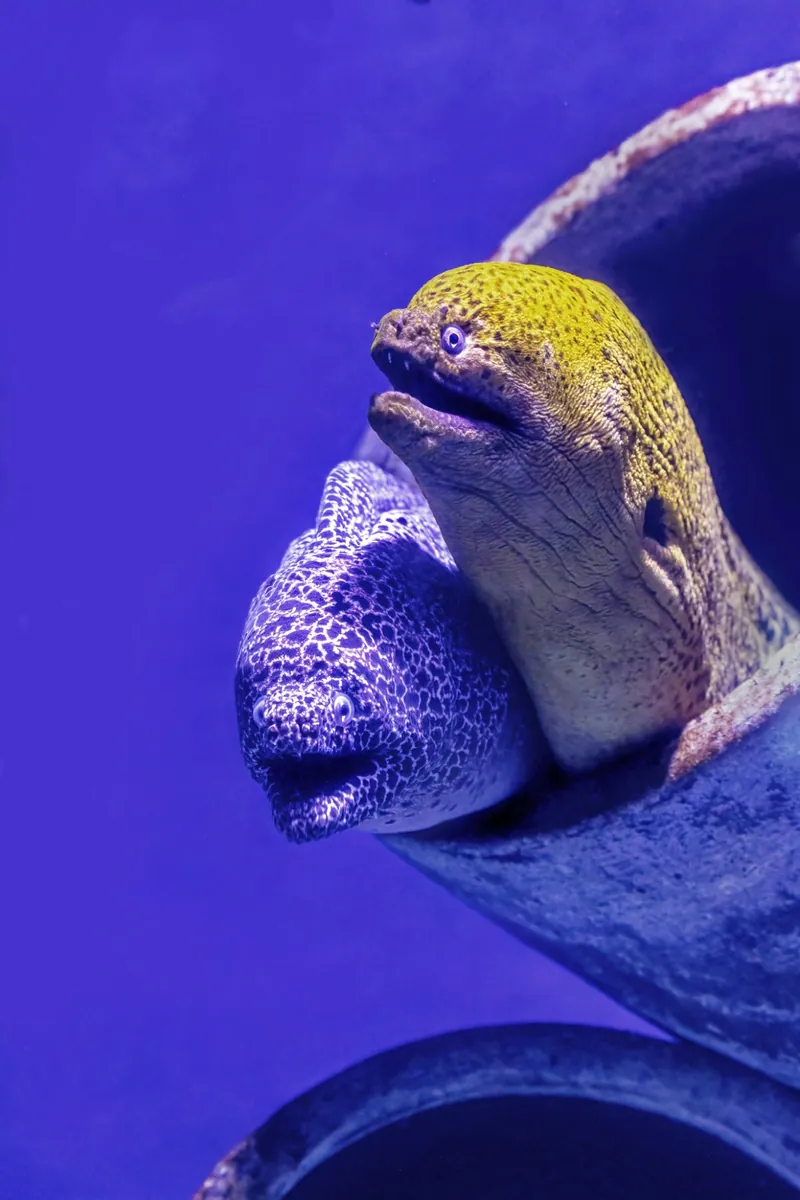
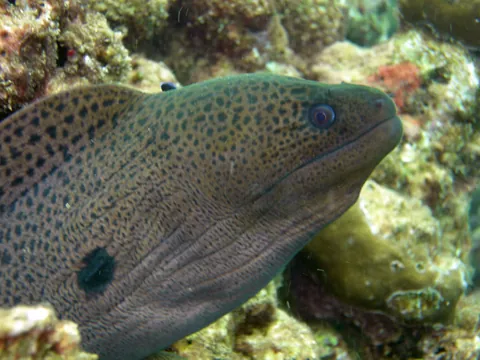
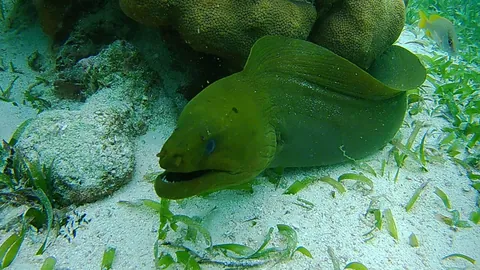
Moray eels are long, snake-like fish that hide in reef holes with just their head showing. In this app the group includes the Giant Moray, the Yellow-edged Moray, and the Spotted Moray.
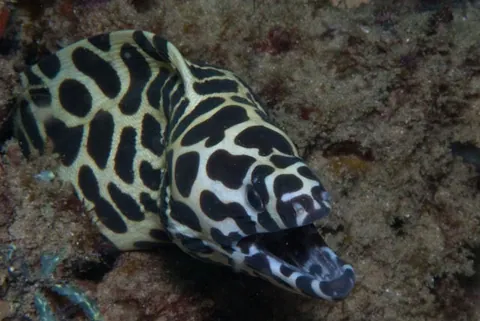
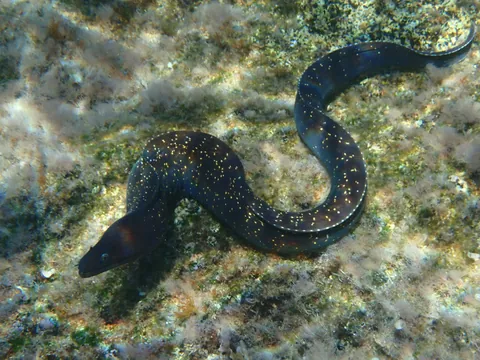
A long, scaleless body with no side fins, resting in a reef hole with only the head out, marks a moray eel; true snakes and sea snakes have scales and no gills. Pattern and colour on the body and inside the mouth are the best way to tell different morays apart.
Morays have a long, snake-like body with no side or belly fins, which gives them their eel shape. A fin runs along the back and joins smoothly with the tail fin. The skin is smooth and scaleless, often patterned, and covered in a protective slime. The jaws are wide and the snout sticks out. Most morays have large, sharp teeth for gripping slippery prey, though a few species have flatter, blunt teeth for crushing shellfish.
Most morays live in the sea, mainly in warm, tropical reef waters, though a few live in cooler temperate seas and one species lives in fresh water. They shelter in holes and crevices in dead reef, rubble, and rocks, from shallow water down to deep parts of the ocean.
Morays are opportunistic hunters that rely on smell more than sight, since their eyes are small. They stay hidden in a hole and ambush prey that comes close, gulping water over their gills to breathe while resting. Larger morays have few predators and act as top hunters on the reef. Some, such as the giant moray, are known to hunt together with roving coral groupers.
Morays mostly eat smaller fish, crabs, and octopuses. A few kinds, such as the snowflake moray, mainly eat hard-shelled prey and have blunt, crushing teeth instead of sharp ones.
Most moray eels lay eggs, releasing them into open water where they are fertilised. The eggs hatch into thin, transparent, ribbon-like larvae that can drift in open water for up to a year before settling on a reef and turning into juvenile eels.
generally harmless if left alone — can bite if provoked or fed
A moray eel's slime is thick enough to glue sand grains together, letting sand-dwelling morays build a burrow with walls that hold their shape.
Describe what you saw and we name it, then keep every species you find in your Oceandex.