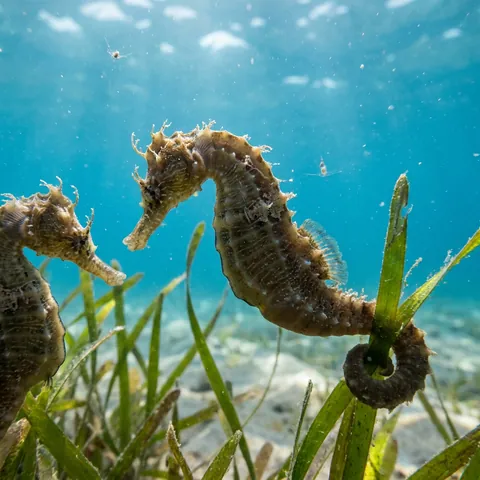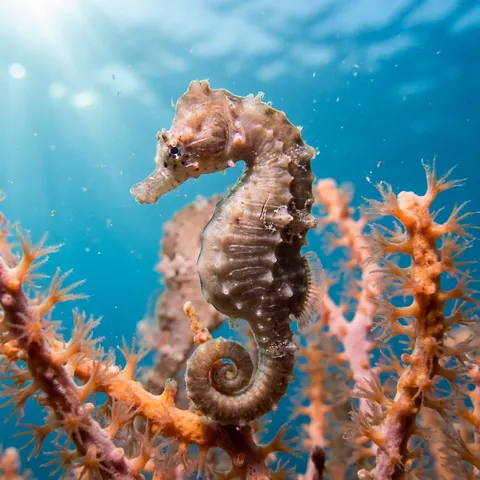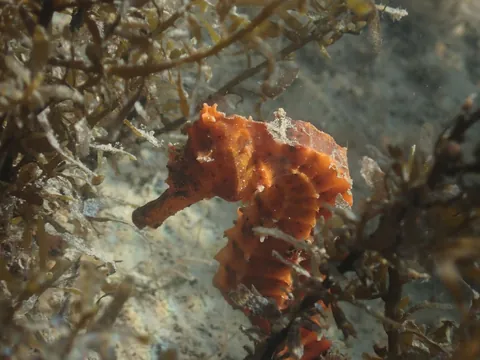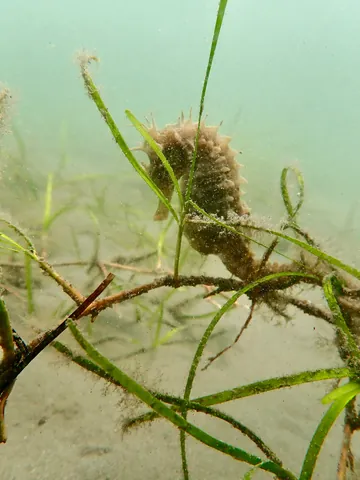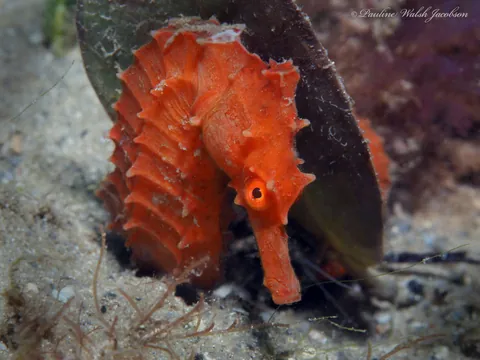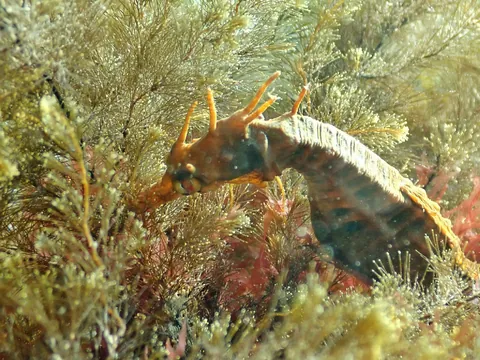
Bigbelly Seahorse
Hippocampus abdominalis
Hippocampus bargibanti
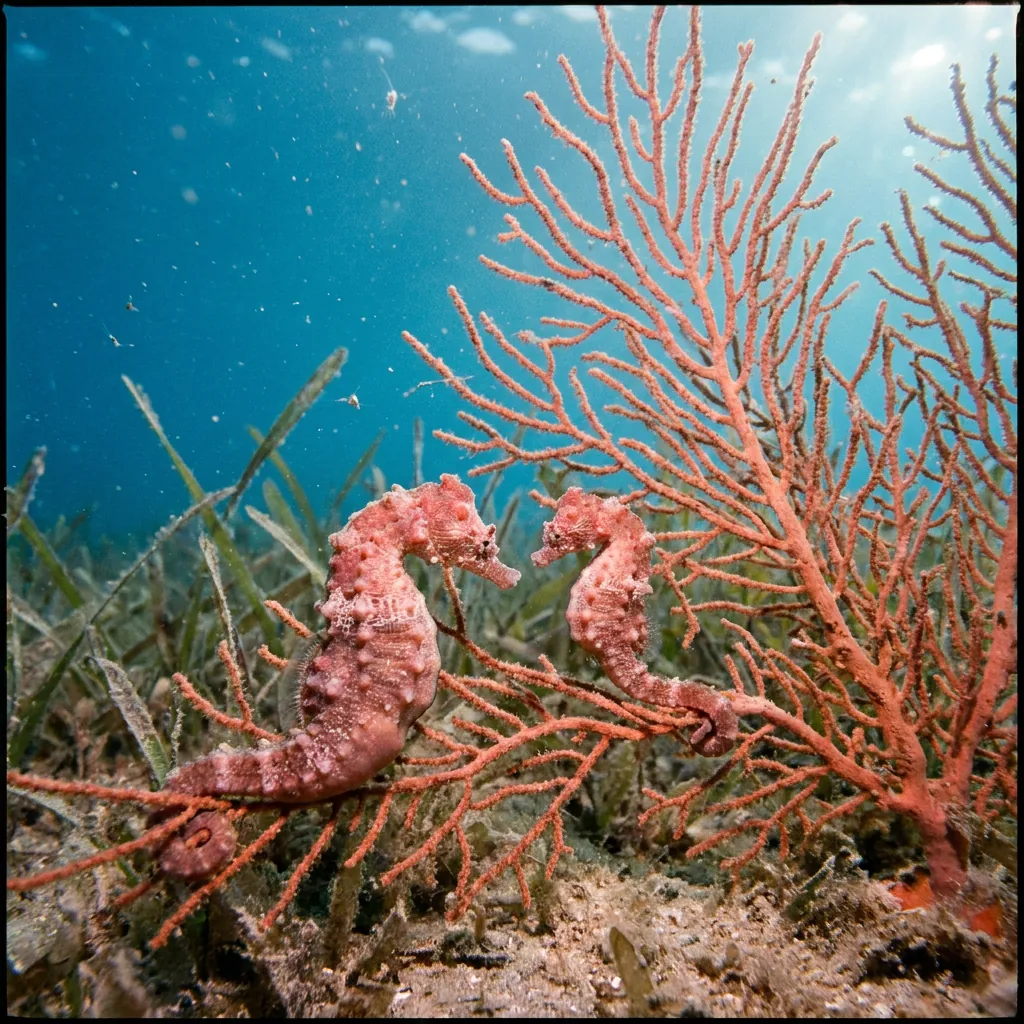
Bargibant's pygmy seahorse is one of the smallest seahorses in the sea, growing to just 2.4 cm. It lives its whole life on a single sea fan, disguised so well that scientists did not notice it until 1969 - and even then only after the coral itself had been collected.
Also known as: bargibant's seahorse, bargibants seahorse, gorgonian seahorse, hippocampus bargibanti
This seahorse is almost impossible to spot against its own sea fan - most divers only find one when a guide points at a bump that turns out to move. The giveaway is the tubercles: unlike a bare-skinned seahorse, its whole body is covered in knobs that mimic the coral polyps around it.
This seahorse is covered in large, rounded bumps called tubercles that match the polyps, the tiny coral animals, of its host sea fan. It comes in two colour forms: grey with red tubercles, or yellow with orange tubercles. Its whole body shape and colour are built to blend into the gorgonian sea fan, a type of soft, fan-shaped coral, it lives on.
Adults usually live in pairs on the same sea fan and may stay with one partner. As with other seahorses, the male carries the young, in a brood pouch on his trunk that sits unusually deep in his body for a seahorse. The female places her eggs into this pouch, the male fertilises them, and he carries them for about two weeks before giving birth to live young. The young look like tiny adults and are independent from the moment they are born.
harmless to humans (tiny and fragile — do not touch the coral)
This species is listed as Least Concern, but very little is known about how many pygmy seahorses there are or whether their numbers are changing, since they are so hard to find. Its striking colours could make it attractive to the aquarium trade, though no trade has been recorded so far. All seahorses are covered by international rules that limit trade across borders.
This species was only discovered because a scientist studying a preserved sea-fan specimen in a lab spotted a pair of tiny seahorses clinging to it - nobody had noticed them living on the coral underwater.
Describe what you saw and we name it, then keep every species you find in your Oceandex.