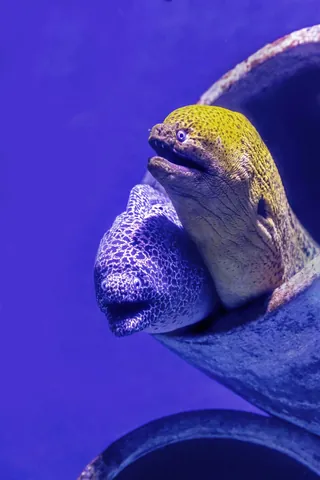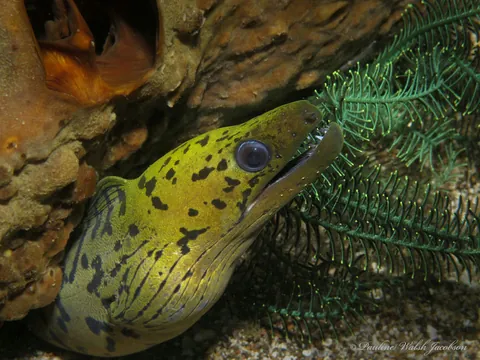
Fimbriated moray
Gymnothorax fimbriatus
Gymnothorax pictus
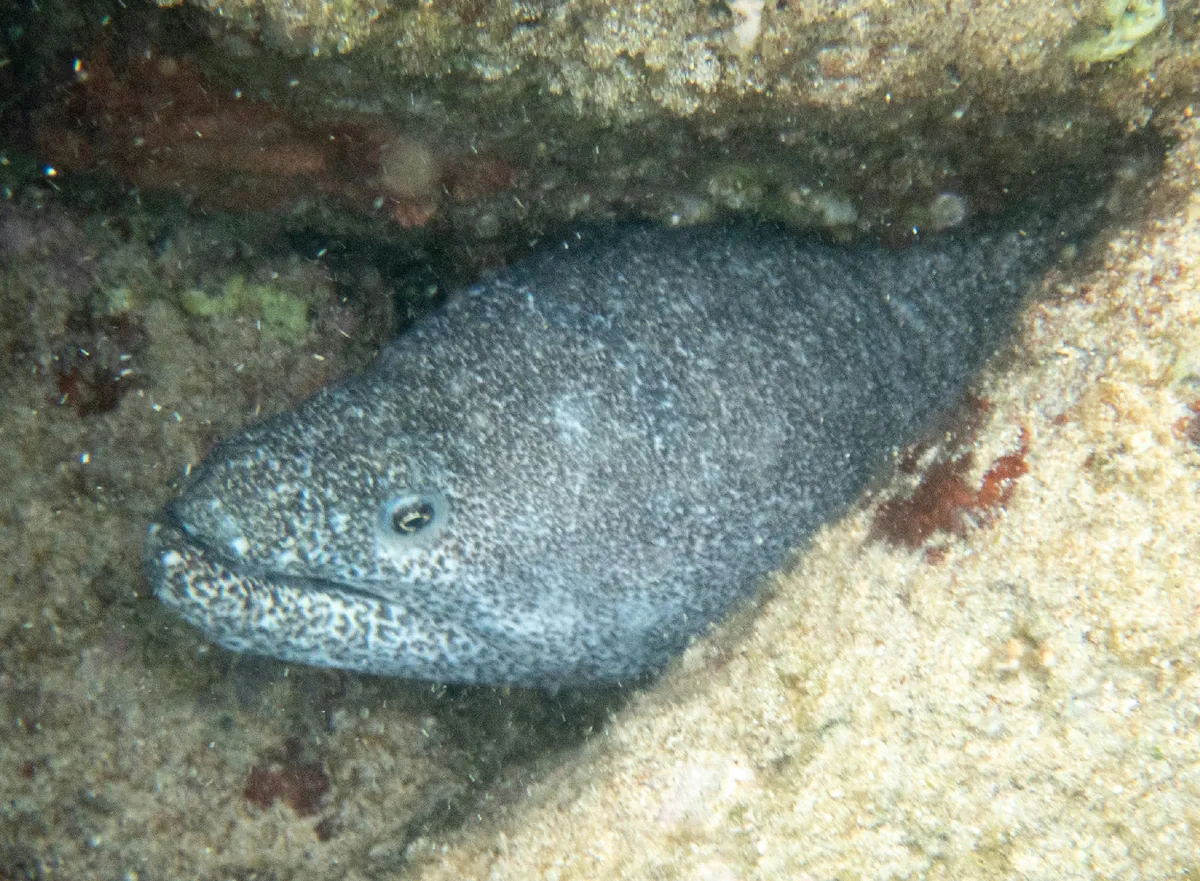
The paintspotted moray is a long, snake-shaped eel of shallow tropical reefs. It reaches 140 cm, which makes it one of the bigger morays a diver is likely to meet on a reef flat. It hunts small fish and crustaceans such as crabs and shrimps. It is also a simultaneous hermaphrodite: each adult carries working male and female organs at the same time.
Also known as: black-speckled reef-eels, giant moray, ocellate moray, paintspotted moray, peppered moray, speckled sidereal moray, speckled sidereal moray, moray eel, peppered moray, painted reef eel, painted moray, speckled sidereal moray, black-speckled reef-eels, paintspotted moray, ocellate moray, giant moray, peppered moray
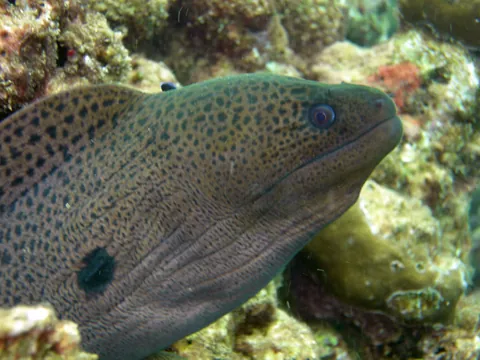
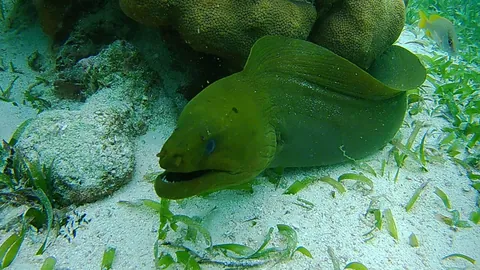
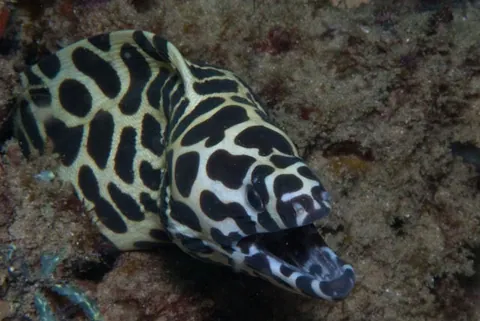
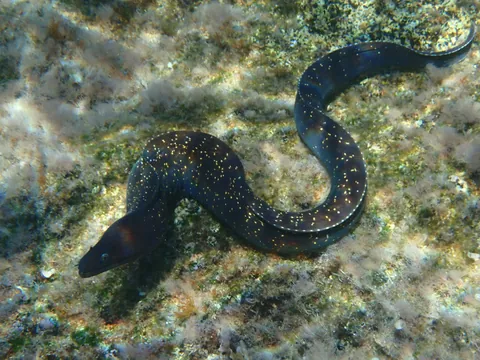
Read the skin. This moray is pale with a dense scatter of dark purplish speckles all over, with no bars or bands anywhere on the body. The peppered look is the mark, and it is easy to see at viewing distance. On an old animal the speckles have merged into larger irregular blotches, but the pattern is still spots joining up, never clean stripes.
The body is pale to greyish and covered in purplish speckles and irregular dark marks. The spots run together more and more as the eel ages, so an old animal can look peppered or blotchy rather than neatly dotted. Young eels look quite different: they are pale purplish with a white belly, and start with either no spots at all or pale spots with hollow centres, which fade as the eel grows. Like other morays it has no paired fins; the dorsal fin starts above or just in front of the gill opening and runs down the body.
It lives across the tropical Indo-Pacific and reaches the islands of the tropical eastern Pacific. It is a shallow-water eel: adults hold reef flats and rocky shorelines, right up into the intertidal zone, the strip that is covered and uncovered by the tide. It is often found in very shallow water over a reef flat. The species has been recorded from 5 m down to 100 m.
This moray sometimes hunts out of the sea. Chasing prey along a reef flat, it will leap clear of the water, and it has been seen fully out of the water on the rocks before slipping back in.
Describe what you saw and we name it, then keep every species you find in your Oceandex.