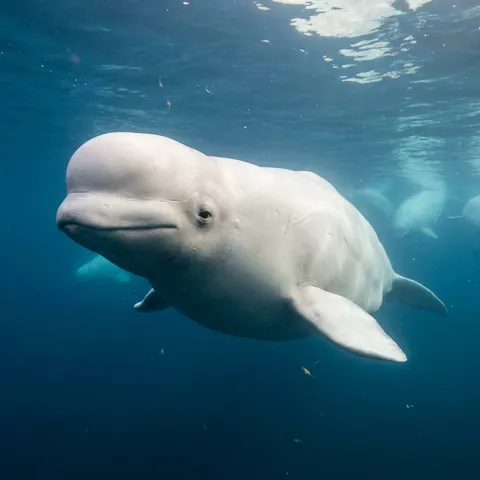
Beluga Whale
Delphinapterus leucas
Balaenoptera acutorostrata
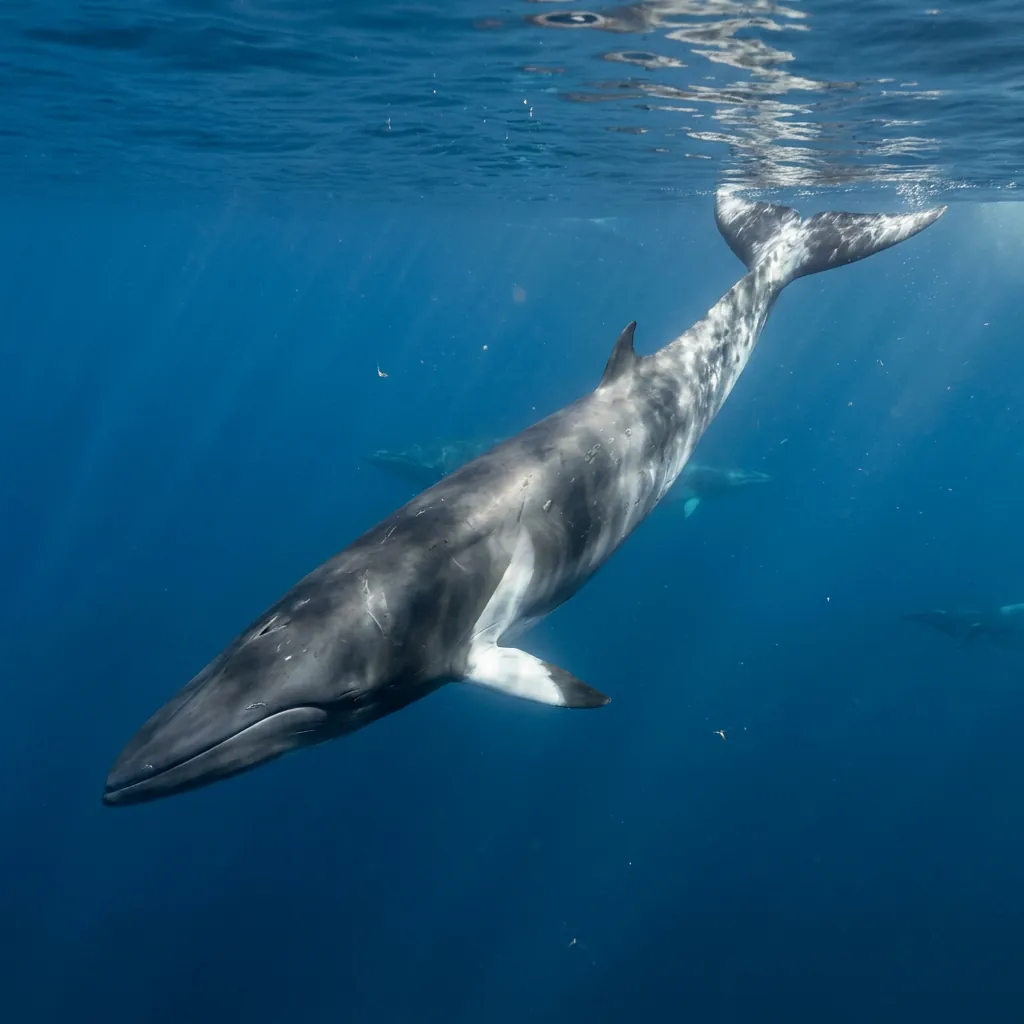
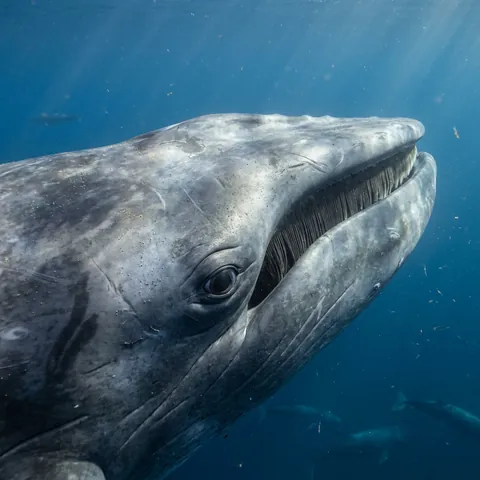
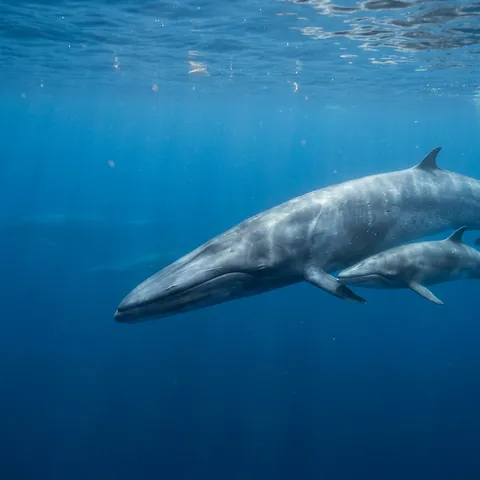
The minke whale is the smallest of the rorquals, the group of whales that lunge-feed by gulping huge mouthfuls of water. It grows to about 10.7 m and 14 tonnes, and dives down to at least 732 m.
Also known as: acutorostrata, balaenoptera acutorostrata, common minke whale, davidson's whale, lesser rorqual, little piked whale
Minke whales live in scattered, disconnected populations rather than one continuous range, spanning both the North Atlantic and North Pacific. They travel between cold, high-latitude waters near the ice edge in summer and warmer waters further south in winter.
Minke whales can cover long distances between feeding areas. Whales tagged and tracked off Iceland made large journeys south along mid-ocean ridges, one covering thousands of kilometres in only a few months. Others tracked in the eastern North Pacific moved between different feeding grounds within a single year.
Minke whales eat small schooling fish, along with krill and other pelagic crustaceans and squid. What they eat shifts with the region and the season: in parts of the Barents Sea capelin dominates the diet, while elsewhere krill or herring take over.
Females mate with more than one partner. After a lengthy pregnancy, a single calf is born; twins are recorded but rare. The calf nurses on its mother's milk for a time before it is weaned. Mothers can become pregnant again while still nursing a calf.
harmless to humans
The minke whale is not considered at risk. Surveys across its range consistently find large numbers, though exact counts vary a great deal between studies and regions.
The name 'minke' may come from a mistake: a Norwegian whaling hand named Meincke is said to have once pointed out a school of these small whales, thinking they were blue whales. His crewmates began calling the modest-sized species a 'Minke's whale' after his blunder, and the name stuck.
Describe what you saw and we name it, then keep every species you find in your Oceandex.