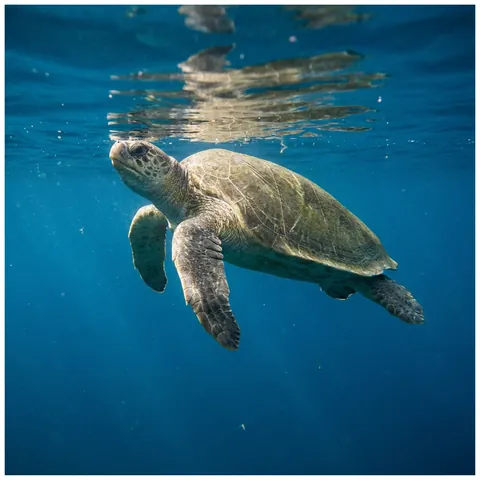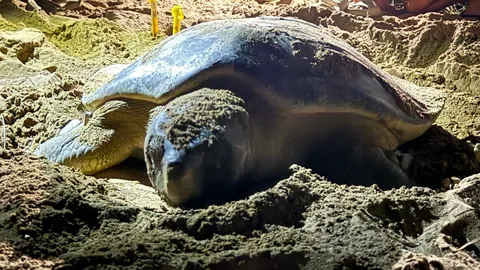
Flatback Sea Turtle
Natator depressus
Caretta caretta
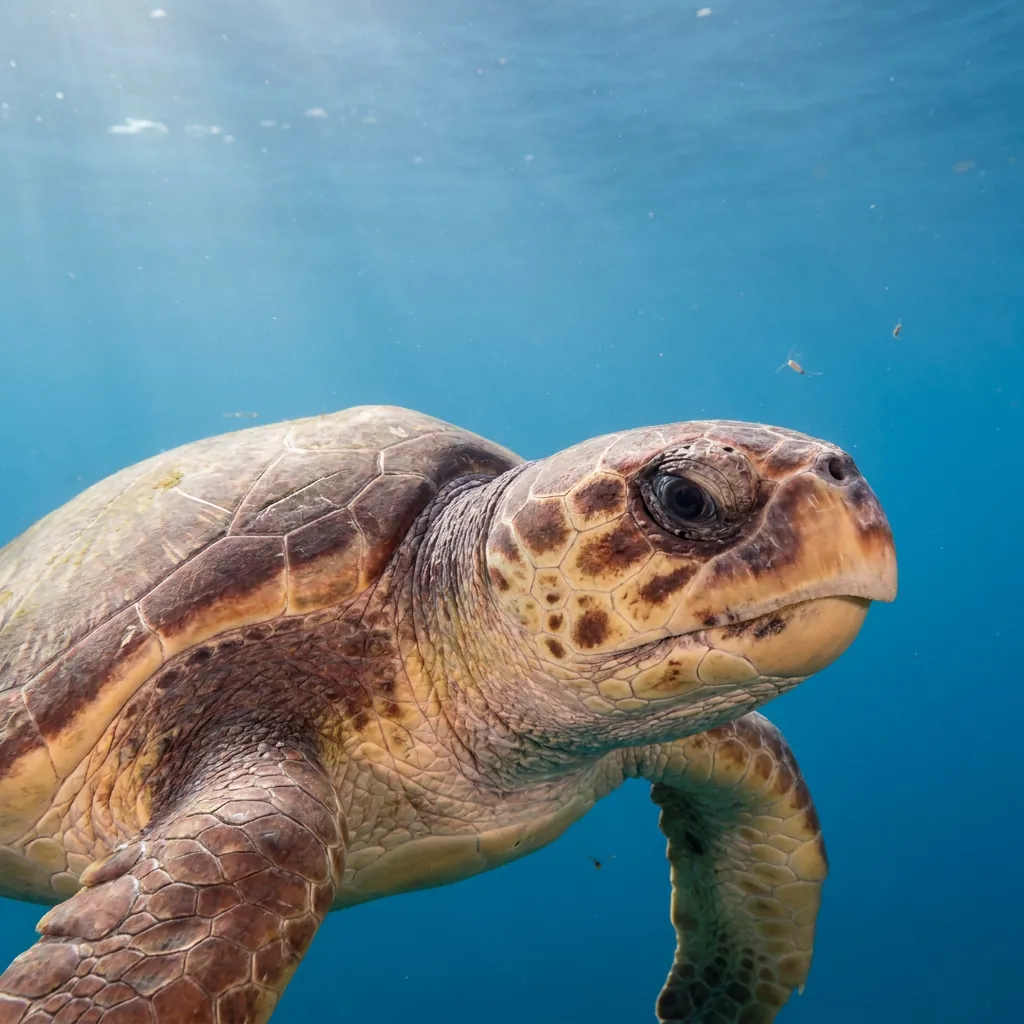
The loggerhead turtle is the world's largest hard-shelled sea turtle, a powerful-jawed traveller that ranges across more of the world's oceans than any other sea turtle.
Also known as: caretta caretta
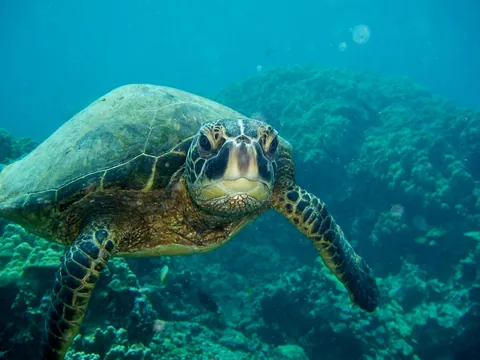
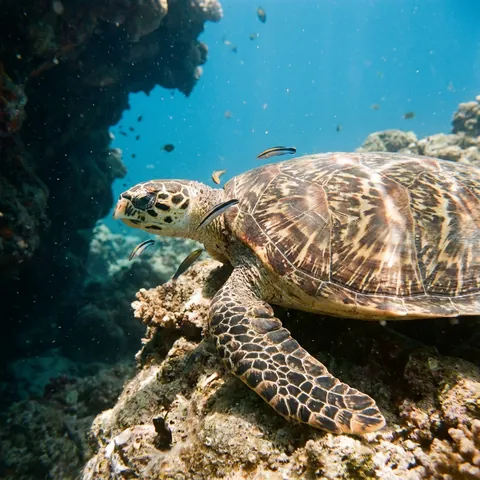
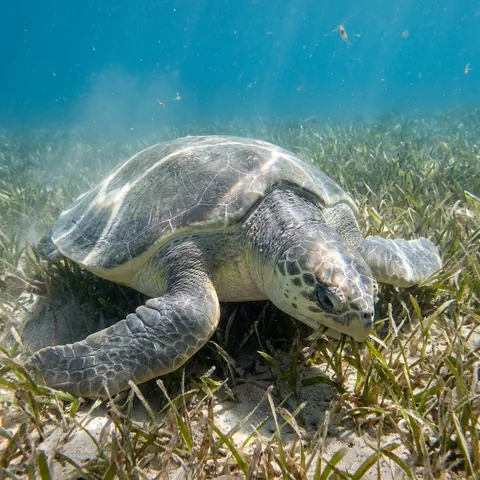
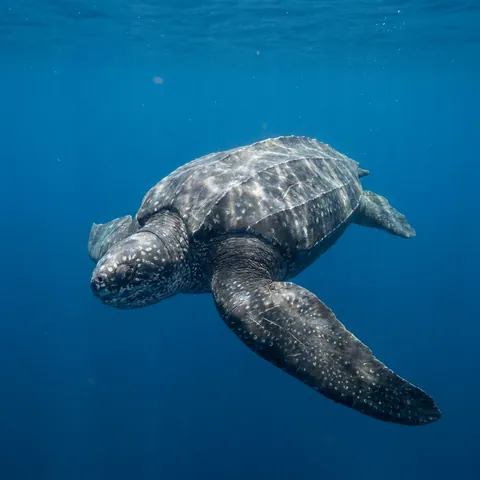
The loggerhead can be confused with other large sea turtles sharing its range, especially the green turtle. The clearest check is the shell's colour, which runs noticeably warmer and redder than that of other sea turtles nearby.
The loggerhead has a large, hard shell made of two parts: the carapace (upper shell) and the plastron (underside). The head and carapace range from yellow-orange to reddish-brown, while the plastron is pale yellow, and the neck and sides are brown on top and yellow below. The carapace is built from large plates called scutes: five run down the centre, flanked by five pairs along the sides, with about eleven or twelve smaller pairs rimming the edge. It commonly reaches about 100 cm in shell length, with a maximum of about 125 cm.
The loggerhead turtle has the broadest range of any sea turtle, living in the Atlantic, Indian, and Pacific Oceans as well as the Mediterranean Sea. It can dive to around 200 m but usually stays above about 40 m, foraging over open seabed and reef habitat between long migrations.
Loggerheads are most active during the day, spending much of their time either resting on the bottom or swimming slowly, and they can remain submerged for far longer than most other air-breathing marine animals. Young loggerheads swim by kicking with their hind limbs alone, but by their first year they switch to the adult style of paddling with all four limbs together.
The loggerhead is omnivorous and has a broader prey list than any other sea turtle, feeding mainly on bottom-dwelling animals such as whelks, conchs, bivalves, and horseshoe crabs. It uses its large, powerful jaws to crush hard-shelled prey, and while migrating through open water it also eats jellyfish, floating molluscs, and squid.
Loggerhead courtship and mating usually happen out at sea along migration routes rather than near the nesting beach, unlike most other sea turtles. Males court females with nuzzling and gentle biting before mating. Females lay several clutches of eggs in a season and then go several years before nesting again.
harmless to humans (vulnerable — do not disturb)
The IUCN lists the loggerhead turtle as Vulnerable.
Unlike most other sea turtles, loggerheads usually mate and court out at sea along their migration routes, not near the beach where they will eventually nest.
Describe what you saw and we name it, then keep every species you find in your Oceandex.