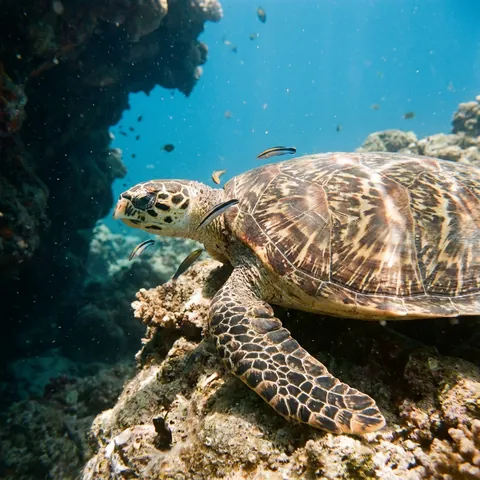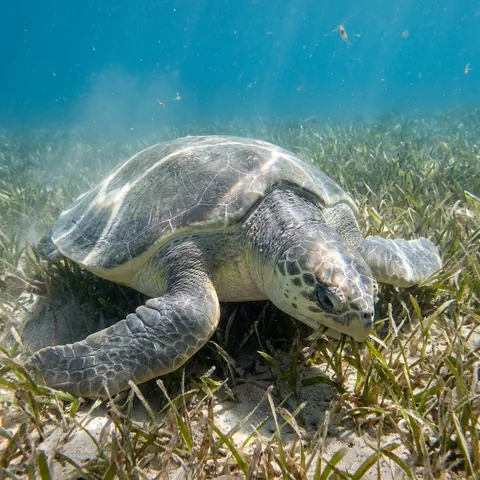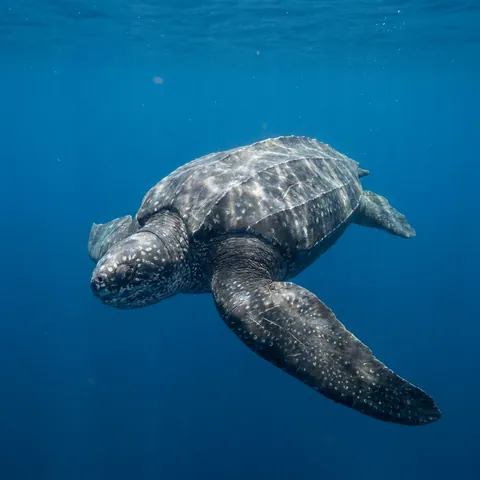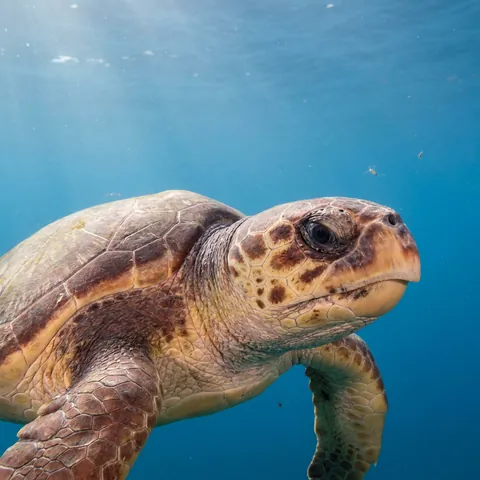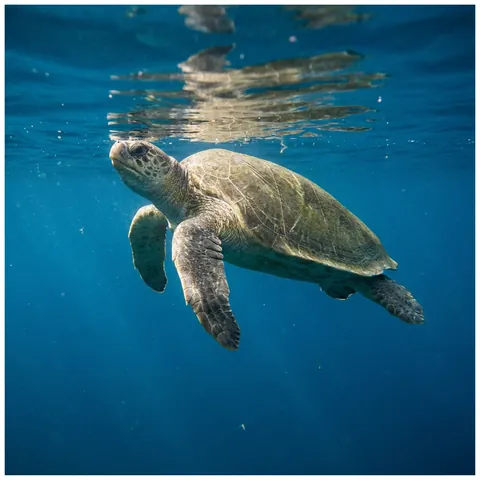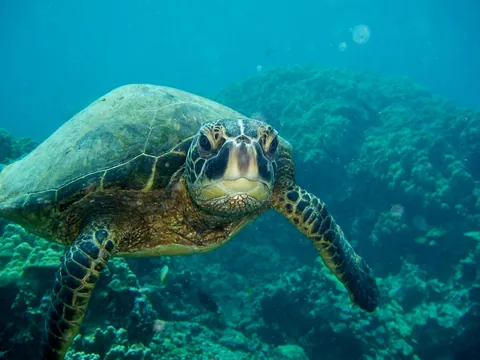
Green Turtle
Chelonia mydas
Natator depressus
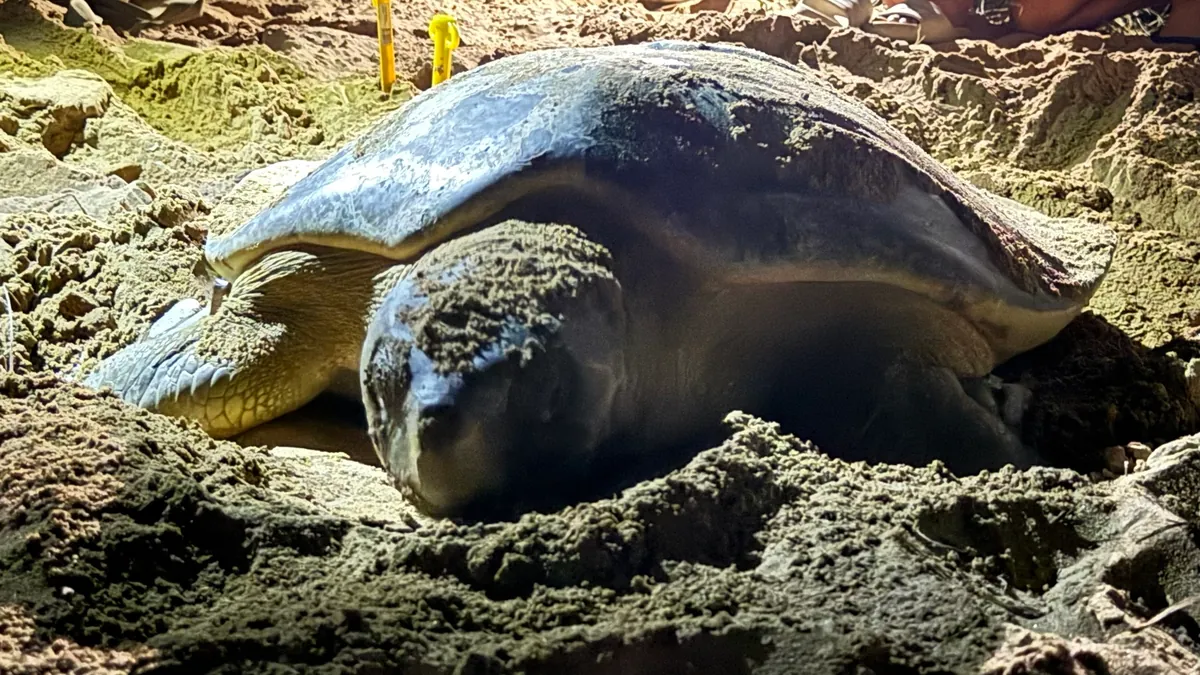
The flatback turtle is found only around Australia, giving it the smallest range of any sea turtle. Its low, flattened shell sets it apart from every other species in the group, and its unusually thin shell can crack under surprisingly light pressure.
Also known as: flatback turtle
Other sea turtles have a higher, more domed shell. The flatback's shell stays low and flat with upturned side edges, the quickest way to pick it out at a glance.
This turtle has a smooth, flat-domed shell with edges that curl upward along the sides, unlike the higher-domed shells of most sea turtles. Its shell plates do not overlap. The colour is olive green or a mix of grey and green, matching the head, while the underside of the shell is pale yellow.
It lives on the continental shelf and in shallow coastal waters, rather than crossing the open ocean like other sea turtles. Its range covers northern Australia, the Torres Strait, and the Gulf of Carpentaria, extending into nearby waters off Papua New Guinea and Indonesia.
Hatchlings have grey backs with dark-edged shell plates, a white belly, and blue eyes. Unlike other sea turtle hatchlings, they stay close to shore from the start instead of drifting far out to sea. Adults favour soft, sandy or muddy sea floors over reef habitat.
It eats mostly meat, feeding on soft corals, sea cucumbers, shrimp, jellyfish, molluscs, and other invertebrates in the shallow waters where it lives. It rarely eats plants, though it will occasionally graze on seagrass.
Flatback turtles nest only on soft sandy beaches in Australia, avoiding shorelines with coral reefs close by. A female returns to the same beach to lay several clutches in one season and comes back again in later years. Her clutches hold fewer eggs than other sea turtles lay, but the eggs themselves are large.
The IUCN lists this species as data deficient, though Australia lists it as vulnerable nationally. It is thought to be the least endangered sea turtle, since there is little demand for its meat and it rarely strays far enough from shore to get caught in fishing nets. Its main threats are coastal development that destroys nesting beaches, vehicle tracks that can trap hatchlings on the sand, and the harvest of eggs and meat, which Australia's indigenous communities are permitted for non-commercial use.
Unlike every other sea turtle, flatback hatchlings skip the long open-ocean drifting phase and stay in shallow coastal waters their whole lives.
Describe what you saw and we name it, then keep every species you find in your Oceandex.