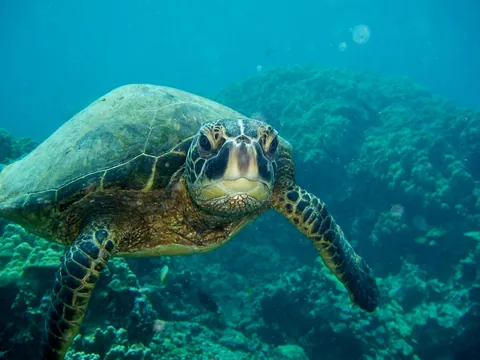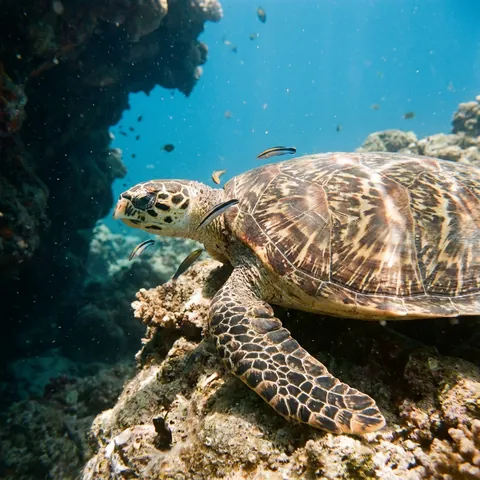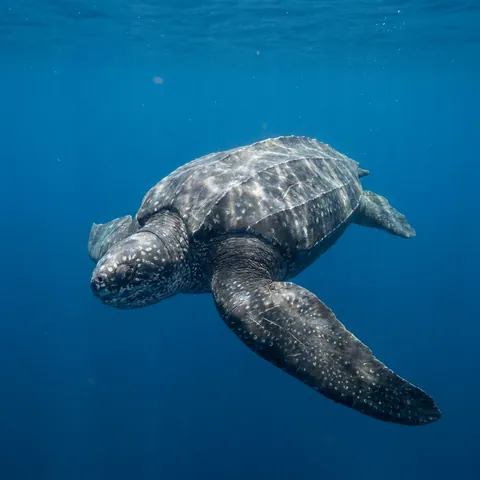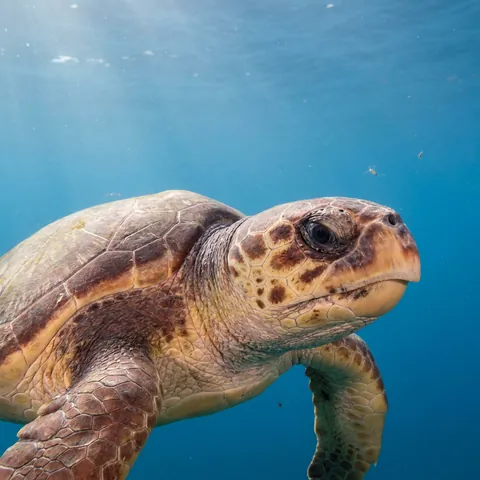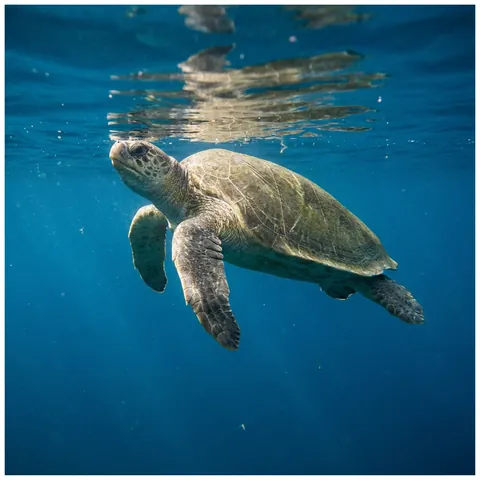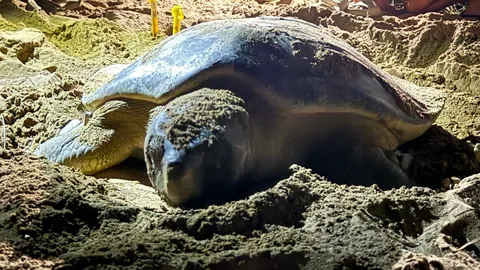
Flatback Sea Turtle
Natator depressus
Lepidochelys kempii
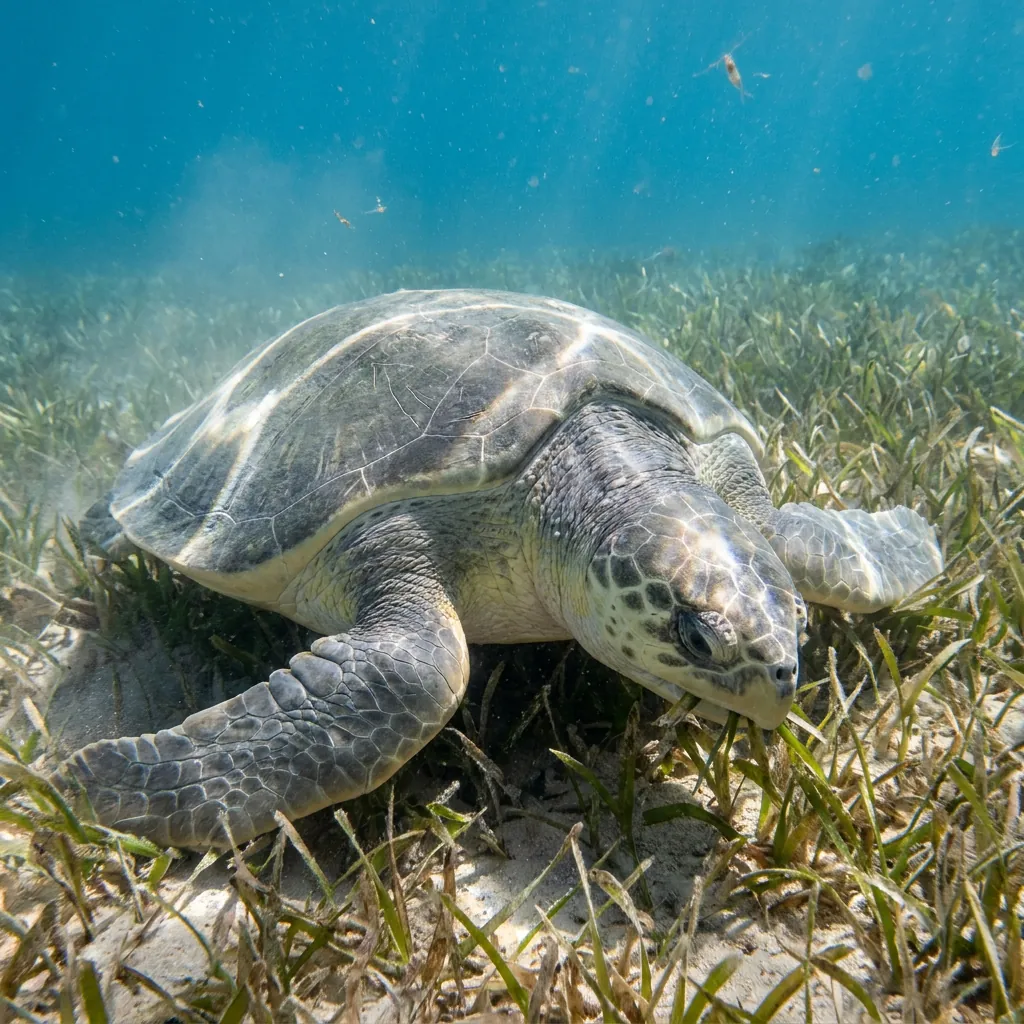
Kemp's ridley is the smallest sea turtle in the world, and one of the rarest sights a diver in the Gulf of Mexico can hope for. Its whole population still nests on just a handful of beaches.
Also known as: kemp's ridley, atlantic ridley, gulf ridley, mexican ridley
It can be mistaken for a loggerhead turtle sharing the same waters. Look for the almost round, grey-green shell, which is rounder and greyer than a loggerhead's heart-shaped, reddish-brown one.
The shell is almost circular, nearly as wide as it is long, and coloured olive-grey in adults. The body is flattened top to bottom, with flipper-like front limbs and a hooked beak built for crushing. Hatchlings start out dark purple all over, but adults develop a grey-green shell with a yellow-green to white underside.
Adults live mostly in the Gulf of Mexico, feeding over the shallow continental shelf. Younger turtles first drift in floating mats of Sargassum seaweed, then range more widely along the Atlantic coast of the United States as they grow toward maturity.
This is the only sea turtle that nests mainly during daylight. Most females return to a single beach in Tamaulipas, Mexico, arriving together in mass groups called arribadas, a Spanish word for 'arrivals'. Males tend to stay closer to the breeding grounds rather than travelling far.
It eats mollusks, crustaceans such as crabs and shrimp, jellyfish, fish, sea urchins, and algae. Young turtles feed near the surface, while adults dive to the bottom and feed mainly on crabs.
Kemp's ridley is listed as Critically Endangered. Egg harvesting and poaching first drove its numbers down, and it now faces habitat loss, pollution, and entanglement in shrimping nets. Conservation work focuses on protecting nesting beaches, cutting bycatch, and rescuing and rehabilitating injured turtles.
Of all the endangered sea turtles that use the Gulf of Mexico, Kemp's ridley is the only one that depends on it as its entire breeding ground.
Describe what you saw and we name it, then keep every species you find in your Oceandex.