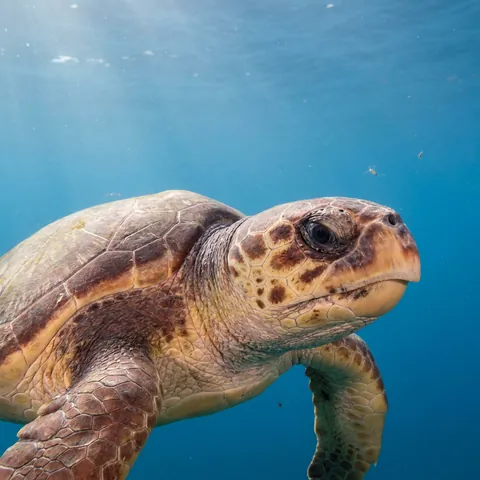
Flatback Sea Turtle
Natator depressus
Lepidochelys olivacea
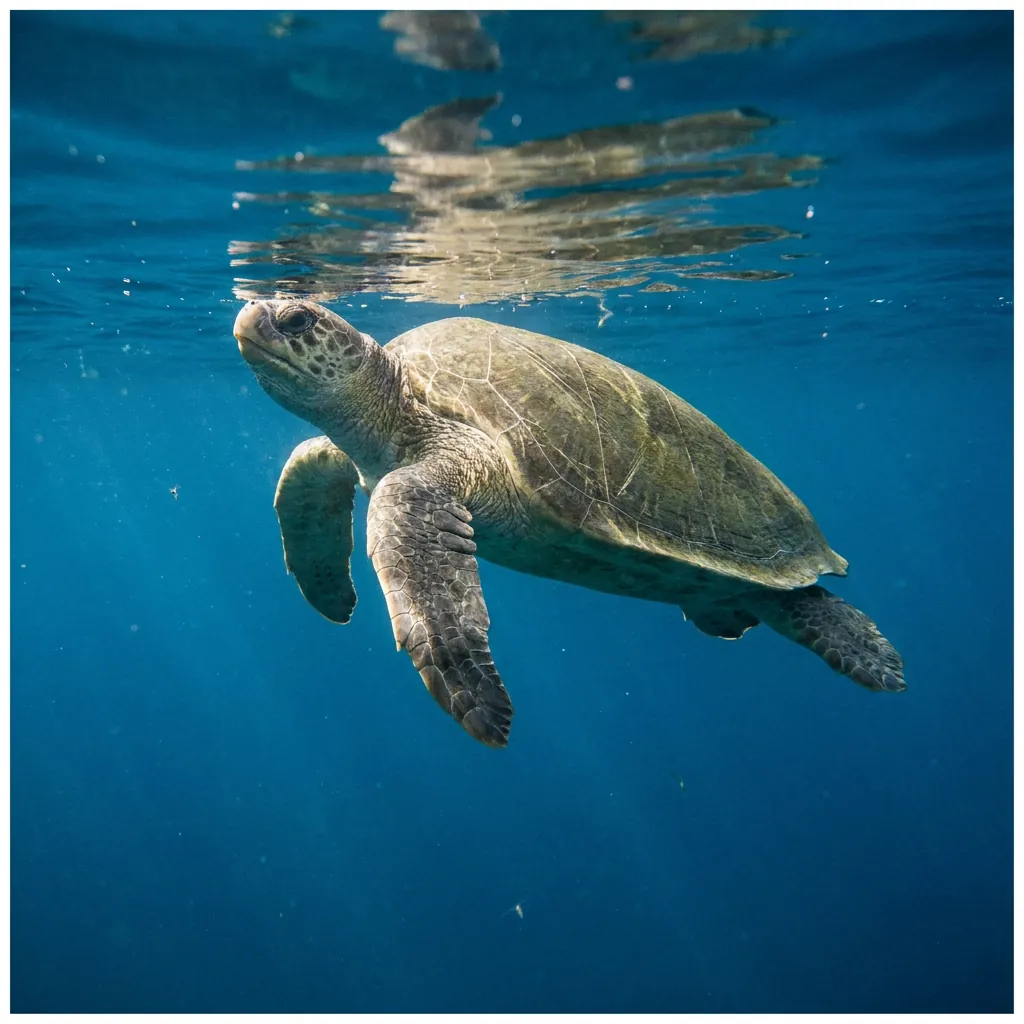
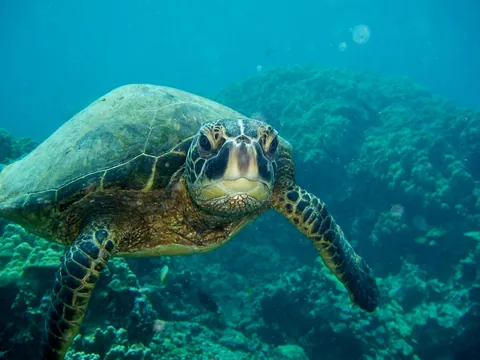
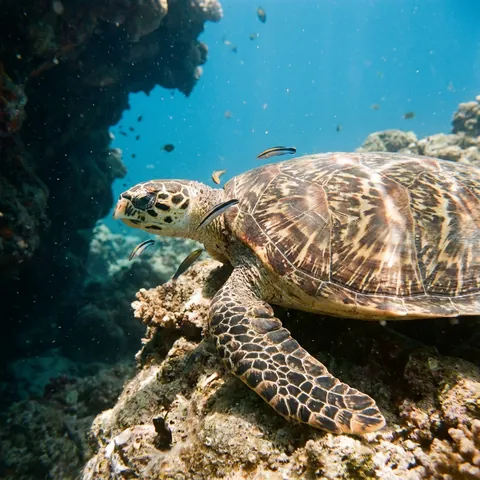
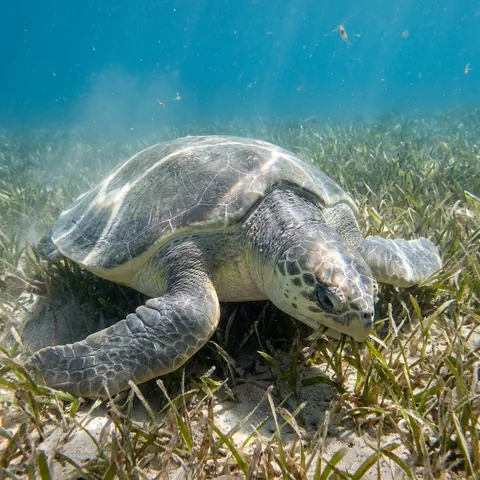
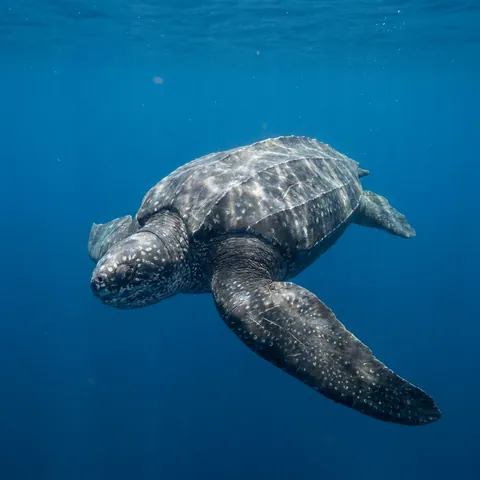
The second-smallest sea turtle in the world, the olive ridley is named for the muted green-brown colour of its shell, and is famous for a nesting spectacle few other animals can match.
Also known as: bastard sea turtle, lepidochelys olivacea, olive ridley, olive ridley sea turtle, olive ridley seaturtle, pacific ridley
Sea turtles can be hard to tell apart at a glance, but the olive ridley is unusual in the animal kingdom for the number of large plates on the sides of its shell: unlike other sea turtle species, which have a fixed number, this species' count varies from one turtle to the next.
This turtle has a heart-shaped, rounded carapace, or upper shell, in an olive-green colour. Males and females grow to about the same size, though females tend to have a slightly more rounded shell than males.
Olive ridleys live in warm and tropical waters worldwide, mainly across the Pacific and Indian Oceans, diving down to about 200 metres. They spend most of their lives at sea, coming to shore only to nest.
This turtle is mostly carnivorous, feeding on a wide range of bottom-dwelling animals such as sea squirts, starfish, sea urchins, squid, snails, shrimp, crabs, and lobsters. It also eats jellyfish and, in areas where other food is scarce, filamentous algae.
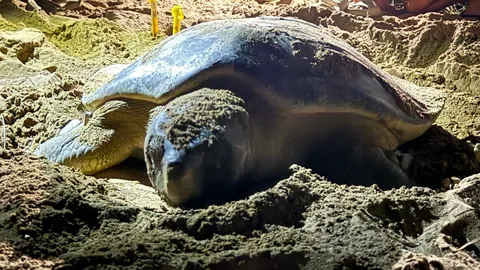
Olive ridleys are best known for the arribada, a mass nesting event in which large numbers of females come ashore on the same beach at the same time to lay their eggs. One of the largest known nesting grounds is Gahirmatha Beach in India.
harmless to humans (vulnerable — do not disturb nesting turtles)
Olive ridleys are listed as Vulnerable. Historically they were harvested in very large numbers for their meat, oil, leather, and especially their eggs, and although egg collection is now illegal across most of their nesting range, the laws are often poorly enforced. A small number of places, such as Ostional in Costa Rica, run a legal, managed egg harvest instead.
It is both the second-smallest and, historically, the most abundant sea turtle species in the world.
Describe what you saw and we name it, then keep every species you find in your Oceandex.