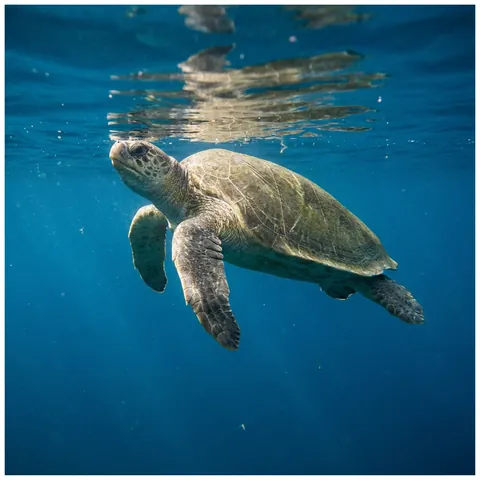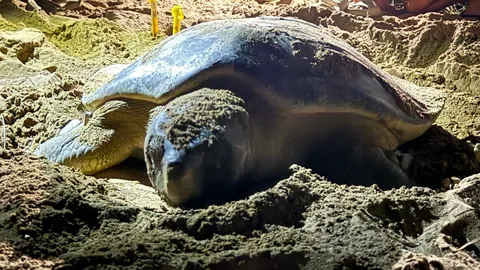
Flatback Sea Turtle
Natator depressus
Chelonia mydas
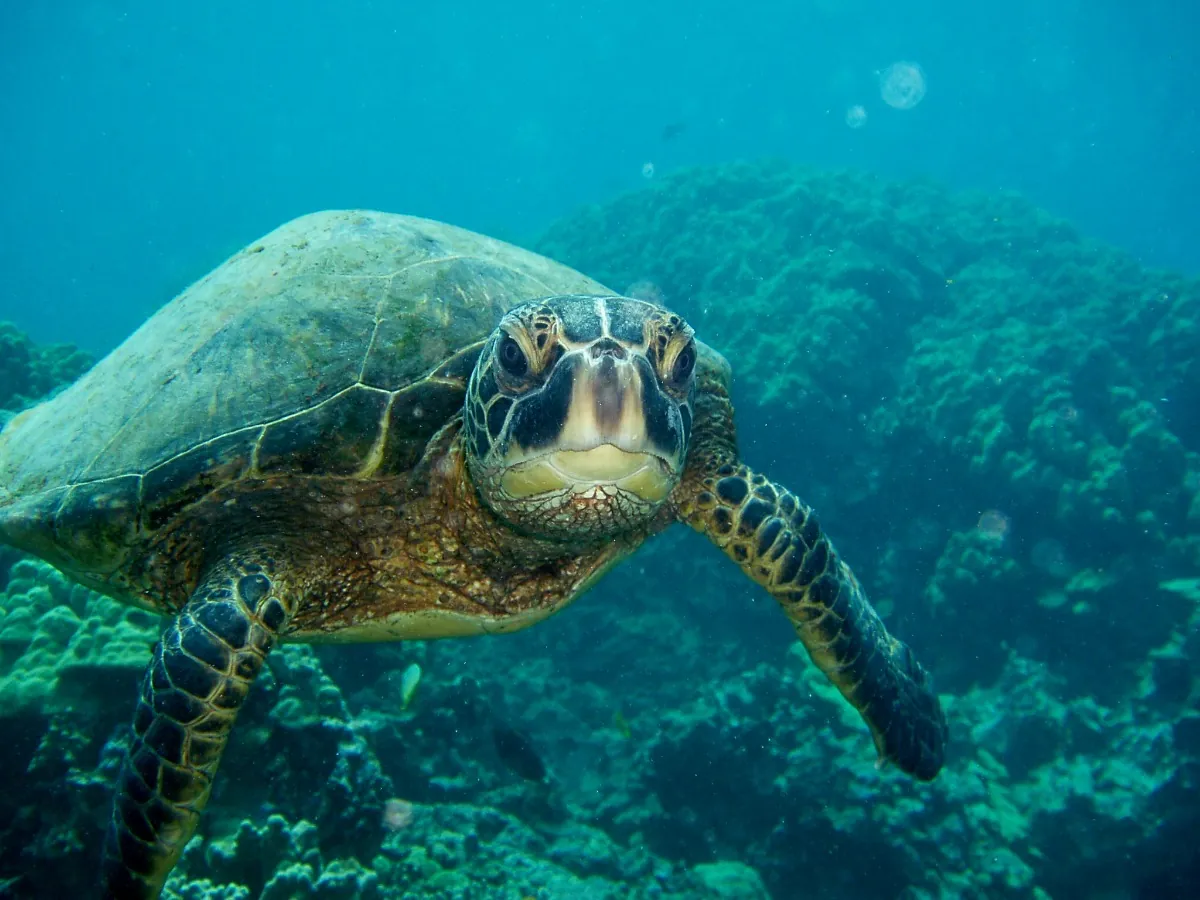
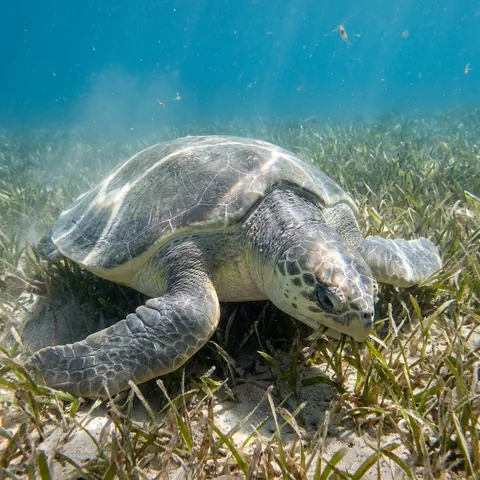
The green turtle is one of the most familiar sea turtles on tropical reefs, a slow-grazing traveller that can cross entire oceans between its feeding grounds and the beach where it was born.
Also known as: black turtle, chelonia mydas, common green sea turtle, common green turtle
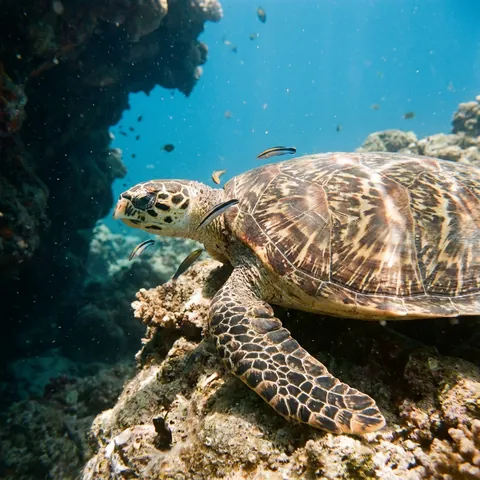
Green turtles are often confused with hawksbill turtles, the other common sea turtle seen on tropical reefs. The single best check is the beak: a green turtle's is short and rounded, not the narrow, hooked, bird-like beak of a hawksbill.
The green turtle has a flattened, oval shell called a carapace, made up of a row of central plates flanked by plates on each side. It has a small, beaked head on a short neck that cannot be pulled fully into the shell, and paddle-shaped flippers built for swimming rather than walking. A single pair of large scales, called prefrontal scales, sits on top of the head between the eyes. It commonly grows to about 90 cm and can reach up to about 105 cm.
Green turtles live in tropical and subtropical oceans worldwide, along coastlines and around islands, and also cross the open ocean on migration between feeding and nesting areas. They can dive to around 200 m, though most feeding happens much shallower, in seagrass meadows and on reefs.
Green turtles migrate long distances between their feeding grounds and the beaches where they nest, and adults often return to lay eggs on the very beach where they hatched. Females typically nest only every two to four years, while males visit breeding areas every year hoping to mate.
Young green turtles are carnivorous, eating small invertebrates and other animal matter, but as they grow they shift to a mostly plant-based diet of algae and seagrass. Their jaw has a serrated edge suited to cropping and chewing tough plant material.
Mating takes place at sea, near the nesting beaches, and males perform elaborate courtship displays to attract females. On land, a female comes ashore, digs a nest in the sand, lays her eggs, and returns to the water, leaving a track behind her. Nesting activity peaks from May to August.
harmless to humans (endangered — observe without touching)
The IUCN lists the green turtle as Endangered.
The green turtle is named for the greenish colour of its body fat, a result of its plant-heavy diet, not the colour of its shell or skin.
Describe what you saw and we name it, then keep every species you find in your Oceandex.