Clownfish
clownfish
Amphiprion ocellaris
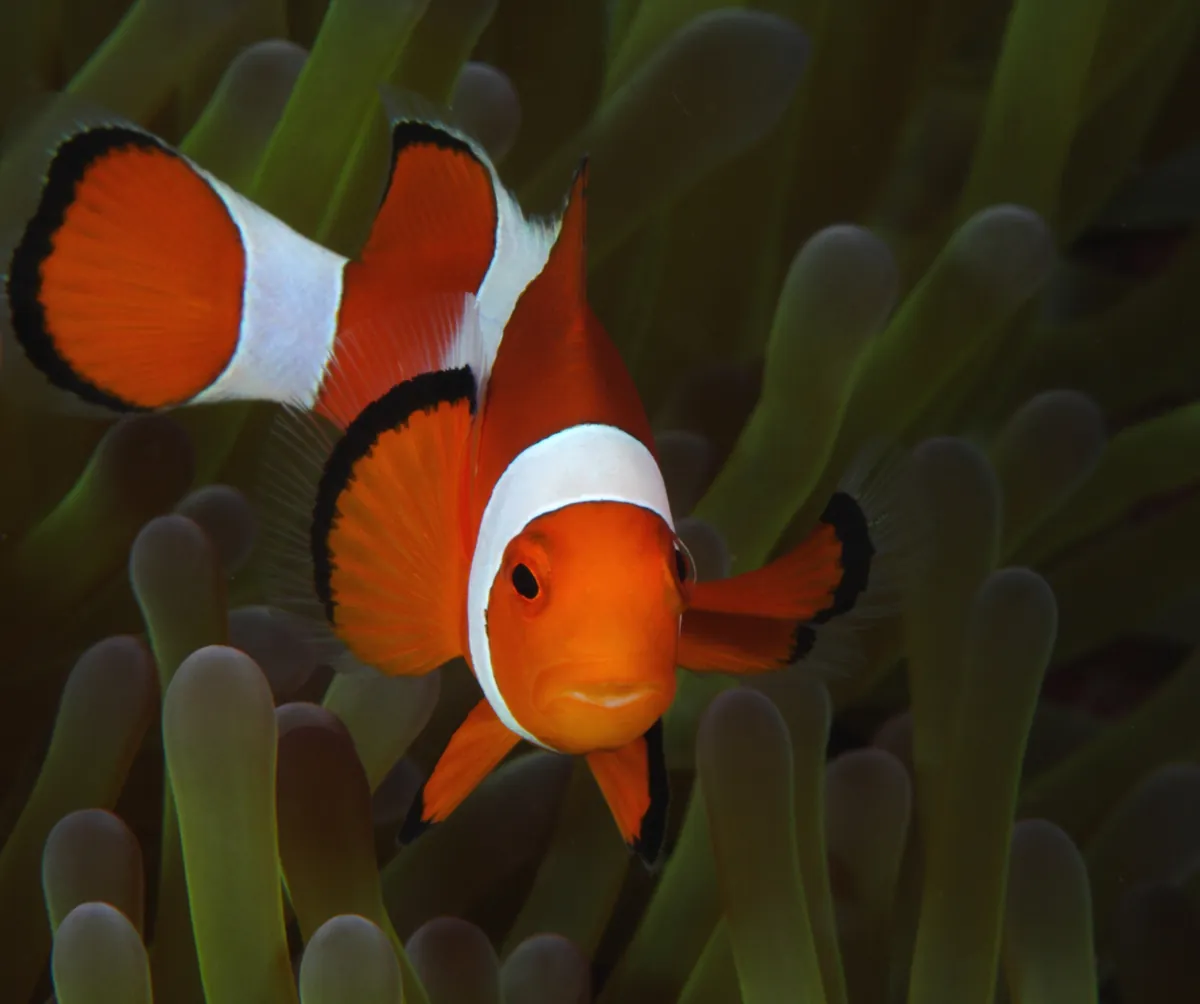
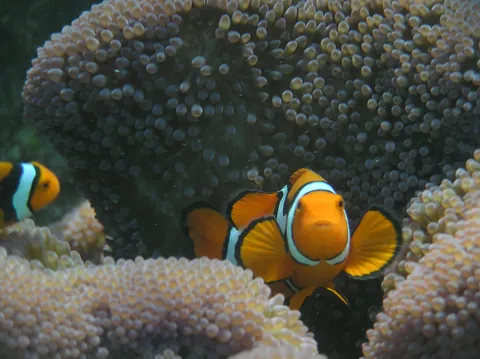
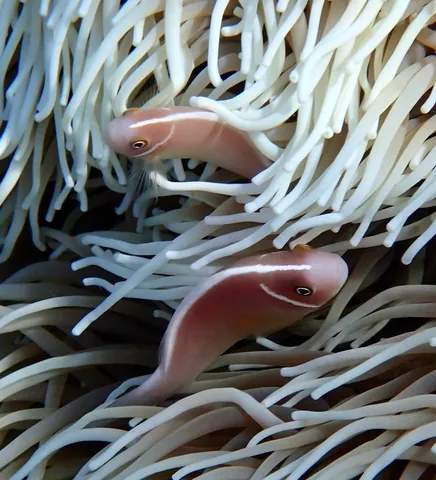
The common clownfish, also called the ocellaris clownfish, is one of the best-known reef fish. It lives in a close partnership with sea anemones, sheltering unharmed among their stinging tentacles.
Also known as: amphiprion ocellaris, anemone demoiselle, anemone fish, black anemonefish, black clownfish, black ocellaris clown, clown anemonefish, clownfish, common clown, damselfish, demoiselle, false clown anemonefish, false clownfish, false percula clownfish, frostbite anemonefish, frostbite clownfish, nemo, puller, western clown anemonefish, western clownfish
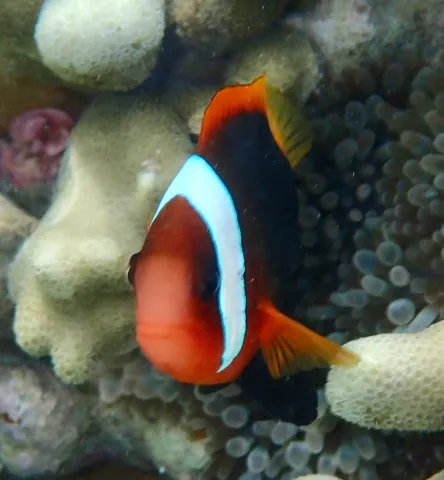
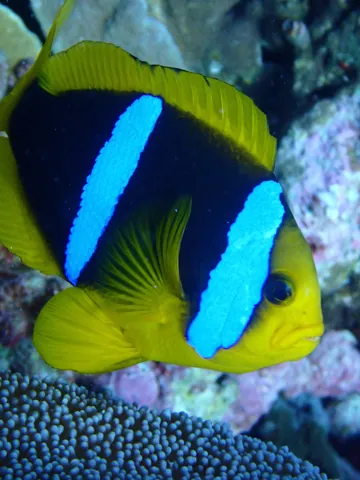
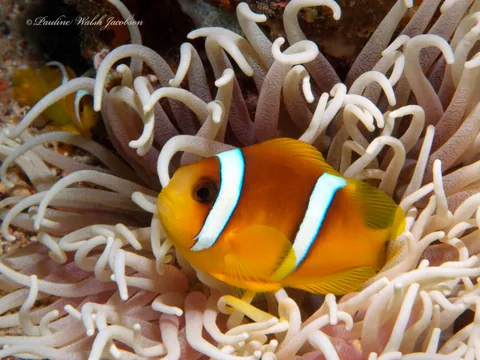
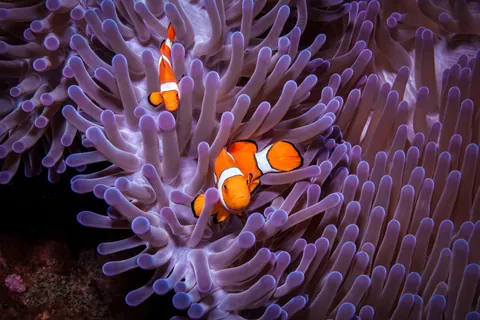
Look for three white bars, each outlined in a thin black line, crossing an orange to reddish-brown body. These bars stay the same even where the background colour varies, and the fish is almost always seen close to a sea anemone.
It has a stocky, oval body, flattened from side to side. Colour is usually orange to reddish-brown, though some populations are black, all marked with three vertical white stripes outlined in a thin black line. It grows up to 11 cm long, with females larger than males.
It lives in small groups on outer reef slopes or in sheltered, shallow lagoons, usually no deeper than about 15 m, always close to a host sea anemone.
It is active by day and completely dependent on its host anemone for shelter, rarely straying far from it. Groups form a strict pecking order, with one dominant pair at the top. It is aggressively territorial and will defend its anemone against other reef fish.
It feeds on algae along with copepods and other zooplankton.
Pairs are monogamous. Before spawning, the male prepares a nest close to the anemone so its tentacles can guard the eggs. The female lays eggs there for one to two hours, then leaves the male to fertilise and guard them, fanning the eggs and eating any that are infertile or diseased.
harmless
Each anemone holds a strict pecking order, and when the dominant fish dies, the next-largest fish in line takes its place. Some young clownfish deliberately choose an anemone with a shorter line-up, since it means a faster route to becoming the dominant fish.
Describe what you saw and we name it, then keep every species you find in your Oceandex.