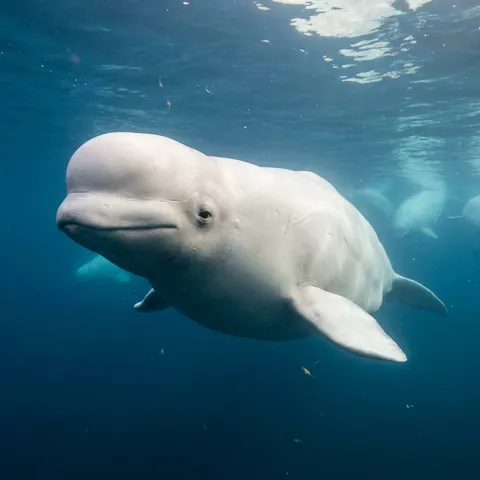
Beluga Whale
Delphinapterus leucas
Balaenoptera musculus
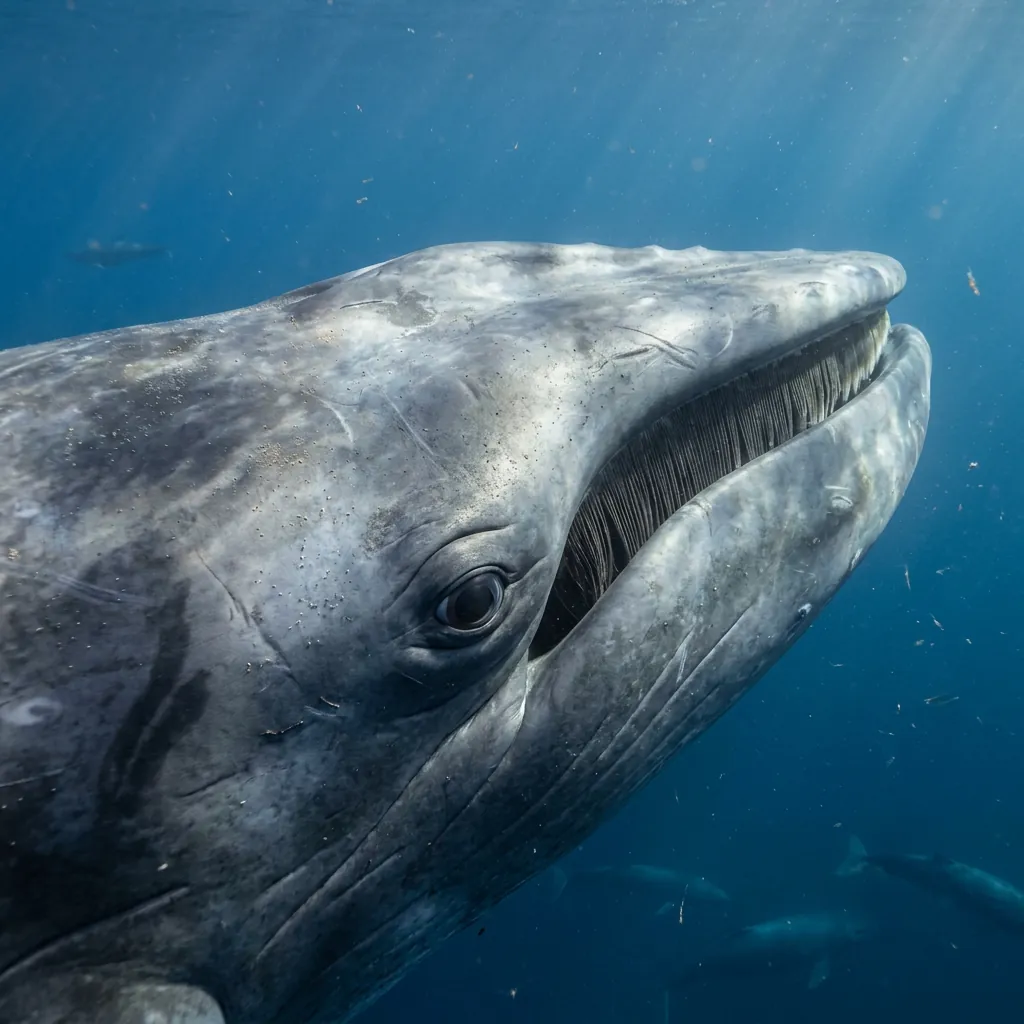
The blue whale is the largest animal known to have ever lived. It can grow up to 33 m long and weigh up to 160,000 kg. Despite its size, its main food is one of the smallest: tiny, shrimp-like animals called krill.
Also known as: balaenoptera musculus, blue rorqual
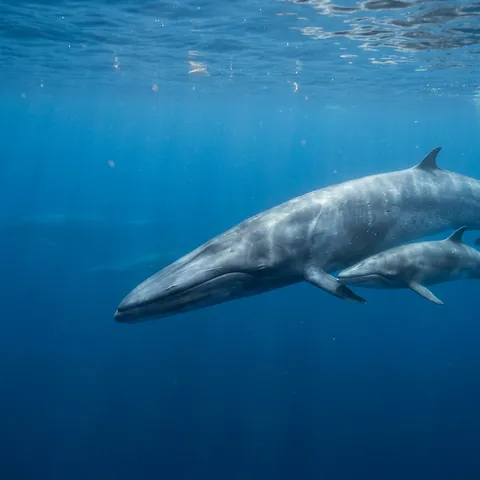
This whale can be confused with the fin whale, its close relative, with which it can even interbreed. Check for the blue-grey mottled skin, which looks distinctly blue underwater, and the small, sickle-shaped dorsal fin set far back near the tail.
The blue whale has a slender body and a broad, U-shaped head. Its flippers are thin and long, and its dorsal fin is small and curved, set far back near the tail. The skin is a mottled grey-blue, which looks distinctly blue underwater. The underside is paler and can look yellowish, because tiny algae called diatoms build up there.
Blue whales are usually alone or in pairs, though larger groups can gather where food is rich. They travel long distances between feeding grounds near the poles and breeding grounds closer to the equator. They seem to remember and return to good feeding spots. They normally swim slowly, but can speed up sharply if a boat or predator comes close.
Blue whales feed almost only on krill. They catch it by lunging forward with their mouth wide open, taking in a huge gulp of water and krill together. They then push the water back out through their baleen, the comb-like plates in their upper jaw, and swallow what is left behind.
Blue whales travel to warmer, more equatorial waters to breed. They can occasionally mate with the closely related fin whale, and these pairings can produce fertile offspring, though this is rare.
harmless to humans (endangered)
The blue whale is Endangered. Its numbers today are far lower than they were a century ago, and it remains hard to count accurately across such a wide ocean range.
Whalers once nicknamed the blue whale the 'sulphur-bottom' whale, because algae on its pale underside can give it a yellowish tint.
Describe what you saw and we name it, then keep every species you find in your Oceandex.