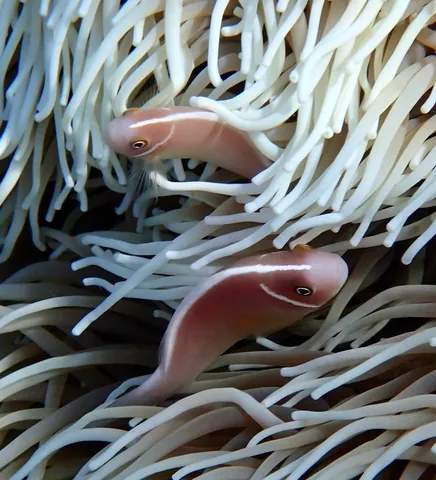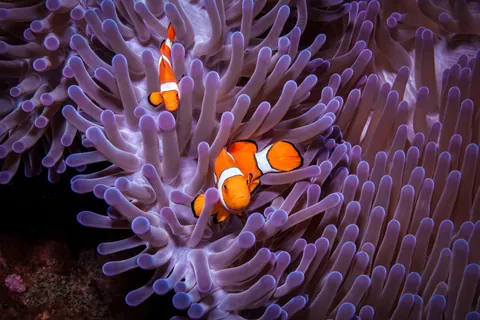
Clownfish
clownfish
Amphiprion sandaracinos
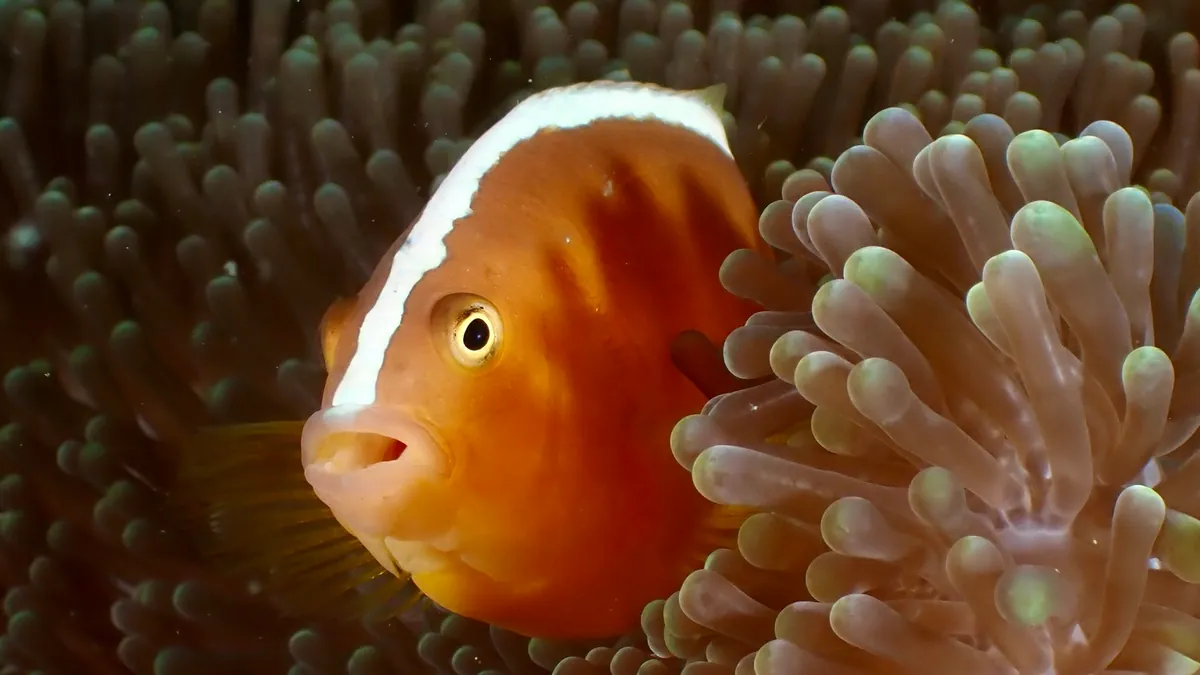
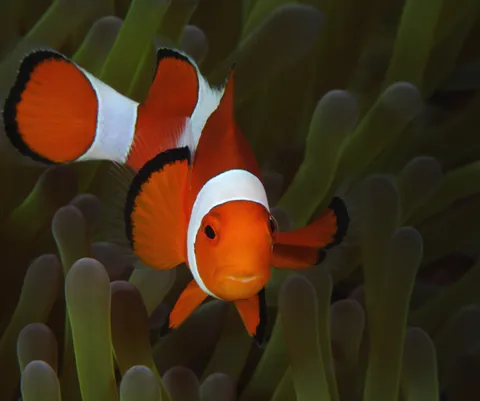
The yellow clownfish, better known as the orange skunk clownfish, is a small, bold reef fish that never strays far from its host anemone. It grows to about 14 cm and lives its whole life within stinging tentacles that would harm most other fish.
Also known as: eastern skunk anemonefish, golden anemonefish, yellow clownfish, yellow skunk clownfish, golden angelfish, yellow skunk clownfish, skunk clownfish, eastern skunk anemonefish, skunk anemonefish, golden anemonefish, yellow clownfish, orange skunk anemonefish, golden angelfish, orange skunk clownfish
It is easily confused with other anemonefish that also carry a single white stripe. The giveaway is how far the white extends — starting at the upper lip and running between the eyes, then continuing onto the dorsal fin rather than stopping at the back.
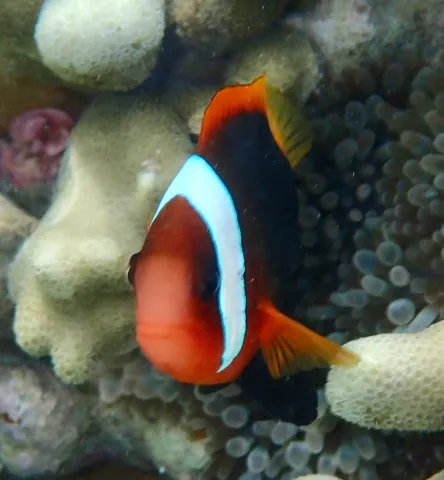
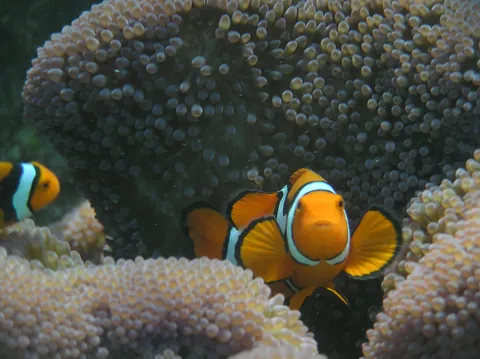
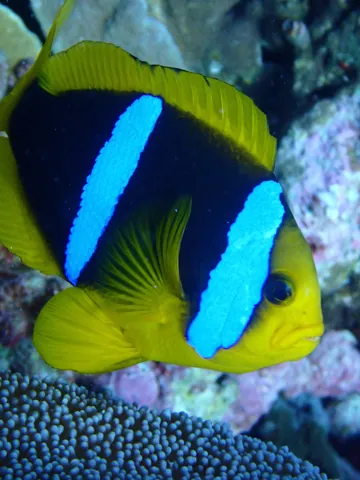
The body is oval and flattened side to side, coloured bright orange all over. A thick white stripe runs from the upper lip, between the eyes, and back along the ridge of the body to the base of the tail. The dorsal fin is partly white to match this stripe, while the other fins stay orange. The eye has a bright yellow iris.
This clownfish lives on outer reef slopes and in lagoons, usually in small groups, from about 3 to 20 m deep. It is a specialist that is almost always found sheltering in a Mertens' carpet anemone, gaining protection from the anemone's sting.
The yellow clownfish is listed as Least Concern. Its main risks are localised: bleaching of its host anemone from warmer or more acidic water, and collection for the marine aquarium trade.
On New Guinea's northern coast, male yellow clownfish sometimes breed with the much larger female of a different species, Amphiprion chrysopterus, producing a distinct hybrid anemonefish called Amphiprion leucokranos.
Describe what you saw and we name it, then keep every species you find in your Oceandex.