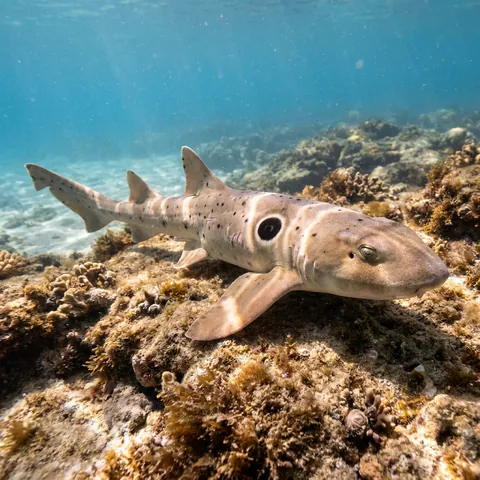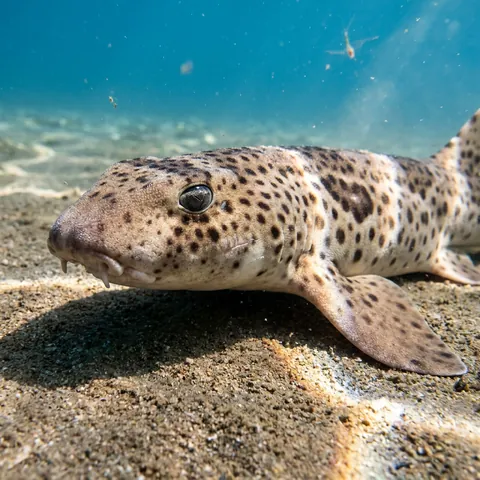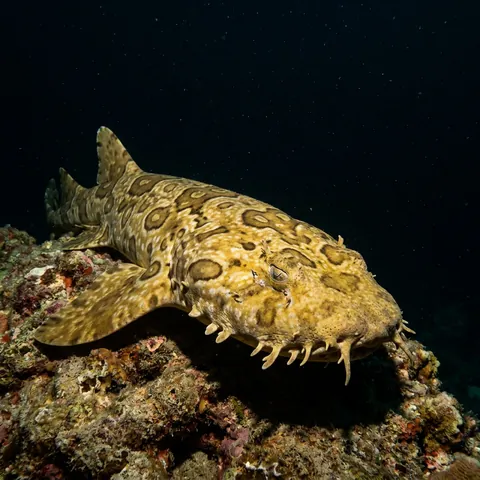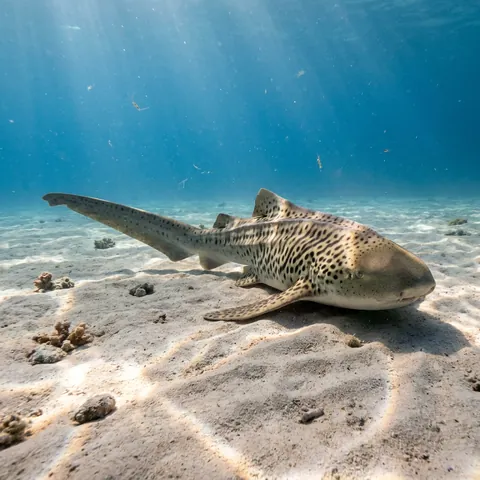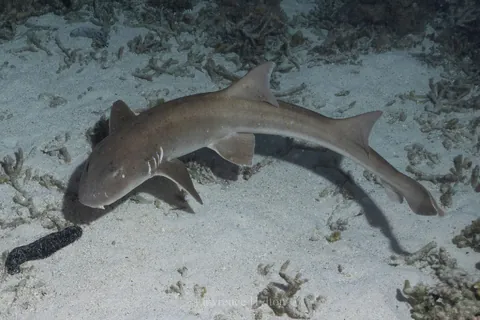
Brownbanded bamboo shark
Chiloscyllium punctatum
Rhincodon typus
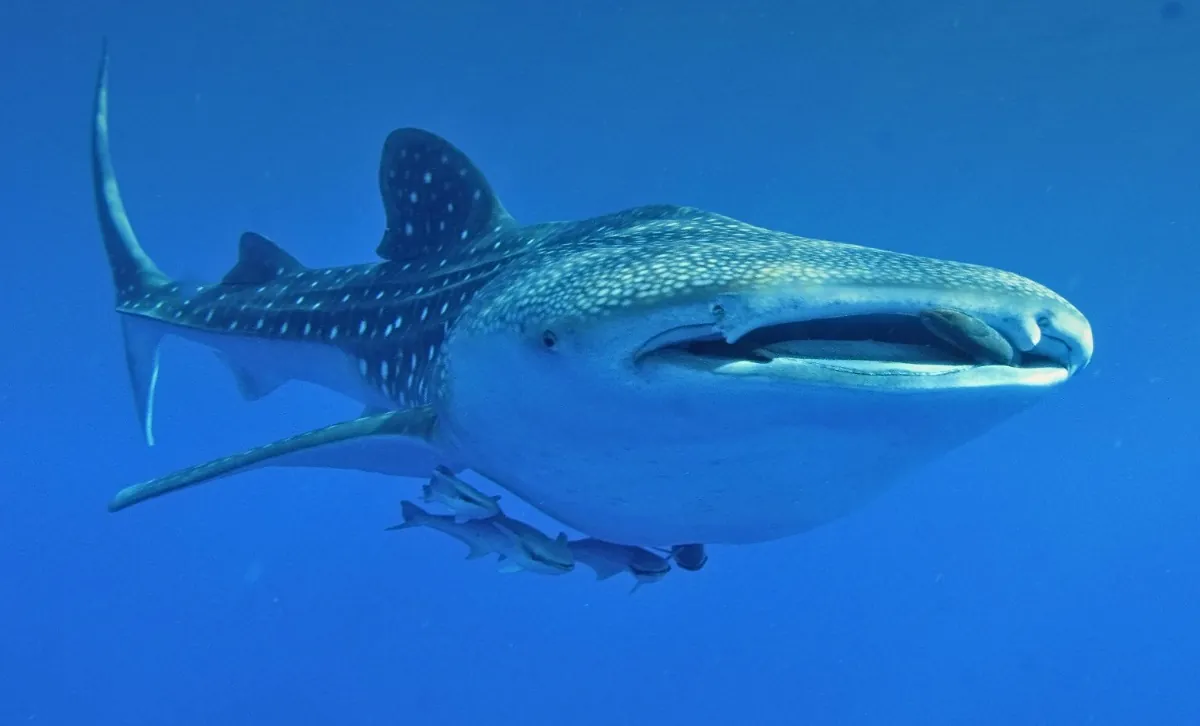
The whale shark is the largest fish in the ocean, yet it feeds on some of the smallest, sieving plankton from the water as it cruises warm seas. Divers travel across the world for a chance to swim alongside one.
Also known as: rhincodon typus, basking shark, tofu sa, tofu shark, whaleshark
The whale shark can be confused with the basking shark, the only other shark of similar size that also filter feeds. The clearest difference is the mouth position: a whale shark's mouth sits at the very front of its head, while a basking shark's sits underneath.
The whale shark has a broad, flattened head with a very wide mouth at the very front, unlike most sharks, whose mouths sit underneath the head. Behind the small eyes sit paired openings called spiracles, and five large gill slits run along each side. The body is dark grey above with a white belly, covered in a pattern of pale spots and stripes that is unique to each individual, like a fingerprint. Thick, rough skin covers the body, and three raised ridges run along each flank from behind the head to the base of the tail. Two dorsal fins sit far back on the body, and the tail fin has a much larger upper lobe than lower one. It commonly reaches about 10 m in length and can grow to 17 m, weighing as much as 34 tonnes.
Whale sharks live in tropical and warm-temperate seas worldwide, in water between 18 and 30 degrees Celsius, using both coastal and open-ocean habitats. They usually stay in the upper 100 m, but can dive to nearly 1,928 m, sometimes descending in short bursts that may be linked to feeding.
Whale sharks are usually seen alone, though they sometimes gather in aggregations of over 100 animals where food is abundant. Despite their size, they are gentle and pose no danger to divers, and young whale sharks will sometimes swim close to people out of curiosity. Touching or riding a whale shark is illegal in most countries where they are found, as it can injure the animal.
Whale sharks are filter feeders, straining plankton such as copepods and krill, along with small fish and squid, from the water. They feed either by swimming forward with an open mouth, letting water and food flow in, or by opening and closing the mouth to actively suck in water, which is then pushed out through the gills while food is trapped inside on filter pads.
Growth and reproduction in whale sharks are still poorly understood. They grow slowly, reach sexual maturity late, and mating has rarely been witnessed in the wild.
harmless to humans (keep a respectful distance; do not touch)
The IUCN lists the whale shark as Endangered.
Each whale shark's pattern of pale spots and stripes is unique, letting researchers identify individual sharks over many years just by photographing their flanks.
Describe what you saw and we name it, then keep every species you find in your Oceandex.