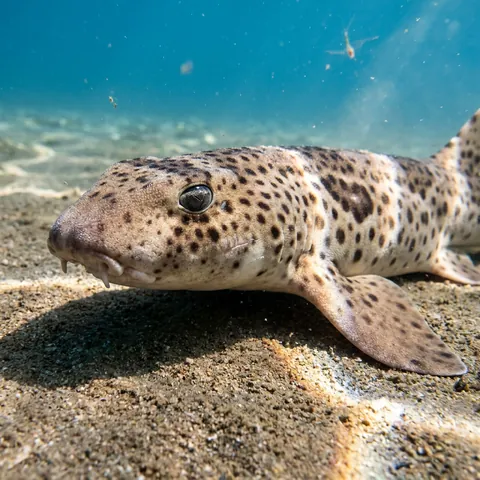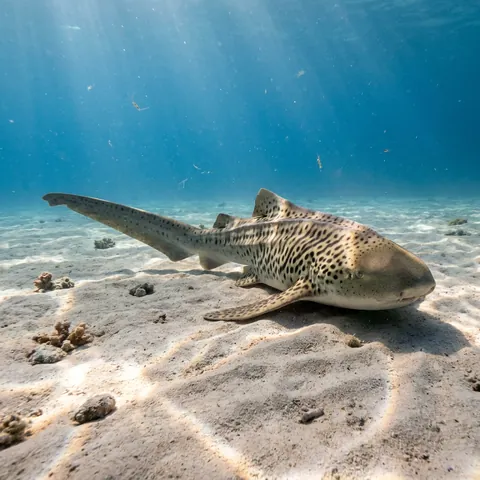
Brownbanded bamboo shark
Chiloscyllium punctatum
Orectolobus maculatus
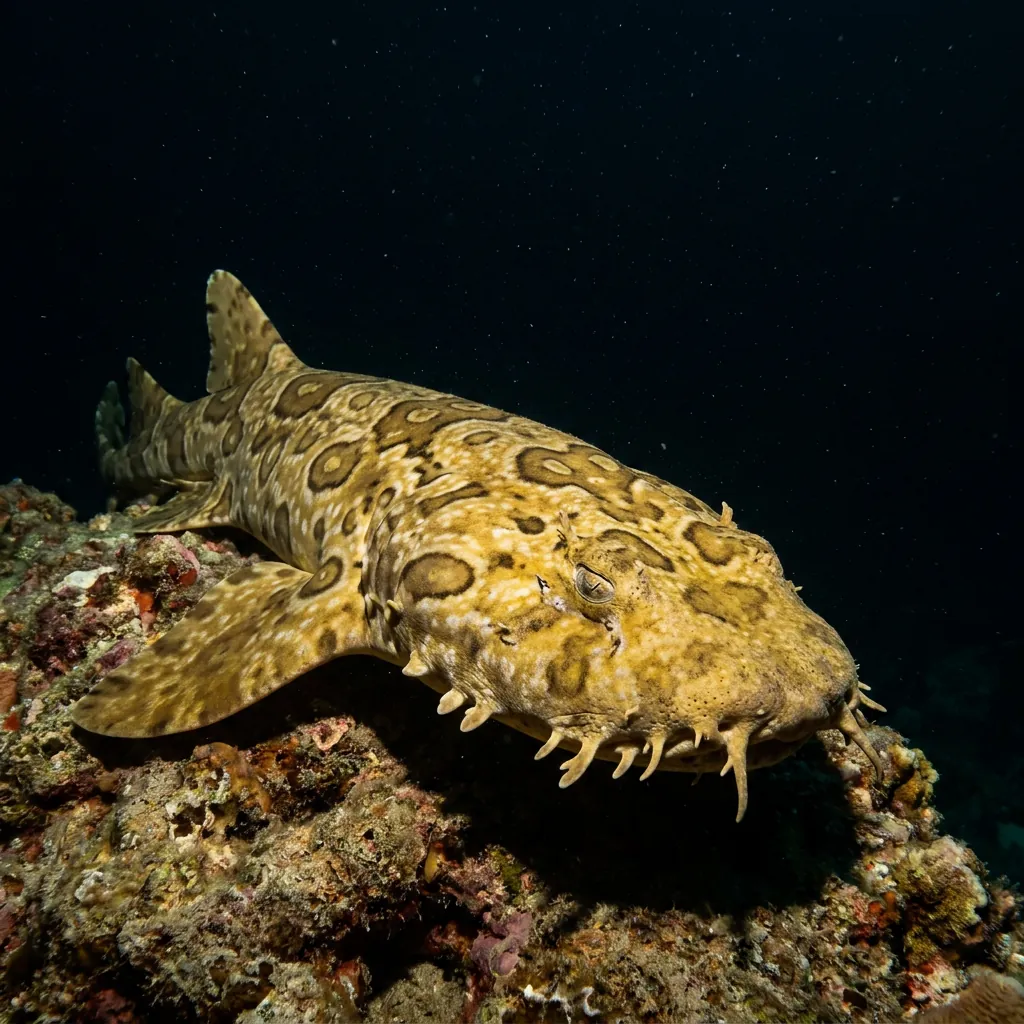
The spotted wobbegong is a broad, flattened shark that spends its days lying almost invisible on the seabed. It can grow up to 320 cm long, and most divers will find it resting quietly rather than swimming.
Also known as: carpet shark, common carpet shark, common catshark, common wobbegong, orectolobus maculatus, spotted wobbegong, tassel shark
Several wobbegong species share this flattened, bearded shape, so look closely at the spots. This species has distinct ring, or O, shapes, rather than the plainer blotches or lines seen on similar species.
It has a large, heavy body that narrows sharply behind its pelvic fins. Colour ranges from green to yellow to brown, with a darker back marked by darker saddle patches and scattered spots. A fringe of skin flaps runs around its head and the rim of its mouth, along with thick barbels on its nostrils and large spiracles (breathing openings) just behind its eyes.
It rests by day on sand, coral reefs, and in coastal bays, then hunts at night. Adults are usually found on algae-covered rocky reefs and beds of seagrass or sand, while young wobbegongs live mostly in estuaries. Its colouring lets it blend in almost completely against a rocky bottom.
harmless if not disturbed — can bite if stepped on or provoked
This species is listed as Least Concern, but it still faces pressure from trawl fishing, gillnets, lobster traps, and both hook-and-line and spearfishing, and is often caught unintentionally as bycatch.
Its camouflage is so effective that prey sometimes wanders right up to its mouth, occasionally even nibbling at its skin flaps, before the shark strikes.
Describe what you saw and we name it, then keep every species you find in your Oceandex.