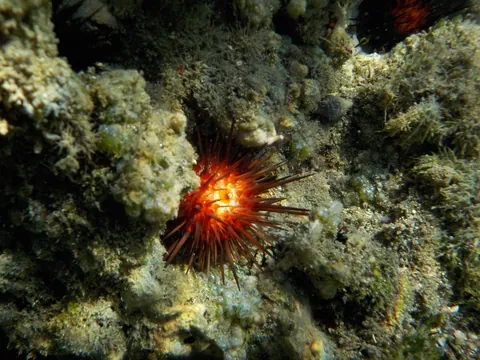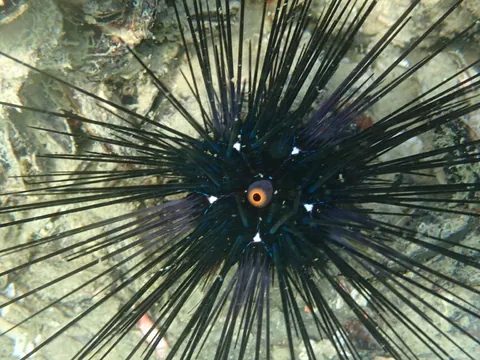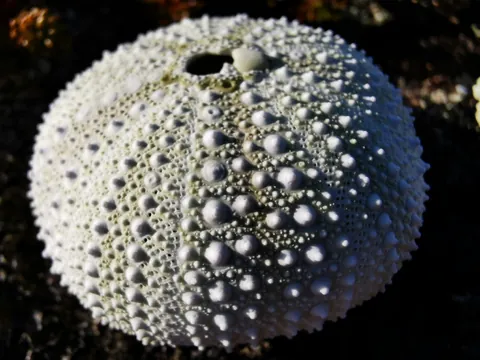
Arctic Green Sea Urchin
Strongylocentrotus droebachiensis
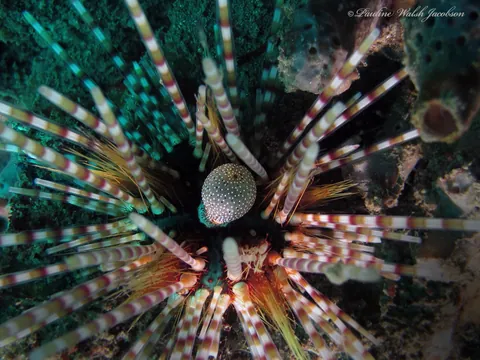
Sphaerechinus granularis
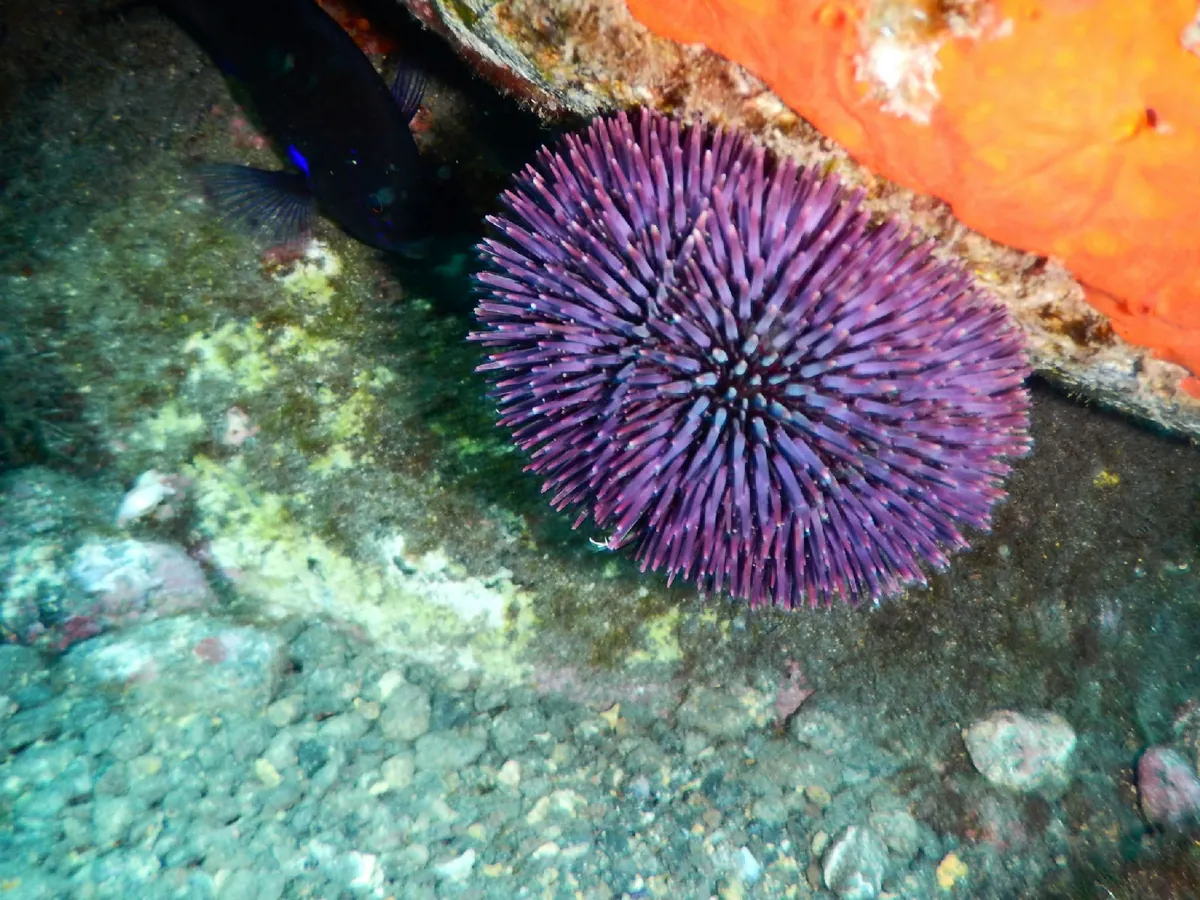
The violet sea urchin is a large, flattened urchin often found dressed in a covering of algae and shell bits that it gathers over its own test, the hard shell beneath its spines.
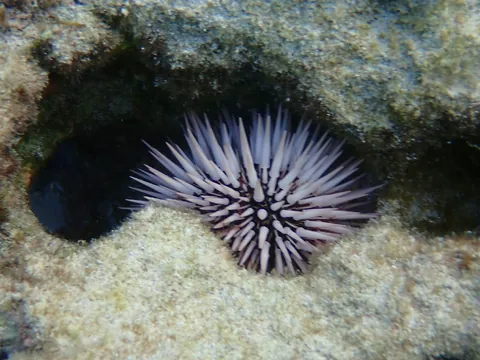
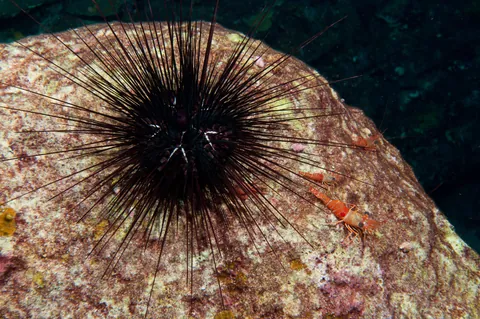
It shares reef and seagrass ground with other purple sea urchins that have long, sharp spines. This species is easy to tell apart by its short, blunt, evenly sized spines, quite unlike the long spines of look-alike urchins nearby.
The body is somewhat flattened from top to bottom. The test is purple, and comes in two forms: one with purple spines, the other with white spines. The spines are short, blunt, and all roughly the same length, arranged neatly in rows.
Lives on rocky ground covered in seaweed, on gravel, and in seagrass meadows, from about 2 to 130 m, across the Mediterranean and the eastern Atlantic. It prefers sheltered spots and is most common in shallower water.
It often covers itself with pieces of algae and shell, held in place by its tube feet and small claw-like grabbers called pedicellariae. It grazes on encrusting algae, seagrass blades, and the debris that settles on them.
It disguises itself by piling bits of algae and shell over its own body, gripping the debris in place with tiny claw-like structures on its skin.
Describe what you saw and we name it, then keep every species you find in your Oceandex.