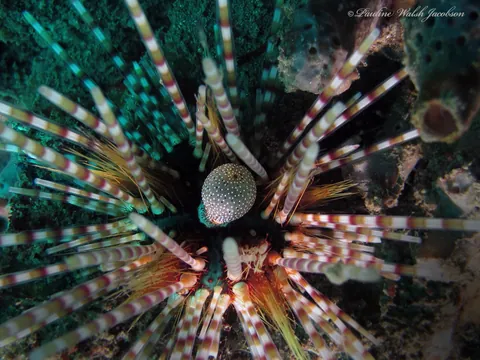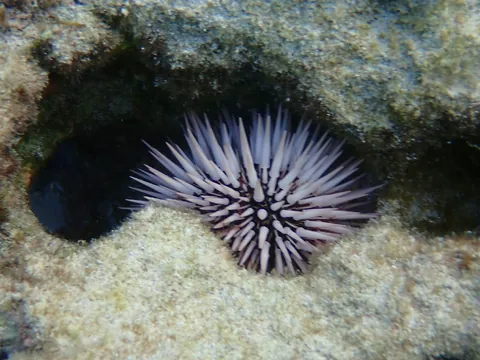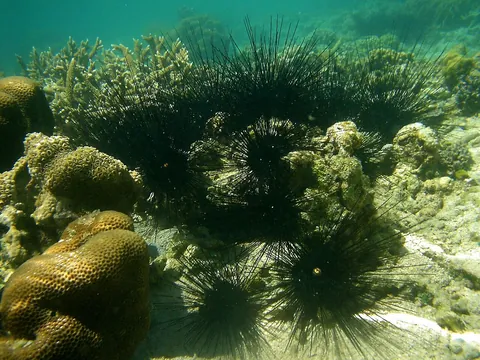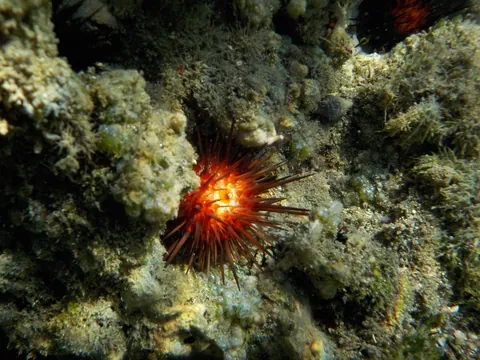
Atlantic Rock-boring Urchin
Echinometra lucunter
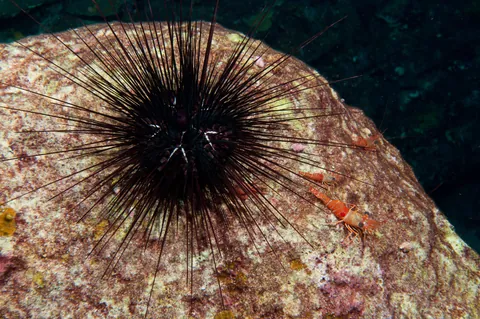
Strongylocentrotus droebachiensis
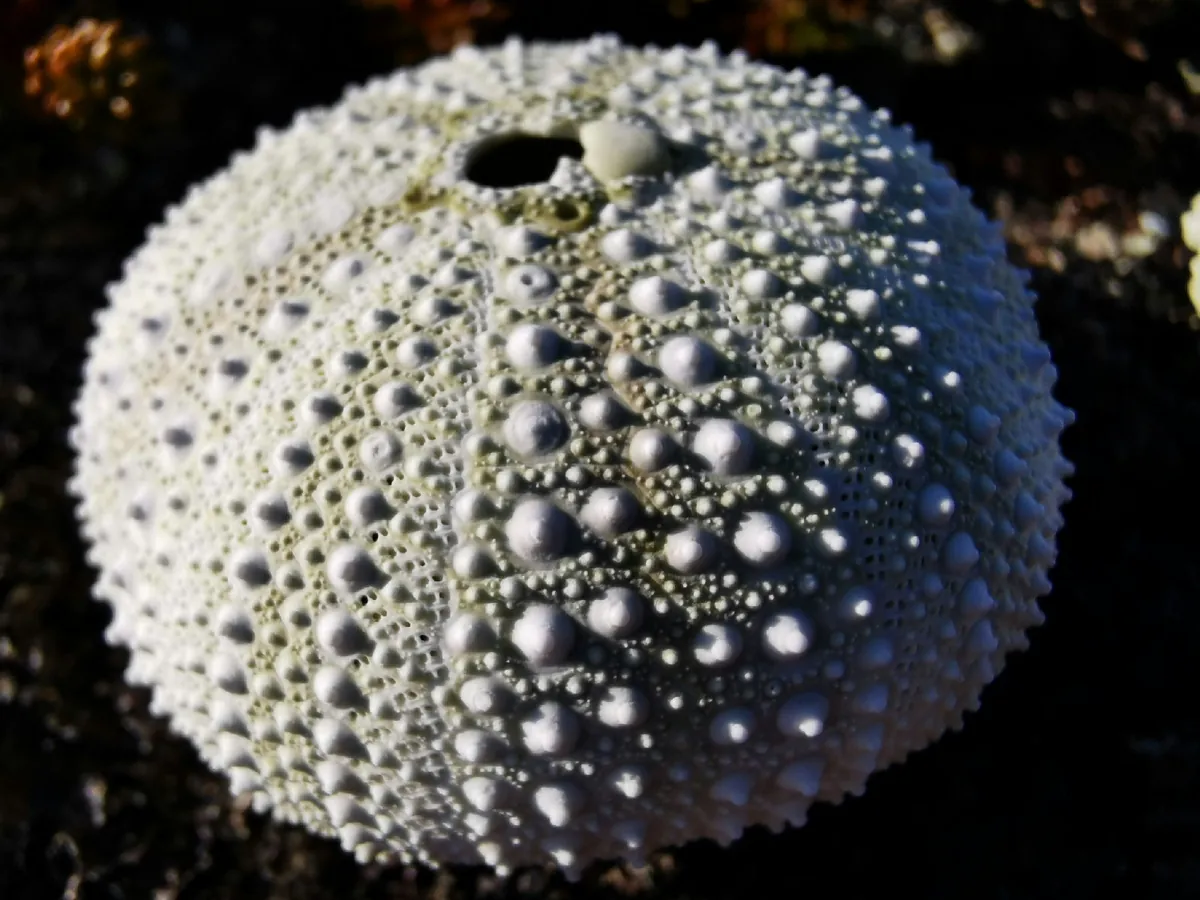
The Arctic green sea urchin is a spiny, globe-shaped grazer that carves out shelters in rock and keeps kelp beds in check across cold northern seas.
Look for the five paired rows of tube feet running between the mouth and the top of the body, visible between the spines - the clearest sign of its five-part body plan.
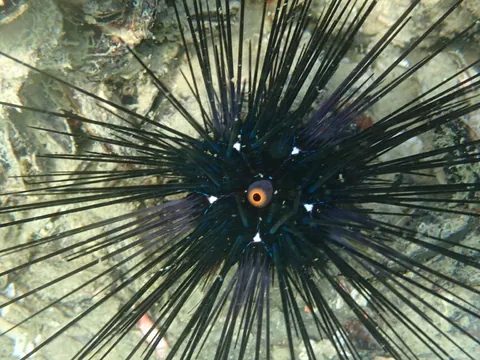
The body is a slightly flattened globe, with a rigid outer shell called a test made of fused plates. Five paired rows of tube feet run from the mouth on the underside to the anus on top, showing the animal's five-part symmetry. Round, tapering spines cover the test and are used for both defence and moving around.
It lives on rocky bottoms, bedrock outcrops, boulders, and cobbles, from tide pools on the shore down to about 300 m, though it is more common in the top 50 m. It can also burrow into rock using its mouth structure and enlarge the hole with its spines, and it tolerates the low-salinity water found in places like Puget Sound.
This urchin grazes mainly on seaweed, favouring certain species over others, and occasionally eats bivalves, snails, and small crustaceans. Its spines discourage most small predators, but sea stars, wolffish, lobsters, and crabs still prey on it. In early spring it releases eggs or sperm directly into the water at the same time as others nearby, where fertilisation happens.
If this urchin's shell cracks or loses a chunk, it slowly rebuilds the damaged area with new calcium carbonate until the shell is whole again.
Describe what you saw and we name it, then keep every species you find in your Oceandex.