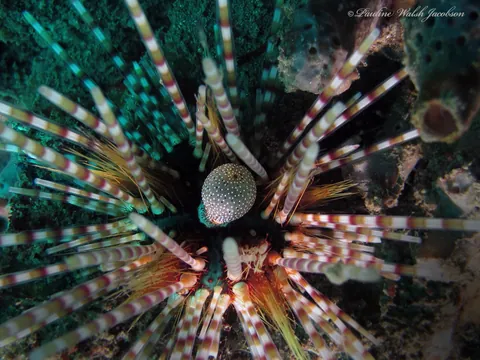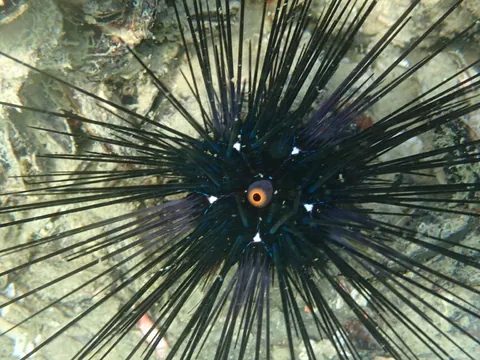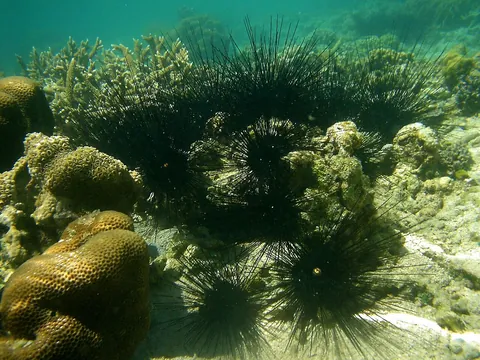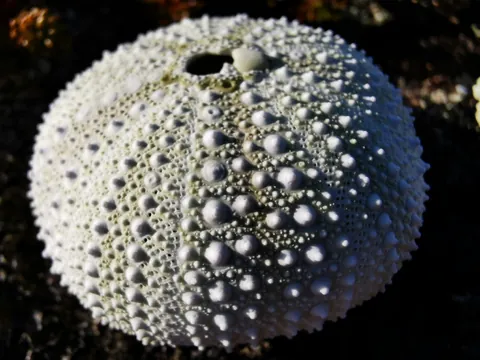
Arctic Green Sea Urchin
Strongylocentrotus droebachiensis
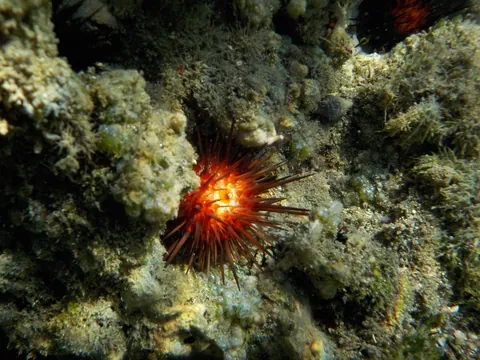
Echinometra mathaei
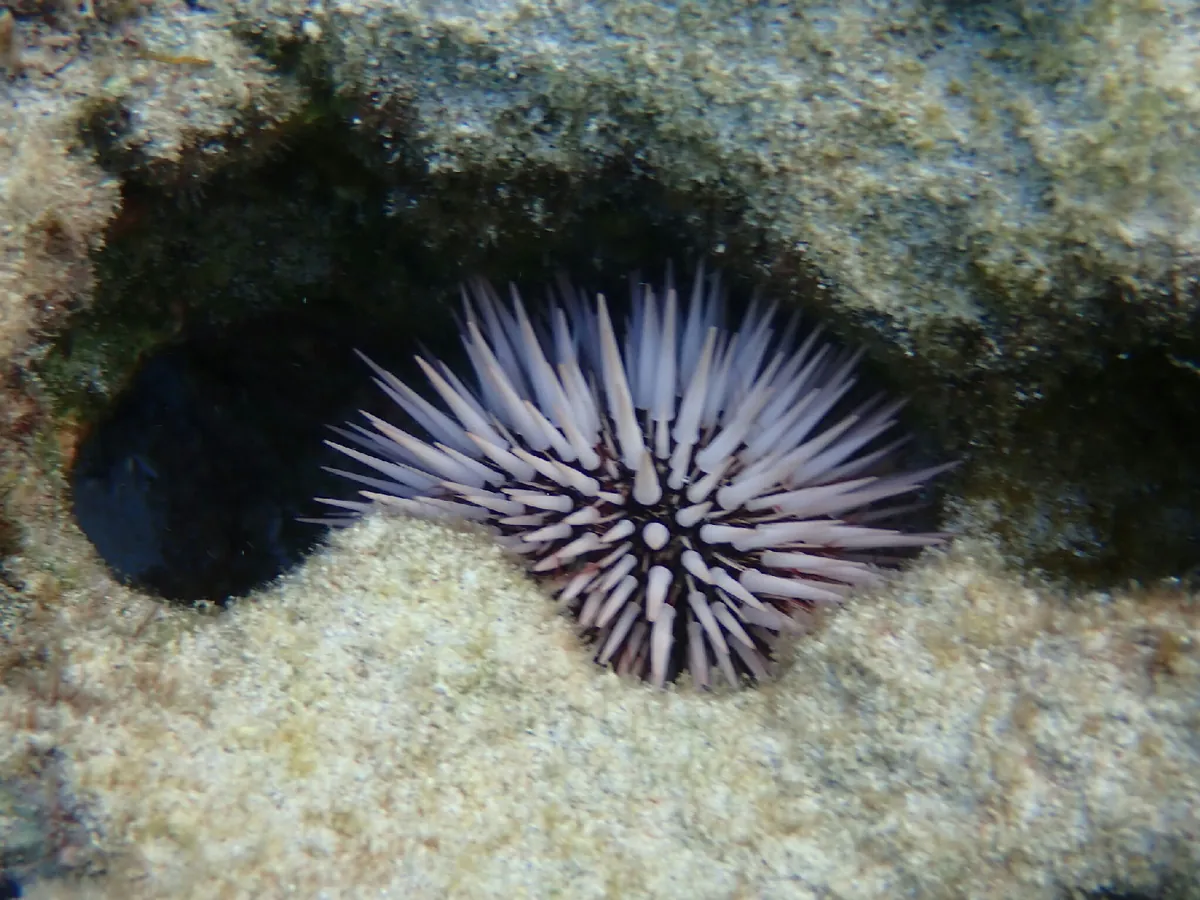
The Indo-Pacific rock-boring urchin is a small, dark sea urchin that lives in a hollow it grinds for itself in reef rock. It is common in shallow water on Indo-Pacific reefs and has been found down to 139 m. By day you usually see only the spines filling the mouth of a burrow. Where fish that eat urchins have been fished out, these urchins become far more numerous, and their digging then wears the reef away faster.
Also known as: burrowing urchin, oval urchin
Do not go by colour, which changes a lot from urchin to urchin. Look instead at where the spines meet the body: each spine has a pale ring around its base, so a burrow full of spines looks lightly speckled with pale dots at the bottom of the spines. That ring is the mark that separates it from other urchins on the same reef.
The shell, called the test, is usually dark. Colour is very variable: the spines can be green and purple with purple tips, or all green with purple tips. Whatever the spine colour, there is a pale ring around the base of every spine.
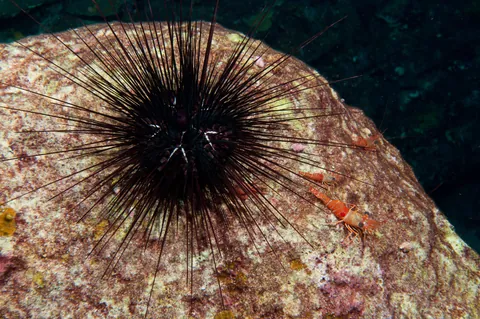
It digs its own burrow into basalt and limestone rock, using its spines and its teeth. The teeth sit in a five-part jaw called Aristotle's lantern. The urchin stays in the hollow during the day and comes out at night to graze, scraping turf algae off the rock and taking small invertebrates as well. Breeding is done by releasing eggs and sperm straight into the water. The young drift as plankton before settling on the bottom and turning into tiny urchins. In the far north of its range, in the Gulf of Suez, it spawns in summer and autumn, but in warmer water it can breed all year. Fish are its main predators, with some brittle stars and sea snails also taking it. A small shrimp lives among its spines without harming it.
A mantis shrimp, Echinosquilla guerinii, copies this urchin. It hides in a rock hole and plugs the entrance with its tail plate, which is covered in spiny points, so the hole looks like it holds an urchin.
Describe what you saw and we name it, then keep every species you find in your Oceandex.